
IEA warns Iran conflict could trigger an energy crisis bigger than past global shocks
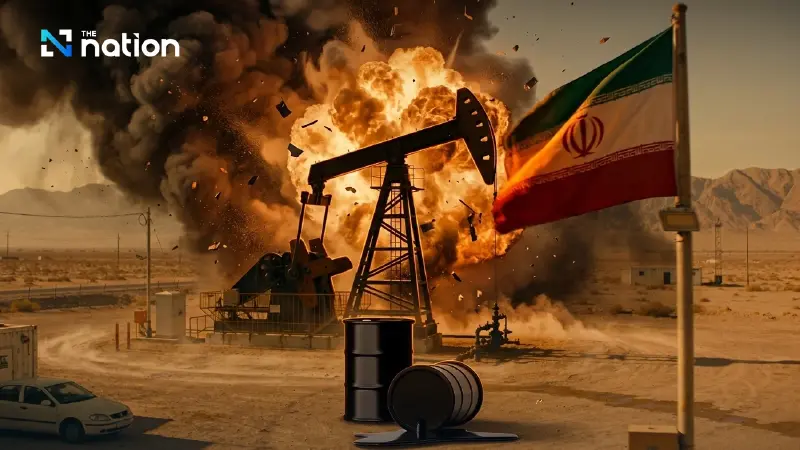


IEA says the Iran war and Strait of Hormuz disruption risk a global energy crisis surpassing the 1970s oil shocks and the 2022 Russia-Ukraine turmoil
The International Energy Agency has warned that the conflict involving Iran is now triggering a global energy crisis on a scale comparable to two of the world’s most severe supply shocks combined — the oil crises of the 1970s and the energy disruption caused by Russia’s war in Ukraine in 2022.
Fatih Birol, the IEA’s executive director, said world leaders had initially failed to properly grasp the scale of the threat posed to global energy markets by attacks on Iran and the closure of the Strait of Hormuz.
In the agency’s view, the current turmoil matches the combined impact of the oil shocks that followed the Yom Kippur war between Israel and Arab states in the 1970s, together with the gas and oil disruption unleashed by the Russia-Ukraine war.
This latest crisis could prove even more damaging because it is disrupting what Birol described as a crucial artery of the global economy. The Strait of Hormuz is not only one of the world’s most important routes for energy shipments, but also a key channel for petrochemicals, fertilisers, sulphur and helium.
Speaking to the Australian Press Association in Canberra on March 23, Birol said leaders had not fully understood in the early stages how deeply the US and Israeli strikes on Iran, along with the closure of Hormuz, would hit global energy markets. He said that was why he called last week for a historic release of emergency oil reserves. The IEA has also proposed demand-side steps to help ease the pressure, including more working from home, temporary motorway speed cuts and reduced air travel.
More than 40 energy sites heavily damaged
Birol said at least 40 energy facilities across the Gulf had suffered severe or very severe damage, warning that supply would not recover immediately even if the fighting were to stop.
He said the oil crises of 1973 and 1979 removed around 5 million barrels a day from the market, while the 2022 Russia crisis cut about 75 billion cubic metres of natural gas from global supply.
By contrast, in the current crisis — which began with the attack in Tehran on February 28 and is still ongoing — around 11 million barrels of oil a day have already been lost, along with about 140 billion cubic metres of gas.
“At this moment, this crisis is the combination of two oil crises and one gas crisis,” Birol said.
Although the global oil market had excess supply at the start of 2026, attacks on vessels in the Strait of Hormuz — a route that carries roughly one-fifth of global oil shipments — have intensified shortages and sharpened concern across international markets.
US President Donald Trump has given Iran 48 hours to reopen the Strait to shipping, warning that he would destroy Iranian power plants if Tehran failed to comply. That deadline is due to expire at 23:44 GMT on Monday, equivalent to around 07:44 a.m. in Thailand on Tuesday, March 24.
Birol said the Asia-Pacific region had been hit particularly hard by the closure of the Strait, adding that the single most important step now was clear: the Strait of Hormuz must be reopened.
More reserve releases under discussion
The IEA chief said he was in talks with leaders in Asia, Europe and North America about the possibility of further releases from strategic oil reserves. He noted that the first release of 400,000 barrels accounted for only 20% of total emergency stockpiles.
“If necessary, we can release more oil into the market, both crude and refined products,” Birol said. “Releasing stocks can ease market anxiety, but it is not the solution. It can only reduce the economic pain.”
He declined to spell out the exact conditions that would trigger another co-ordinated release by the IEA’s 32 member countries, saying any move would depend on the evolving situation, market analysis and consultations with member states.
Asked whether countries trying to protect their own fuel reserves could become a wider economic problem, Birol said that pattern was already visible in parts of Asia. Europe, meanwhile, was beginning to feel the effects of changing diesel and aviation fuel supply flows, though higher oil output from Canada and Mexico should provide some relief.
“I do not think any country will escape the effects of this crisis if events continue in this direction,” Birol said. “That is why global co-operation is essential.”
