
Wang Yi urges Iran to start talks with the US as soon as possible
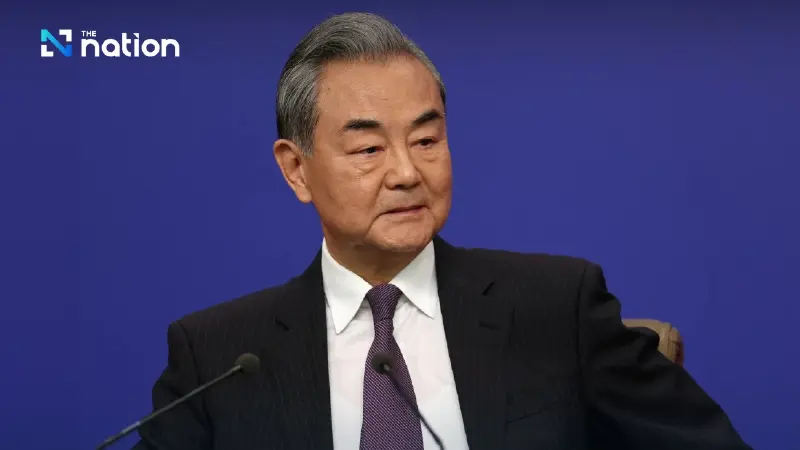


China’s foreign minister called for dialogue over force, urging Tehran to seize every chance for negotiations with Washington to halt the conflict.
- Chinese Foreign Minister Wang Yi urged his Iranian counterpart to begin peace negotiations with the US as soon as possible, emphasizing that dialogue is preferable to warfare.
- Iran responded by asking China to help condemn what it described as US and Israeli aggression and to stop the US from abusing the UN Security Council.
- The call for diplomacy comes amid an escalating conflict with no signs of de-escalation, as Iran holds the Strait of Hormuz in retaliation for a war launched by the US and Israel.
- This diplomatic push occurs despite uncertainty over whether any talks are actually happening, with the US claiming they are and Iran denying it.
China has again pushed for diplomacy, with Foreign Minister Wang Yi telling Iranian counterpart Abbas Araqchi in a phone call on Tuesday that all sides should use every available opening to begin peace negotiations as quickly as possible, according to a statement from Beijing.
During the conversation, Wang said dialogue remained preferable to warfare and stressed that every flashpoint should be handled through negotiation rather than force.
Iranian state media reported on Wednesday that Araqchi replied by saying Tehran expected members of the UN Security Council, especially China and Russia, to stop the United States from, in his words, continuing to abuse the Council. He also called on them to take a firm stand in condemning what he described as aggression by the United States and the “Zionist regime” of Israel.
Wang’s latest call for diplomacy came just days after President Donald Trump said the United States had been talking with Iran to end the conflict. But the background remained murky, including who was involved, whether any meaningful talks had actually taken place, and whether there was any realistic chance of a deal. Iran denied holding talks with Washington, while neighbouring Pakistan, a US defence partner, offered to act as a mediator between the two sides.
On the ground, there was still no sign of de-escalation. Iran continued to hold the Strait of Hormuz, Israel kept up its attacks, and Trump was moving additional troops into the Middle East.
Earlier, Wang had called for an immediate ceasefire and urged the international community to intensify efforts to promote peace talks.
Since the United States and Israel launched a war against Iran, Tehran has retaliated by striking energy facilities across the Persian Gulf. The Strait of Hormuz, a major choke point for oil and gas shipments bound largely for Asia, has in effect been shut, sending global energy prices higher and fuelling market volatility.
Since late February, only a small number of vessels have managed to pass through the crucial waterway, including ships linked to Iran, China and Syria.
Reuters
