
China and Russia block UN push to protect Hormuz shipping
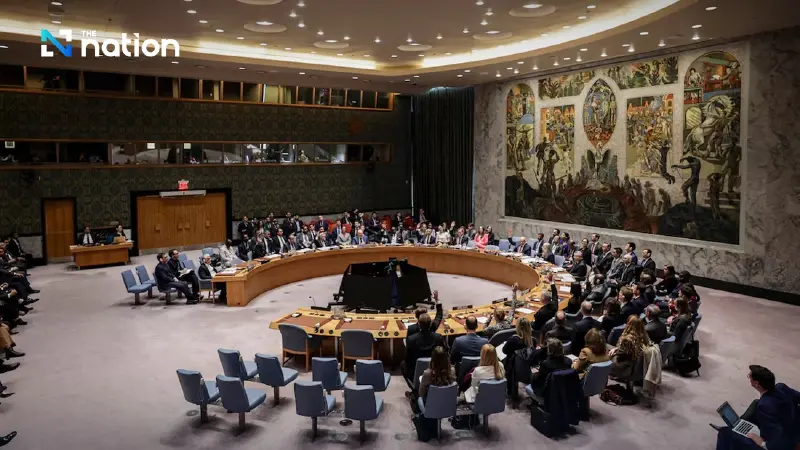


China and Russia veto a UN Security Council resolution on Strait of Hormuz shipping, calling it biased against Iran as tensions deepen
- China and Russia used their veto power as permanent members of the UN Security Council to block a resolution aimed at protecting commercial shipping in the Strait of Hormuz.
- The two nations argued that the resolution was unbalanced, biased against Iran, and risked sending the wrong political signal amid escalating tensions and war rhetoric.
- The US and France condemned the veto, while Iran praised it; China and Russia proposed an alternative resolution focused on de-escalation and a return to diplomacy.
China and Russia on Tuesday blocked a United Nations Security Council resolution that sought to encourage countries to coordinate defensive efforts to protect commercial shipping in the Strait of Hormuz, arguing that the draft UN resolution was tilted against Iran and risked sending the wrong political signal at a time of escalating war rhetoric.
The 15-member council voted 11 in favour of the Bahrain-sponsored resolution, but it failed after China and Russia, both permanent members, exercised their veto powers. Two countries abstained.

The vote came at a highly volatile moment in the Middle East, with US President Donald Trump intensifying pressure on Tehran and warning that “a whole civilization will die tonight” if Iran refused to comply with his ultimatum to reopen the Strait of Hormuz by Tuesday evening, Washington time.
The waterway, one of the world’s most critical energy chokepoints, had previously carried around a fifth of global oil and liquefied natural gas shipments. Since the United States and Israel struck Iran at the end of February, oil prices have jumped sharply as the conflict stretched into its sixth week and Tehran largely kept the strait closed.

Bahrain’s Foreign Minister Abdullatif bin Rashid Al Zayani said the draft had failed because of a negative vote by a permanent member of the council.

The United States reacted angrily. US Ambassador to the United Nations Mike Waltz condemned the Chinese and Russian vetoes, calling them “a new low” at a time when Iran’s closure of the strait was disrupting the delivery of medical aid and supplies to humanitarian crises in places including Congo, Sudan and Gaza.
He accused Tehran of holding the global economy hostage and said Moscow and Beijing had chosen to side with a regime seeking to intimidate Gulf states even while repressing its own people. Waltz urged “responsible nations” to join the United States in protecting the Strait of Hormuz and ensuring it remained open to lawful trade, humanitarian goods and the free movement of global commerce. He also said Iran still had a choice to reopen the strait, pursue peace and make amends.
France also criticised the vetoes. Its UN ambassador, Jerome Bonnafont, said the aim of the resolution had been strictly defensive, to improve the safety and security of the strait without pushing the situation into a more dangerous spiral.
China and Russia, however, said the draft resolution was fundamentally unbalanced. China’s UN envoy Fu Cong said passing such a resolution while the United States was openly threatening the survival of an entire civilisation would have sent the wrong message. Moscow’s UN ambassador, Vasily Nebenzya, said Russia and China were instead proposing an alternative resolution dealing with the wider Middle East crisis, including maritime security.
A draft of that alternative UN resolution called for de-escalation of the fighting and a return to diplomacy. In Beijing, China’s foreign ministry said the Security Council should work to ease tensions, stop the conflict and restart negotiations, rather than endorse what it described as illegal acts of war or add fuel to the fire.
Iran welcomed the outcome. Iran’s UN ambassador Amir Saeid Iravani praised Beijing and Moscow for preventing the Security Council from being used, in his words, to legitimise aggression. He also said the UN secretary-general’s personal envoy was on the way to Tehran for consultations. A UN source said envoy Jean Arnault had left for the Middle East on Monday and intended to visit Iran as part of efforts to encourage an end to the war, though his movements would depend on security and logistical conditions.
The failed resolution had already been softened before the vote in an attempt to win broader support. After China objected to language that could have been interpreted as authorising force, Bahrain removed any such wording from the final version. References to binding enforcement that had appeared in an earlier draft were also dropped.
Instead, the final UN resolution merely urged states to coordinate defensive measures appropriate to the circumstances in order to support the safety and security of navigation through the Strait of Hormuz. It said such measures could include escorting merchant and commercial vessels and backed efforts to deter attempts to close, obstruct or otherwise interfere with international navigation through the strait.
Even with those changes, China and Russia judged the resolution unacceptable, leaving the Security Council divided as the diplomatic and military crisis around Hormuz deepened further.
