
South Korean vessels remain stranded in Hormuz as others pass
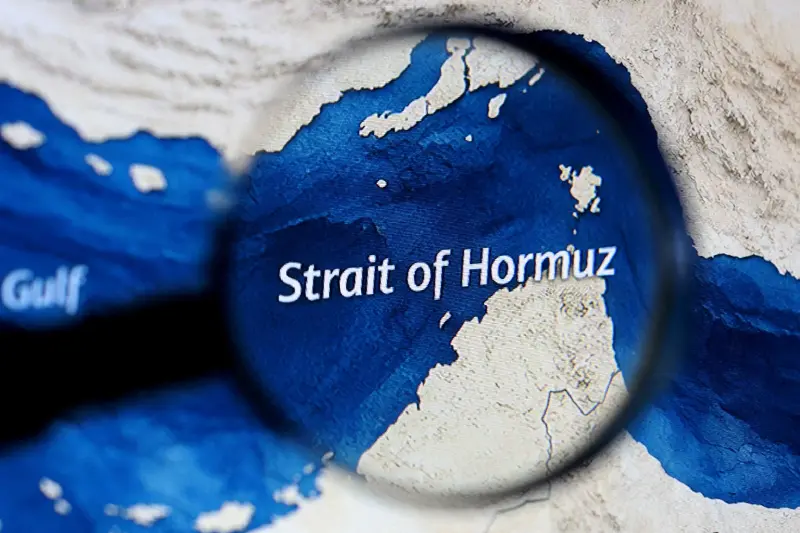


Japanese and Omani-linked ships have moved through, but 26 South Korea-related vessels and 173 crew are still waiting in the strait.
- All 26 South Korea-linked vessels remain stuck in the Strait of Hormuz, while ships associated with Japan, France, and Oman have successfully passed through.
- The situation has raised questions about the effectiveness of Seoul's diplomatic response, though officials argue that each vessel's circumstances, such as flag state and cargo, are unique.
- Potential reasons for the difficulty include South Korea's close alliance with the US and friction with Iran over Seoul's sale of Cheongung-II missile defence systems to the UAE.
- Despite participating in multilateral talks, South Korea has not confirmed direct negotiations for the passage of its vessels, and shipping operators are prioritising safety by remaining in place.
South Korea-linked vessels remained stuck in the Strait of Hormuz on Monday, even as several ships tied to Japan, France and Oman managed to get through, raising fresh questions in Seoul over whether the government response has suffered from poor coordination and communication among the agencies involved.
All 26 vessels linked to South Korea, carrying 173 crew members, are still inside the strait with no immediate sign of departure. The issue is being handled by the Foreign Ministry and the Ministry of Oceans and Fisheries. When the Strait of Hormuz was effectively closed in late February, around 180 people were on board. Since then, 10 people, including trainees from Korea Maritime and Ocean University and Mokpo National Maritime University, have disembarked, but many seafarers remain aboard.
MarineTraffic and media reports showed that the French-owned container ship CMA CGM Kribi and an LNG carrier linked to Japan’s Mitsui OSK Lines had crossed the strait. Shipping data also showed that the French vessel changed its declared destination to “Owner France” before passing through Iranian waters, apparently signalling the nationality of its owner. MarineTraffic data further showed that two very large crude carriers and an LNG tanker operated by Oman Shipping Management left the Gulf last week.
The contrast has intensified doubts over whether Seoul’s diplomatic efforts have delivered enough results. Government officials, however, said the situation cannot be judged through simple country-to-country comparisons, arguing that each ship faces different conditions.
“Conditions differ for each vessel depending on factors such as the flag state, ship operator, cargo owner and charterer,” a Foreign Ministry official, speaking on condition of anonymity, said Monday. “We understand that even Japanese-related vessels passed without involvement from the Japanese government.”
Japanese media have reported a similar picture. According to the Asahi Shimbun, a government official said the LNG carrier Sohar LNG was not bound for Japan and that Tokyo was not involved in negotiations over its passage. The vessel was reportedly registered in a third country, such as Panama or India.
A separate Seoul official said at a closed-door briefing on Monday that the government had taken note of such cases, but warned against drawing direct comparisons. “The nationality, owner, operator, cargo type, destination and crew nationality of vessels vary, meaning conditions differ in each case, so simple comparisons between countries based on transit examples may not fully reflect the actual situation.”
Iran has said ships from “non-hostile countries” could be allowed to pass after prior coordination, while also suggesting that vessels linked to US trade may face restrictions. Observers noted that South Korea, as a close US ally, could therefore come under additional scrutiny.
Asked whether Seoul was engaging in negotiations with Iran after Iran’s paramilitary Revolutionary Guard reportedly said vessels linked to Israel and the US would not be allowed through the strait, the ministry official said: “There has been no indication that South Korea is specifically being denied passage.”
Nam Sung-wook, a professor of diplomacy and unification at Korea University and former head of the Institute for National Security Strategy, said South Korea’s defence exports in the region may be one reason for friction.
“One reason is that South Korea’s export of Cheongung-II missile systems to the Middle East does not align with Iran’s national interests,” Nam said. “These systems, deployed in places like the United Arab Emirates, have reportedly been effective in intercepting Iranian missile attacks, so from Iran’s perspective, South Korea’s role in exporting anti-Iran weapon systems is difficult to accept.”
Cheongung-II, also known as M-SAM II, is South Korea’s domestically developed medium-range surface-to-air missile system designed to intercept aircraft and ballistic missiles, forming a key layer of the country’s air defence architecture. In 2022, Seoul signed a multibillion-dollar deal to export the system to the UAE, where it has since been integrated into a broader multilayered air and missile defence network alongside systems such as THAAD and Patriot. According to reports and claims cited by lawmakers and regional sources, Cheongung-II has been used in the Gulf to intercept missiles and drones linked to Iran, strengthening the UAE’s defensive capability.
Nam also said the recent passages by Japanese- and French-linked vessels should not be seen as diplomatic breakthroughs. “While one French vessel and two Japanese vessels have passed, the situation is complicated. It depends on who owns the vessel, its nationality, where it is headed and what cargo it carries,” he said. “Although two Japanese vessels passed, they were not heading to Japan. They were bound for places like India and Oman. So this is not a case of Japan securing free passage through cooperation.”
He added that Japan was facing similar difficulties, with dozens of its vessels reportedly still in the area. “From our perspective, with around 180 crew members stranded for six weeks, diplomatic efforts must be made, but the situation is not easy,” he said.
Seoul officials said on Monday that they were maintaining communication through “multiple channels” regarding vessel safety. They said South Korea was taking part in wider multilateral efforts, including a UK-led foreign ministers’ meeting and a France-led meeting of military chiefs, while also keeping in contact with Iran through foreign minister-level calls and embassy channels.
South Korea joined a UK-led virtual foreign ministers’ meeting last week involving more than 40 countries, as well as a separate France-led meeting of military chiefs, as part of broader efforts to safeguard freedom of navigation.
Even so, Seoul has not confirmed whether it has entered into direct negotiations over the passage of individual vessels. The government has continued to stress that the Strait of Hormuz is an international waterway and that the response should be multilateral.
“At the UK-led meeting, there was no specific discussion regarding the issue of individual vessels exiting the strait, separate from transit fees,” the Foreign Ministry official said, adding that the talks instead focused on “coordinating responses related to transit fees and cooperating on economic sanctions.”
For now, shipping companies appear to be putting safety ahead of movement. With Iran still exercising tight control over access and multinational discussions yet to produce a concrete mechanism for vessel clearance, South Korean ships are likely to remain where they are as operators weigh commercial risk, geopolitical sensitivity and an unsettled diplomatic response.
“We prioritise the safety of vessels and crew and respect the position of shipping companies, taking this into account,” the official said. “At this point, we have not identified any indications that our vessels are seeking to leave the Strait of Hormuz.”
The Korea Herald
