
Kimchi microbe may help flush nanoplastics from the body, study finds
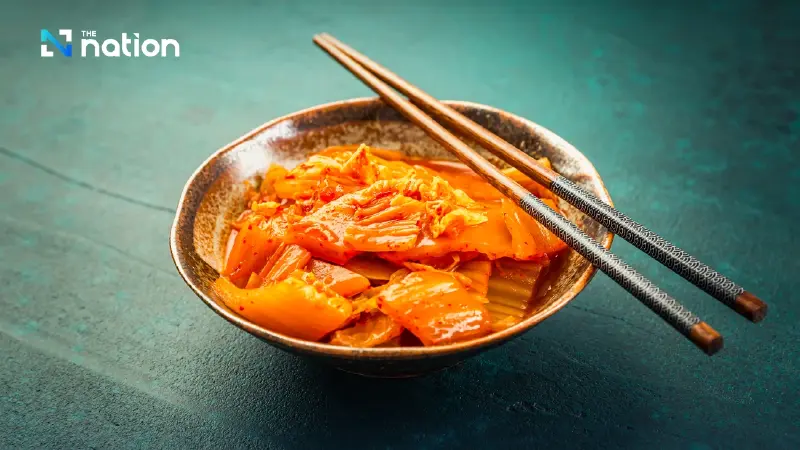


South Korean researchers have found that a specific lactic acid bacterium in kimchi, Leuconostoc mesenteroides CBA3656, can trap nanoplastics in the gut.
Plastic pollution has become one of the world’s most serious environmental problems, and it is now closer to home than ever.
People today may unknowingly ingest more than 100,000 tiny plastic particles a year through water, salt, food and even airborne dust. There are still very few ways to remove these plastics from the body, but new research suggests kimchi may help the body expel nanoplastics.
Nanoplastics are smaller than 1 micrometre and cannot be seen with the naked eye. Because of their tiny size, they can slip through the intestinal wall and enter the bloodstream. Once in circulation, they can accumulate in major organs such as the kidneys, liver and even the brain, where plastic concentrations have been found to be higher than in other organs.
However, a research team from the World Institute of Kimchi (WiKim) in South Korea, led by Dr Se Hee Lee and Dr Tae Woong Whon, discovered that the lactic acid bacterium Leuconostoc mesenteroides CBA3656, found in kimchi, can capture plastic particles through a process known as biosorption.
The bacterium works rather like a tiny hook on the cell wall, catching and binding to plastic particles passing through the gut. This allows the plastic to remain attached to the microbe, preventing it from passing through intestinal tissue into other parts of the body.

In laboratory tests, the CBA3656 strain showed a plastic-binding efficiency of as high as 87% under standard conditions. That striking result suggests the microbe can capture significantly more plastic than other strains.
The bacterium also proved highly resilient. Researchers simulated the harsh conditions of the human gut, which is turbulent, acidic and full of enzymes. While other lactic acid bacteria typically saw their plastic-binding ability fall to just 3%, CBA3656 retained a biosorption efficiency of up to 57%.
To verify the findings in a living organism, the team carried out experiments on germ-free mice, which have no natural gut microbes, allowing the researchers to isolate the effects of the kimchi bacterium alone. The study found that mice given CBA3656 together with polystyrene nanoplastics excreted twice as much plastic in their faeces as those in the control group.
“Plastic contamination is an emerging public health challenge, and our findings suggest that microbes from traditional fermented foods may offer a new biological approach to addressing this problem,” said Dr Lee, who led the study. “We will continue to unlock the scientific value of kimchi’s microbial resources for human health.”

Using kimchi-related microbes to remove nanoplastics from the human body may also offer a safety advantage, since people have consumed this fermented food for generations. This means the bacterium is already familiar to the human body, easing concerns over hidden risks linked to a newly introduced strain.
Even so, the research remains at an early stage. So far, the experiments have been limited to polystyrene nanoplastics, and it is not yet clear whether the same results would apply to other common types of plastic.
In addition, the human gut is far more complex than a test tube or a germ-free mouse. It contains trillions of resident microbes competing for space and resources, so further studies will be needed to determine how well kimchi-derived microbes can continue removing plastic in such a dense gut ecosystem.
In the near future, specialised probiotics may be developed specifically to reduce environmental toxins. These could come in the form of yoghurt or supplements for people living in heavily polluted areas, or for those who eat large amounts of seafood, which is one of the main sources of microplastic exposure.
Although eating kimchi will not completely cleanse the body of plastic, regularly consuming foods rich in beneficial microbes such as kimchi may provide a simple first line of defence while also supporting overall health.
