
Iran confirms two-week ceasefire deal, offers Strait of Hormuz safe passage window
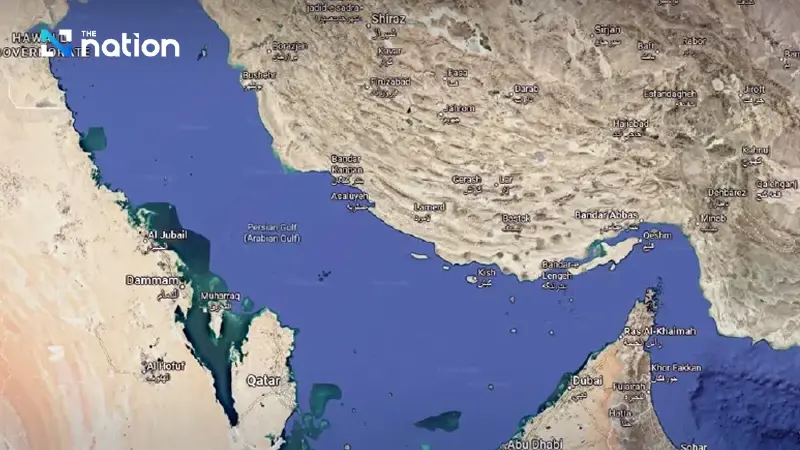


Al Jazeera, citing Iran’s Mehr News, reports Tehran has confirmed a two-week ceasefire arrangement brokered by Pakistan, with Iran’s foreign minister saying safe passage through the Strait of Hormuz would be possible for two weeks if attacks stop.
Al Jazeera reported on Tuesday, citing Iran’s Mehr News Agency, that Iran’s Supreme National Security Council has confirmed a two-week ceasefire agreement negotiated by Pakistan.
According to the report, the statement said the arrangement was approved by Iran’s new supreme leader, Ayatollah Mojtaba Khamenei, describing the deal as an “Iranian victory”, and adding that talks towards a permanent agreement would be held in Islamabad.

Araghchi statement: ‘If attacks against Iran are halted…’
In a statement shared by Iranian Foreign Minister Seyed Abbas Araghchi—posted as a message “on behalf of the Supreme National Security Council of the Islamic Republic of Iran” and dated Tehran, April 7, 2026—Araghchi said Iran would halt its defensive operations if attacks stopped.
He also said that for two weeks, safe passage through the Strait of Hormuz would be possible “via coordination with Iran’s Armed Forces” and subject to “technical limitations”, according to the text shown in the post.
The statement also expressed appreciation for Pakistan’s Prime Minister Sharif and Field Marshal Munir for efforts to end the war, and referenced US interest in negotiations based on a US “15-point proposal”, alongside mention of the US president accepting the general framework of Iran’s proposal as a basis for talks.

Iran’s 10-point proposal (as reported)
The report outlined a 10-point proposal presented as conditions for ending the war with the United States:
- Guarantees that Iran will not be attacked again
- A permanent end to the war, not just a temporary ceasefire
- An end to Israeli attacks in Lebanon
- Lifting all US sanctions on Iran
- An end to regional fighting targeting Iran’s allied groups
- If achieved, Iran would reopen the Strait of Hormuz
- Iran would charge a US$2 million “transit fee” per ship through Hormuz
- Iran would share the fee revenue with Oman
- Iran would set rules to ensure safe navigation through Hormuz
- Iran would use the transit revenue for national reconstruction instead of seeking war compensation
Pakistani Prime Minister Shehbaz Sharif welcomed the ceasefire announcement and invited the leaders of the United States and Iran to visit Pakistan for further talks aimed at “ending all disputes”.
“I warmly welcome this wise move and express my deepest appreciation to the leaders of both countries,” Sharif said in a statement posted on X.
Sharif invited delegations from both Iran and the United States to hold further negotiations in Islamabad on Friday, April 10, “to end all disputes”.
“We sincerely hope that the ‘Islamabad talks’ will succeed in achieving lasting peace, and we hope to share more good news in the coming days!” he said.
Pakistan has positioned itself as a mediator in the conflict, drawing on its close ties with both Tehran and Washington. The country shares a long border with Iran, has cultural and religious links, and is home to the largest Shia Muslim population outside Iran.
Sharif said the ceasefire agreement reached between the United States and Iran also covers Lebanon. He said he had presented the plan to US President Donald Trump.
“With the utmost humility, I am pleased to announce that the Islamic Republic of Iran and the United States of America, together with their allies on both sides, have agreed to an immediate ceasefire everywhere, including in Lebanon and elsewhere, effective immediately,” Sharif said in his statement.
