
Behind high-stakes US-Iran talks in Islamabad as world watches


Trump lashed out at Iran over the Strait of Hormuz deal as US-Iran talks in Islamabad drew intense global attention on April 10
Fresh US-Iran talks are set to unfold in Islamabad, thrusting Pakistan into the centre of a high-stakes diplomatic push to stop the Middle East crisis from flaring up again just days after a fragile ceasefire framework began to take shape.
The negotiations are being watched closely by governments, markets and the energy trade, with attention fixed on two key questions: whether the truce can hold and whether the Strait of Hormuz can stay open to global oil flows. Reuters reported that Iran had in principle agreed to allow only a limited number of vessels through the chokepoint, highlighting how precarious the situation still is.
Donald Trump sharpened the pressure on Thursday by accusing Tehran of failing to honour its side of the understanding over Hormuz. In remarks carried by multiple outlets, the US president said Iran was handling the issue badly and suggested the arrangement over oil transit was not what had been agreed with Washington.

Signs are also emerging of a more structured diplomatic process. Reports say the Iranian delegation has already arrived in Islamabad ahead of weekend discussions, while the US side is expected to be represented by Vice President JD Vance. One report said Iran’s team could include senior figures such as Parliament Speaker Mohammad-Bagher Ghalibaf and Foreign Minister Abbas Araghchi.
Pakistan’s role has expanded noticeably in recent days. Islamabad had put forward a framework aimed at ending hostilities, beginning with an immediate ceasefire and followed by a broader settlement process, helping turn the Pakistani capital into a venue for direct contact between the two sides.
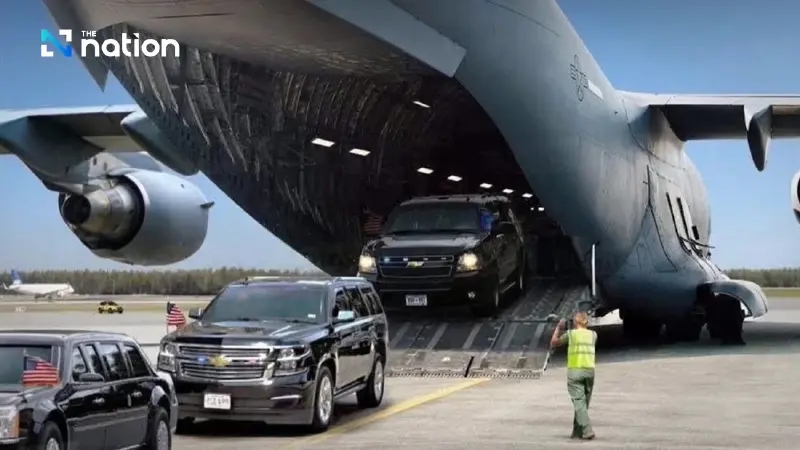
Reports surrounding the Islamabad talks have also focused on the extraordinary security wrapped around the US delegation. As Vice President JD Vance prepared to travel to Pakistan for negotiations with Iran, advance teams were said to have flown in dozens of vehicles aboard a C-17 transport aircraft to support the motorcade, including heavily armoured Chevrolet Suburbans, specialist ambulances, support trucks, ECM vehicles designed to counter explosive threats, and additional SUVs and vans for advisers and staff.


Separate reports also claimed Pakistani fighter jets were seen over Bandar Abbas as part of security preparations linked to the Iranian delegation’s journey to Islamabad. Some accounts went further, saying the Pakistani Air Force had set up an aerial shield backed by fighter aircraft and AWACS over parts of Iran and the Gulf to protect the delegation.

For now, Islamabad is hosting one of the most delicate diplomatic efforts in the region since the conflict escalated. But with Trump still publicly attacking Tehran and the Strait of Hormuz only partly back in operation, the talks are being followed with more tension than optimism.
