
Hormuz crisis strands hundreds of ships, stokes global energy fears
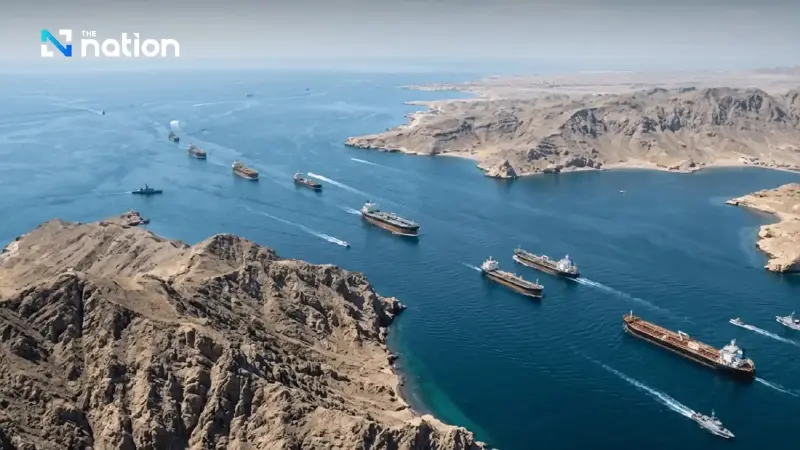


US enforcement against Iran-linked shipping is deepening disruption around Hormuz, with hundreds of vessels stranded and fresh risks to energy and trade
The worsening crisis around the Strait of Hormuz is no longer just a regional security flashpoint. It is rapidly turning into a wider threat to global trade and energy stability, as ships remain stranded at sea, oil markets stay on edge and fears grow that military escalation could trigger broader economic disruption.
Reuters reported that on April 13, the US military began enforcing a blockade on vessels departing Iranian ports, after US President Donald Trump declared that Washington would block not only Iranian ships but also any vessel willing to pay Iran transit fees. He also warned that any Iranian attack craft approaching the blockade line would be destroyed.
The US Central Command said the blockade would be applied impartially to ships of all nationalities entering or leaving Iranian ports in the Persian Gulf and the Gulf of Oman. At the same time, it stressed that vessels travelling to or from non-Iranian ports would not be obstructed, signalling that the operation was aimed specifically at cutting off Iran-linked maritime traffic rather than shutting down all navigation through the waterway.

The move followed the collapse of weekend talks in Islamabad, which had raised hopes of easing the confrontation. Since the war began on February 28, Iran has effectively restricted the Strait of Hormuz to its own vessels, saying foreign ships could pass only under Iranian supervision and only after paying fees. That has already created one of the sharpest disruptions in recent memory in a maritime corridor that handles a major share of the world’s oil and gas trade.
Iran responded with fresh threats. Brigadier General Reza Talaei-Nik, spokesperson for Iran’s Defence Ministry, warned that any attempt by foreign forces to take control of the Strait of Hormuz would only deepen the crisis and make global energy insecurity even worse. Iranian military officials also said the US move amounted to a violation of maritime rights, while warning that if Iranian ports came under threat, no port in the Persian Gulf or the Gulf of Oman would remain safe.
The Islamic Revolutionary Guard Corps added to the pressure, saying any warship approaching the Strait of Hormuz would be regarded as violating the ceasefire agreement. The rhetoric has sharpened fears that the waterway could become the focal point of a much wider confrontation, with implications far beyond the Gulf.
The sense of alarm has grown further because of the shipping backlog building up around the strait. BBC reported that the first vessel had already passed through Hormuz after the US announced its military blockade. The ship, the container vessel Paya Lebar, was sailing from India to Dubai in the United Arab Emirates.
But that isolated movement does little to ease wider concerns. Richard Meade, editor-in-chief of maritime data firm Lloyd’s List Intelligence, said nearly 800 ships had already been stuck around the Strait of Hormuz for several weeks, with most of them fully loaded. He said the priority should now be to move those vessels out first, underscoring just how severe the disruption has become.
