
US-Iran talks back on table as blockade drives tensions higher
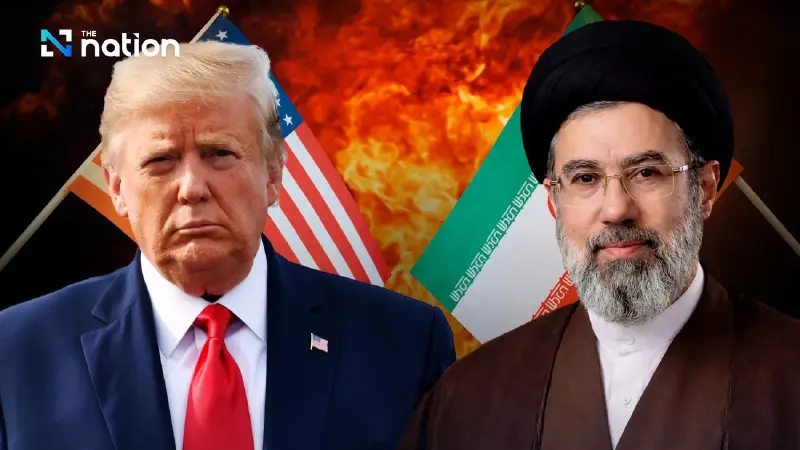


US and Iran may resume talks in Islamabad after failed weekend negotiations, as port blockade and Hormuz tensions keep oil markets on edge
The United States and Iran may return to negotiations as early as this week after talks over the weekend failed to produce any breakthrough, with tensions rising further following Washington’s move to blockade Iranian ports.
Sources familiar with the matter said on Tuesday that negotiating teams from both sides could travel back to Islamabad to resume discussions aimed at ending the conflict.
Although the US blockade has drawn a strong response from Tehran, signs that diplomatic efforts may continue have helped calm oil markets, with benchmark crude prices falling below US$100 on Tuesday.
The latest round of high-level talks, the most significant between the long-time adversaries since Iran’s 1979 Islamic Revolution, ended in Pakistan’s capital over the weekend without progress, raising doubts over the durability of the two-week ceasefire, which now has about one week remaining.
However, sources involved in the negotiations said both sides could return as soon as the end of this week, with proposals already made for Washington and Tehran to send delegations back.
A senior Iranian source said no exact date had been set, but the delegation was available to return between Friday and Sunday.
US President Donald Trump said on Monday that Iran had reached out and was seeking a deal. He added that he would not approve any agreement that allows Tehran to possess nuclear weapons.
Since the United States and Israel launched military operations on February 28, Iran has effectively closed the Strait of Hormuz to all vessels except its own, saying ships would only be allowed to pass under Iranian control and subject to fees.
The move has had far-reaching consequences, as nearly one-fifth of the world’s oil and gas supply previously flowed through the narrow waterway.
In response, the US military began blocking maritime traffic in and out of Iranian ports on Monday. Tehran has warned it could attack warships passing through the strait and retaliate by targeting ports in neighbouring Gulf countries.
The blockade has further clouded the outlook for global energy security and the supply of goods that depend heavily on petroleum.
US allies in NATO, including the United Kingdom and France, said they would not take part in the blockade, stressing the need to reopen shipping routes.
Reflecting the growing disruption, the International Energy Agency on Tuesday sharply cut its forecasts for global oil supply and demand growth, saying both are now expected to fall from 2025 levels due to the impact of the Middle East conflict on oil flows and the global economy.
On the diplomatic front, US Vice President JD Vance, who led Washington’s delegation in talks with Iranian parliament speaker Mohammad Bagher Ghalibaf, told Fox News on Monday that there had been “significant progress” in communicating areas where the United States could compromise and where it would remain firm.
He said Trump remained insistent that any enriched nuclear material must be removed from Iran and that a mechanism must be established to verify that Tehran is not developing nuclear weapons.
Vance added that Iran had moved closer to the US position, saying this was a positive sign, although not yet sufficient to reach a deal.
Despite the tensions, the ceasefire has largely held through its first week, even as both sides continued to exchange strong rhetoric.
An Iranian military spokesman described the US restrictions on international shipping as “piracy” and warned that if Iranian ports were threatened, no ports in the Persian Gulf or the Gulf of Oman would be safe.
The Islamic Revolutionary Guard Corps also warned that any warships approaching the strait would be seen as violating the ceasefire.
Trump said Iran’s navy had been “completely destroyed” during the conflict, adding that only a small number of fast attack vessels remained.
In a social media post, he warned that any vessel approaching the US blockade line would be destroyed immediately.
US Central Command said the blockade would apply to vessels entering or leaving Iranian ports in the Persian Gulf and Gulf of Oman, but would not interfere with neutral transit through the Strait of Hormuz to or from non-Iranian destinations, according to a notice to mariners.
Shipping data showed that three tankers linked to Iran were seen passing through the Strait of Hormuz on the first day of the US blockade on Tuesday, as they were not travelling to or from Iranian ports and were therefore not affected by the restrictions.
