
Competition intensifies in Japan's electric vehicle market
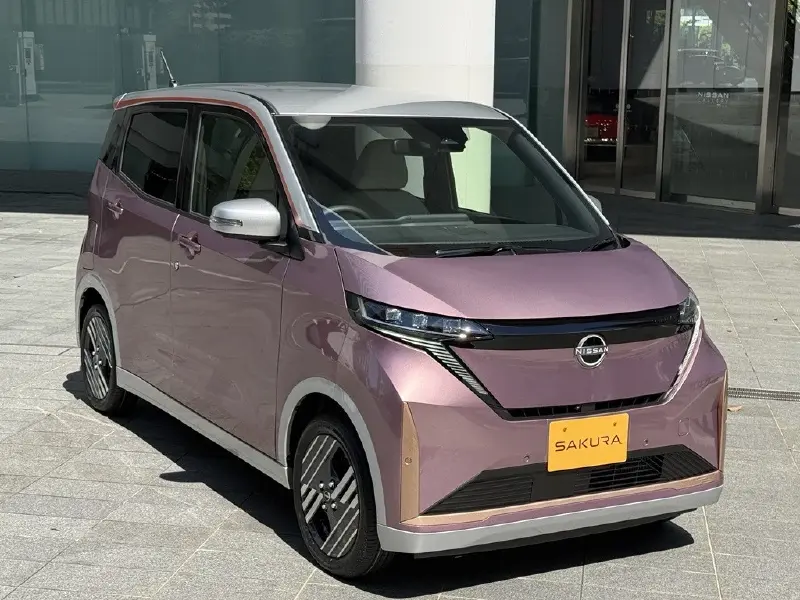


Nissan, Honda and BYD are rolling out cheaper small EVs in Japan, raising hopes of fresh demand as high petrol prices reshape buyer interest.
- Chinese automaker BYD is entering Japan's electric vehicle market this summer with the Racco, a model designed specifically for Japanese consumers and expected to be competitively priced.
- Nissan is intensifying competition by releasing a lower-cost version of its Sakura electric minivehicle to attract a wider range of customers.
- Honda is also expanding its offerings, planning to release the new Super-One compact EV, adding to its existing electric minivehicle lineup.
Competition is intensifying in the Japanese market for electric minivehicles and compact electric vehicles, with Chinese automaker BYD Co. set to join the race this summer.
Some industry officials expect that greater competition will help revitalise the domestic EV market and increase sales through the expansion of product lineups and price cuts.
Nissan Motor Co. plans to release this summer a low-cost model of its Sakura electric minivehicle, which first hit the market in 2022.
The new version is 150,000 yen cheaper than the original model and can be bought at a cost of 1,868,600 yen with the use of state subsidies of 580,000 yen.
While high prices are a disadvantage of EVs, Nissan hopes the lower-priced model will attract a wide spectrum of customers. "We hope it will be chosen by people who are considering buying (gasoline-powered) minivehicles," a company official said.

Honda Motor Co. launched the N-One e: electric minivehicle in autumn last year.
Late next month, the company plans to release the Super-One compact EV, which is based on the N-One e: model. The new model, one of the lightest EVs in Japan, is designed to offer smooth driving, according to Honda.
BYD is slated to launch the Racco electric minivehicle in Japan this summer.

It is the first BYD model designed exclusively for the Japanese market. The Racco is taller than standard minivehicles to allow for a larger interior space and has a shape popular in Japan. It is expected to have a price tag of around 2 million yen, lower than the prices of conventional EVs from Japanese automakers.
EV sales are stagnating in the United States. Meanwhile, there is room for a rise in demand in Japan, where EVs have not spread yet.
"An increasing number of people are expected to shift to EVs" amid rising gasoline prices reflecting the ongoing crisis in the Middle East, a senior official of an automaker said.

[Copyright The Jiji Press, Ltd.]
