
Singapore PM Vows to Protect Workers Amid AI Surge and Global Volatility
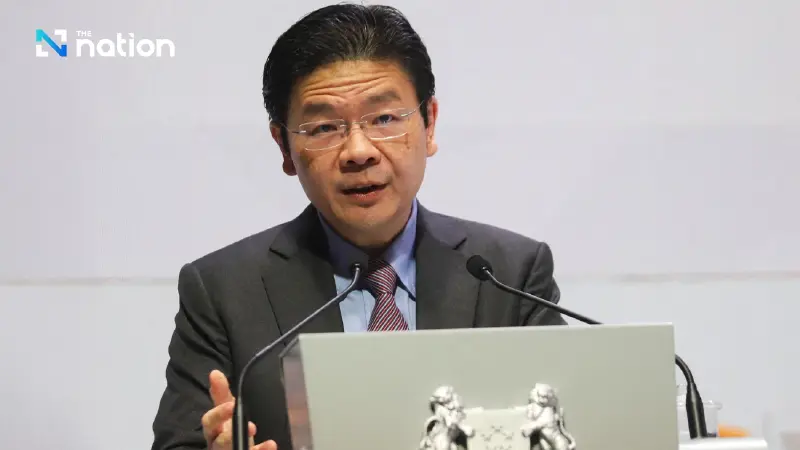


As Middle East tensions and rapid automation threaten the labour market, Lawrence Wong pledges robust social safety nets and a focus on reskilling
- Prime Minister Lawrence Wong has pledged to protect every worker, acknowledging that not all jobs can be saved amidst rapid AI integration and global instability.
- The government will strengthen social safety nets and implement large-scale reskilling programs through a collaborative model involving the state, employers, and unions.
- Specific support measures include targeted wage subsidies, enhanced assistance for mid-career workers, and tighter restrictions on foreign labor to aid local professionals.
- The vow is a response to a "perfect storm" of challenges, including geopolitical tensions in the Middle East that threaten global supply chains and market confidence.
As Middle East tensions and rapid automation threaten the labour market, Lawrence Wong pledges robust social safety nets and a focus on reskilling.
Prime Minister Lawrence Wong has issued a sobering call for national resilience, warning that Singapore must navigate a "perfect storm" of rapid technological disruption and heightening geopolitical instability.
Delivering his May Day address on 1 May, Wong struck a balance between economic pragmatism and social compassion.
He cautioned that the breakneck speed of Artificial Intelligence (AI) integration would render certain roles obsolete faster than in previous industrial shifts.
However, he offered a firm commitment to the nation’s workforce, stating: "We may not be able to protect every job, but we will protect every worker."

A New Social Compact
To counter the threat of displacement, the Singaporean government is pivoting its fiscal strategy towards "tripartism"—a unique collaborative model between the state, employers, and trade unions.
This year’s budget prioritises the strengthening of social safety nets and the radical scaling of upskilling programmes to transition workers into higher-quality emerging roles.
Specific measures include:
Targeted Wage Subsidies: To alleviate the rising cost of living for vulnerable households.
Foreign Labour Restrictions: Tightening minimum salary thresholds to ensure a level playing field for local professionals.
Mid-Career Support: Enhanced assistance for older workers, who are deemed most at risk from global competition and automation.

Geopolitical Headwinds
The Prime Minister also addressed the deepening crisis in the Middle East, specifically the tensions surrounding Iran.
He warned that even if vital maritime routes like the Strait of Hormuz remain open, the "scars" on global supply chains—including infrastructure damage and shaken market confidence—will take months to heal.
"Some countries may face a recession, and Singapore will be directly affected," Wong remarked.
With the nation's GDP contracting by 0.3% in the first quarter of 2026, the Monetary Authority of Singapore has already moved to tighten monetary policy—the first in Asia to do so—to stave off energy-driven inflation.
As a small, open economy, Singapore remains acutely sensitive to energy price shocks. Wong confirmed that the government is currently in high-level talks with international partners to diversify energy supply chains and maintain the nation's competitive edge in an increasingly fractured global market.
