
Thailand to propose scrapping MOU 44 in maritime dispute shift
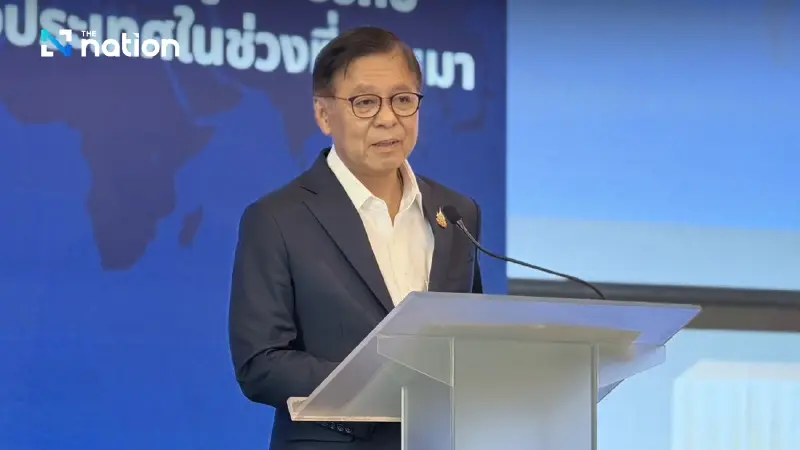


Thailand plans to end MOU 44 after 20 years, shifting to UNCLOS while pushing confidence-building steps with Cambodia
Thailand is preparing to propose the cancellation of the long-standing MOU 44 framework governing maritime boundary negotiations, in a move aimed at resetting talks with Cambodia after more than two decades of limited progress.
Deputy Prime Minister and Foreign Minister Sihasak Phuangketkeow is expected to submit the proposal to the Cabinet on May 5, seeking approval to end the 2001 memorandum of understanding and shift towards negotiations under the United Nations Convention on the Law of the Sea (UNCLOS).

The move is intended to unlock a prolonged impasse over overlapping maritime claims, while laying the groundwork for renewed cooperation, particularly in the energy sector.
Sihasak outlined the plan during a briefing to 84 diplomats from 58 countries and eight international organisations, where he also reviewed Thailand’s recent foreign policy engagements.
He said Thailand’s approach was to adopt a forward-looking stance, especially on border issues requiring close coordination with neighbouring countries. This includes cooperation with Myanmar on transnational crime, online scams, drug trafficking, and environmental challenges such as water and air pollution.

Thailand is working within a trilateral framework with Myanmar and Laos to address these cross-border issues, including capacity-building support.
Border trade also remains a priority, particularly at the Mae Sot–Myawaddy crossing, where Myanmar authorities are expected to reopen the checkpoint soon after regaining control of the area.
Thailand also expressed hope that Myanmar’s recent election would mark a transition towards peace, reconciliation and dialogue, despite mixed international recognition.
Sihasak said both sides had agreed on four key areas of cooperation: welcoming the release of detainees including a former president, supporting Myanmar’s commitment to peace talks, expanding humanitarian access, and monitoring the situation of Aung San Suu Kyi, who has recently been moved from prison to house detention.
On energy security, Thailand is considering expanding gas exploration in Myanmar, including two new wells, to support domestic electricity generation.
The foreign minister also highlighted discussions with Chinese Foreign Minister Wang Yi during his recent visit to Thailand, marking the 50th anniversary of diplomatic ties between the two countries. Both sides reaffirmed their comprehensive strategic partnership and agreed to develop a five-year action plan focusing on digital economy, green growth, innovation and human resource development.

Cooperation on tackling transnational crime and advancing artificial intelligence governance was also discussed, with an international AI conference scheduled for July 21–22, which Thailand will attend.
Thailand is also preparing to host a Mekong-Lancang Cooperation meeting this year after Cambodia was unable to do so previously. Meanwhile, Bangkok plans to attend the APEC leaders’ meeting in China in November 2026.
China has offered to facilitate renewed dialogue between Thailand and Cambodia, providing a neutral venue without intervening in the substance of negotiations, a position aligned with Thailand’s stance.
Sihasak said the proposed cancellation of MOU 44 does not mean an end to negotiations, but rather reflects the reality that talks under the framework have made little progress over the past 20 years.
Thailand hopes Cambodia will understand and accept the shift, allowing both sides to begin a new phase of negotiations under UNCLOS.
Cambodia has meanwhile called for an early meeting of the joint boundary commission. Thailand said it needs to prepare internally before proceeding, as conditions have changed since the last round of talks.
While a ceasefire is currently in place in disputed areas, Sihasak stressed the importance of maintaining stability and avoiding inflammatory rhetoric, noting that accusations against Thailand continue to surface in some international forums.
He said both sides must focus on building trust and improving the atmosphere for dialogue.
Proposed confidence-building measures include strengthening border security cooperation, tackling online scams, enhancing military exchanges, and establishing early warning systems to prevent escalation.
Sihasak said he may meet his Cambodian counterpart Prak Sokhonn at an upcoming Asean meeting in the Philippines later in May to present these proposals.
The Philippines has also indicated a willingness to host trilateral talks. Thailand said it was open to such discussions, provided they remain constructive and forward-looking, though the outcome will depend on Cambodia’s response.
