
US says rare earths pact with China remains in force
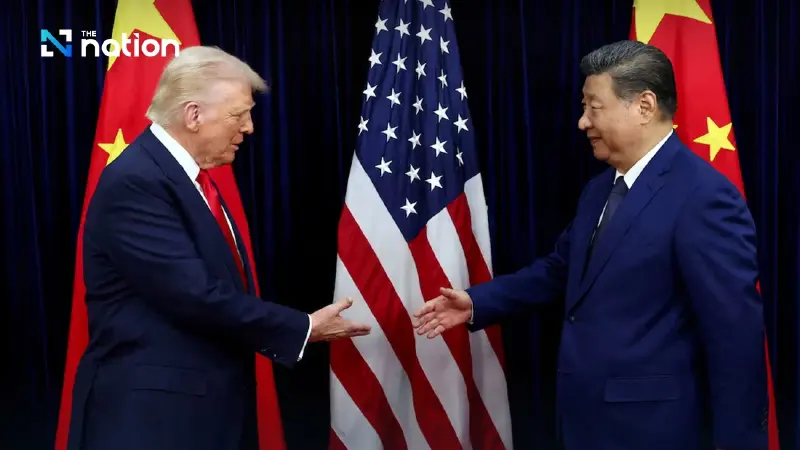


Washington says its rare earths agreement with Beijing remains active ahead of high-stakes Trump-Xi talks in Beijing this week
A senior US official said on Sunday that the rare earths agreement between Washington and Beijing remains in force, easing concerns over another possible escalation in the ongoing trade and technology dispute between the world’s two largest economies.
The official said discussions over the future of the agreement were continuing and indicated that any extension would be announced “at the appropriate time”. However, it remained unclear whether the current arrangement would be formally prolonged.
The remarks came ahead of a closely watched summit between US President Donald Trump and Chinese President Xi Jinping in Beijing on May 14-15, where rare earths, trade disputes, Taiwan and the conflict involving Iran are expected to dominate discussions.
Rare earth minerals have become one of the most sensitive pressure points in US-China relations because they are essential for manufacturing semiconductors, electric vehicles, aerospace systems and military equipment. China remains the world’s dominant producer and processor of the materials, giving Beijing significant leverage in global supply chains.

The current arrangement traces back to a trade truce reached last year after China imposed tighter export controls on several rare earth materials during the height of the trade conflict with Washington. The measures triggered shortages and sharp price increases worldwide before both sides moved to stabilise supplies through temporary agreements.
Despite the existing deal, tensions over critical minerals remain high. The United States and European allies have accelerated efforts to reduce dependence on Chinese supply chains, while Beijing has continued expanding export controls and other economic countermeasures linked to strategic technologies and industrial materials.
Analysts said the issue is likely to remain central to future negotiations as both governments increasingly view access to critical minerals as a national security concern as much as an economic one.

