
G7 finance chiefs face tough talks as trade strains and supply risks mount
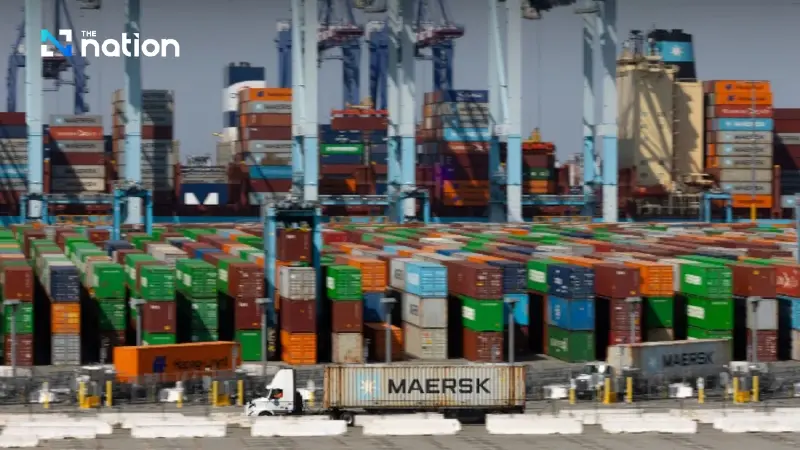


G7 finance ministers meet in Paris to address global imbalances, Middle East fallout and critical mineral supply risks.
G7 finance ministers are set to meet in Paris on Monday for two days of talks aimed at finding common ground on global economic tensions, trade imbalances and critical raw material supplies, even as geopolitical divisions threaten to strain the group’s unity.
The meeting comes after a summit in Beijing between US President Donald Trump and Chinese President Xi Jinping, which produced few concrete economic breakthroughs despite a show of diplomatic cordiality. Tensions over Taiwan and trade continued to simmer in the background.
At the centre of the Paris agenda will be what French Finance Minister Roland Lescure described as deep-rooted global economic imbalances that are fuelling trade friction and could trigger a disorderly adjustment in financial markets.
“The way the global economy has been developing for the past 10 years or so is clearly unsustainable,” Lescure said, pointing to a pattern in which China consumes too little, the United States consumes too much and Europe invests too little.
G7 seeks update after Trump-Xi summit
Lescure, who will host the talks, said the G7 meeting would provide a chance for frank discussion among allies at a time when disagreements with Washington are widening.
“These discussions are not easy. I’m not going to tell you that we agree on everything, including, of course, first and foremost with our American friends,” he told journalists ahead of the meeting.
Finance ministers are expected to seek an update on US-China relations following the Trump-Xi summit, as well as Washington’s latest efforts to reopen the Strait of Hormuz. The talks also come after the Trump administration allowed a sanctions waiver on Russian seaborne oil to lapse on Saturday.
French officials involved in preparations said even getting each side to accept some responsibility for trade and capital-flow imbalances would count as progress, although they expect reluctance from the US side.
“I’d be shocked if they’re going to sign on to the idea this is the US’s fault in some way,” said Philip Luck, director of the economics programme at the Center for Strategic and International Studies in Washington.
Middle East conflict and bond-market volatility in focus
Ministers are also due to discuss the economic fallout from the Middle East conflict and volatility in global bond markets, an issue of particular concern to Japan.
Britain’s finance ministry said Chancellor Rachel Reeves would press for coordinated action to limit inflation and supply-chain pressures, while also calling for freedom of navigation through the Strait of Hormuz to be restored.
Reeves is also expected to restate the British government’s aim of reducing trade barriers between the UK and the European Union.
The divisions within the G7 complicate efforts to project unity ahead of the group’s leaders’ summit, scheduled for June 15-17 in the French spa town of Evian.
Critical minerals and rare earths top supply agenda
A second major priority will be critical minerals and rare earths, as G7 governments seek to coordinate efforts to reduce reliance on China, which dominates supply chains essential for electric vehicles, renewable energy and defence systems.
Lescure said the G7 would push for stronger coordination to monitor markets, anticipate supply disruptions and develop alternative sources, including through joint projects across allied economies.
The aim, he said, is to ensure that “no country can ever again have a monopoly” over such materials.
G7 countries are trying to agree on a common set of tools to stabilise markets and encourage domestic investment. Possible measures include price floors for producers, pooled purchases and tariffs.
However, Luck, who worked on the issue under the Biden administration, said the initiative remained a long-term project and was unlikely to produce significant results at the finance ministers’ meeting.
“We are in the very early innings of figuring this out,” he said. “I don’t think there’s agreement on a strategy even within the US government, let alone being able to articulate that in a convincing way to our partners in order to get them to sign on.”
Source: Reuters
