
Chinese tankers break through Hormuz blockade as Iran talks edge forward
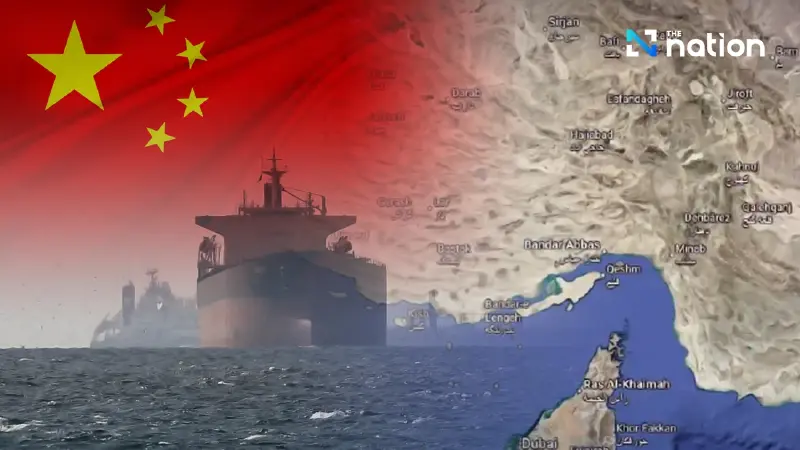


Two Chinese supertankers carrying about 4 million barrels of oil exit the Strait of Hormuz as US-Iran deal hopes lift market sentiment
Two Chinese supertankers have successfully exited the Gulf through the Strait of Hormuz, in a rare movement through one of the world’s most critical oil routes as the waterway remains caught between Iranian and US blockades.
The vessels, carrying around 4 million barrels of oil, passed through the strait on Wednesday, marking the latest sign that Iran may be willing to ease restrictions for countries it regards as friendly. Reuters identified the tankers as Yuan Gui Yang and Ocean Lily.
Iran has largely closed the Strait of Hormuz to most shipping since the US-Israeli military campaign began in February, while the United States later imposed its own blockade on Iranian ports. Before the war, about 140 ships normally crossed the strait each day, but shipping monitor Lloyd’s List said only 54 vessels passed through last week, around double the previous week but still far below normal levels.
The Chinese tankers’ exit has raised cautious hopes that the energy supply shock may be easing, especially after both US President Donald Trump and Vice President JD Vance suggested that talks with Iran were making progress.
Trump said on Tuesday that the war could end “very quickly”, although he also warned that he had come close to restarting the military campaign.
“I was an hour away from making the decision to go today,” Trump told reporters at the White House.
Vance also struck a more optimistic tone, saying Washington and Tehran had made progress in talks.
“We’re in a pretty good spot here,” he told a White House briefing.
Still, the risk of renewed conflict remains high. Iran warned on Wednesday that any fresh US attack could expand the war beyond the Middle East. The Revolutionary Guards said in a statement carried by state media: “If aggression against Iran is repeated, the promised regional war will extend beyond the region this time.”
Iran’s latest proposal reportedly includes demands for control of the Strait of Hormuz, compensation for war damage, the lifting of sanctions, the release of frozen assets and the withdrawal of US forces from the region. Reuters reported that the public outline of the offer appeared to repeat terms previously rejected by Trump.
Market sentiment improved after the tanker movement and the more positive signals from Washington. Benchmark Brent crude futures eased by about 1.5% on Wednesday morning to just below US$110 a barrel, although prices remained well above the previous week’s level.
Toshitaka Tazawa, an analyst at Fujitomi Securities, said investors were watching closely to see whether Washington and Tehran could reach common ground.
“Investors are keen to gauge whether Washington and Tehran can actually find common ground and reach a peace agreement, with the US stance shifting daily,” he said.
