
Wuxi Declaration: Global Buddhist Leaders Unite in China to Tackle World Crises through Dhamma
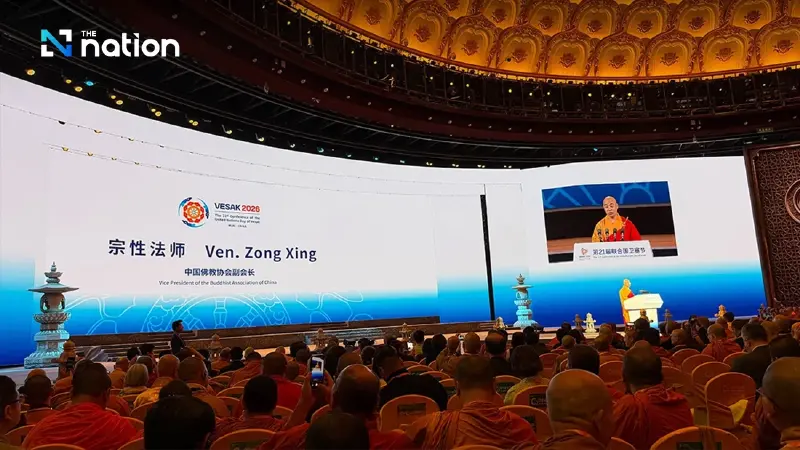


Over 1,000 Buddhist delegates from 67 nations adopt the Wuxi Declaration, pledging to use compassion and eco-harmony to foster global peace
- Over 1,000 Buddhist leaders from 67 nations met in Wuxi, China, to adopt a declaration aimed at using Buddhist principles to solve global crises.
- The declaration's framework focuses on four pillars: fostering peace through compassion, promoting altruism to reduce inequality, achieving eco-harmony to fight climate change, and building a shared future through international cooperation.
- Key strategies include urging dialogue over confrontation in diplomacy, improving education and healthcare for vulnerable communities, and promoting low-carbon lifestyles based on the concept of interconnectedness.
- The manifesto concludes with an appeal to world leaders to collaborate in transforming conflict, poverty, and ecological degradation into a stable world guided by compassion.
Over 1,000 Buddhist delegates from 67 nations adopt the Wuxi Declaration, pledging to use compassion and eco-harmony to foster global peace.
More than 1,000 Buddhist leaders and representatives from 67 countries have united in Jiangsu province to launch a landmark manifesto aimed at tackling the world’s most pressing crises through spiritual diplomacy.
The 21st Global Visakha Bucha Day Conference concluded with the official proclamation of the Wuxi Declaration.
The framework pledges to deploy core Buddhist principles—specifically compassion, peace, and equality—as practical tools to resolve modern geopolitical conflicts, natural disasters, and widening social inequalities.
Against a backdrop of rising international tensions, delegates at the summit finalised a joint agreement built upon four strategic pillars:
1. Fortifying peace through compassion
The declaration calls on the global community to reject geopolitical friction, urging nations to choose "dialogue over confrontation" to defuse cultural and international disputes.
Delegates emphasised the practical application of the Four Sublime States of Mind (Brahmavihara)—loving-kindness, compassion, sympathetic joy, and equanimity—as a roadmap for modern diplomacy.

2. Selflessness and altruism
In a bid to address systemic global inequality, the manifesto issues an urgent call to action for the protection of vulnerable communities in impoverished regions.
The text highlights education, healthcare, and equitable technological sharing as the primary vehicles for eradicating hunger and disease.
3. Achieving eco-harmony
Addressing the climate crisis, the declaration champions the Buddhist concept of Pratītyasamutpāda (Dependent Origination), which underscores the profound interconnectedness between humanity and the natural world.
The summit called for a collective shift towards low-carbon lifestyles, aggressive reforestation, and ecosystem protection to safeguard the planet for future generations.
4. Fostering a shared global future
The final pillar outlines a vision for international cooperation rooted in mutual respect. Delegates agreed to utilise Buddhist art and culture as a diplomatic bridge to foster international friendships, while emphasising that all global problem-solving must be conducted under the framework of international law.

A message to global leaders
The conference concluded with a powerful appeal directed not just at the faithful but at secular governments worldwide.
Authors of the declaration urged world leaders to collaborate in transforming conflict, poverty, and ecological degradation into a stable, secure world guided by collective wisdom and compassion.
