
Oil jumps as Iran tensions rattle global supply routes
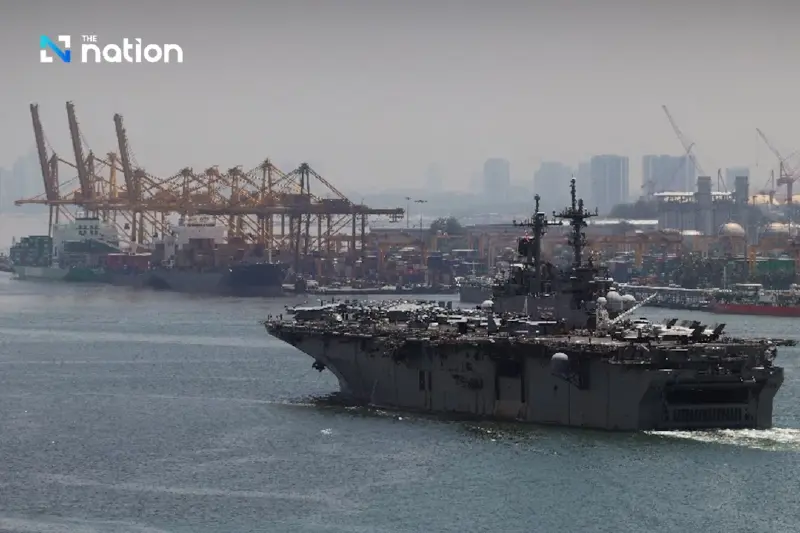


Brent and US crude settle more than 4% higher as US-Iran tensions, Hormuz risks and Lebanon escalation unsettle oil markets
- Oil prices surged, with Brent crude rising over 4% and U.S. crude over 5%, due to escalating geopolitical tensions in the Middle East.
- The price jump was triggered by reports that Iran had halted indirect talks with the U.S. amid intensifying conflict involving Israel and Hezbollah.
- Fears of supply disruption are central to the rally, as Iran and its allies have reportedly made plans to block crucial oil shipping routes like the Strait of Hormuz and the Bab el-Mandeb Strait.
Oil prices closed more than 4% higher on Monday, as fresh tensions involving Iran, the United States, Israel and Hezbollah reignited fears of disruption to key global energy routes.
Brent crude futures settled at US$94.98 a barrel, gaining US$3.86, or 4.2%. US crude futures finished at US$92.16 a barrel, up US$4.80, or 5.5%.
Both benchmarks had climbed by more than 6% earlier in the session before giving back part of their gains.
The rally followed a report by Iran’s Tasnim news agency that Tehran had stopped indirect message exchanges with Washington. The report also said Iran and its allies were preparing plans to fully block the Strait of Hormuz and potentially disrupt other strategic waterways.
The Strait of Hormuz is one of the world’s most important energy corridors, carrying large volumes of oil and liquefied natural gas. Any threat to shipping through the route can quickly feed into global crude prices.

Tensions have intensified across the region in recent days, with Iran and the United States exchanging strikes. Israel has also ordered its forces to advance further into Lebanon in its conflict with Hezbollah, the Iran-backed militant group.
Oil’s gains were trimmed after US President Donald Trump said he was not aware that talks with Iran had been suspended. He also said he had spoken with Hezbollah through intermediaries and had secured a pledge that the group would not attack Israel.
The sharp rebound came after a difficult month for crude. Brent and US oil futures ended May between 17% and 19% lower, their steepest monthly declines in absolute terms since March 2020, when the Covid-19 pandemic crushed energy demand.
Those losses had been driven partly by expectations that Washington and Tehran were moving closer to an agreement, which had reduced the risk premium in oil markets.
Tasnim reported earlier on Monday that Tehran and the “Resistance Front”, a grouping that includes Iran’s allies in Yemen, Lebanon and Iraq, had set an agenda to close Hormuz and activate other fronts, including the Bab el-Mandeb Strait, in response to Israel and its supporters.
The Bab el-Mandeb, located at the southern end of the Red Sea, is another crucial route for global energy shipments. Saudi Arabia currently moves about 4 million to 6 million barrels of oil per day through the waterway, according to Robert Yawger, executive director at Mizuho.
Analysts warned that the longer the conflict drags on, the greater the risk that commercial oil inventories could tighten and push prices sharply higher.
Shipping executives meeting in Athens also said any peace arrangement would need clear rules before vessels could safely return to normal operations through the Strait of Hormuz.
Beyond geopolitics, traders were also watching signs of weaker demand. Chinese economic data released over the weekend showed factory activity stalling, adding to concerns that the world’s second-largest economy is losing momentum.
Goldman Sachs said weak oil demand in China and Europe posed a significant downside risk to its fourth-quarter forecasts of US$90 a barrel for Brent and US$83 for West Texas Intermediate crude. However, it also noted that Middle East supply disruptions could still drive prices higher.
Saudi Arabia is expected to lower its official crude selling prices to Asia in July for a second straight month, according to a Reuters survey.
Russia, meanwhile, is preparing to increase fuel supplies from Belarus and tighten control over gasoline and diesel exports to meet domestic demand, RBC reported, citing sources familiar with the matter. A two-month ban on gasoline exports is also under discussion.
In the United States, crude inventories were expected to have fallen by about 3.6 million barrels in the week ending May 29, according to a preliminary Reuters poll. Gasoline and distillate inventories were also expected to decline.
Elsewhere, Kazakhstan has restored oil production to 290,000 metric tonnes per day after earlier losses at the Tengiz oilfield, Energy Minister Erlan Akkenzhenov said.
Venezuela’s oil exports also rose slightly in May to 1.25 million barrels per day, marking a third consecutive monthly increase, supported by higher shipments to the United States, India and Europe.
