
Trump nears Iran truce call as Hormuz pressure rises
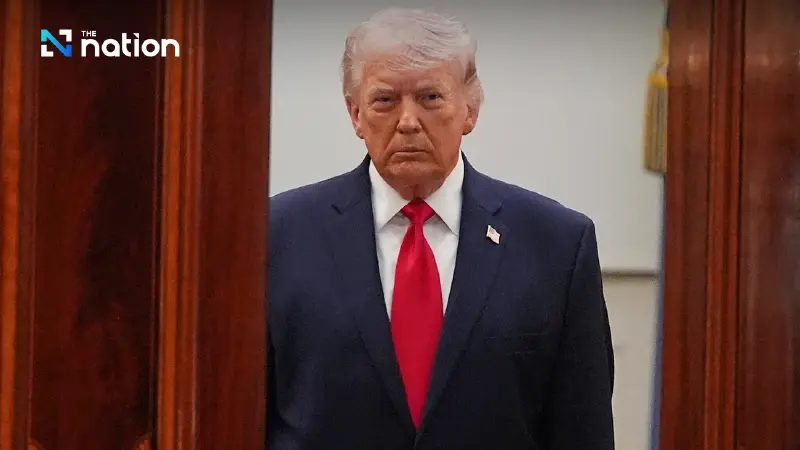


Donald Trump is weighing a 60-day Iran ceasefire extension as Washington demands free passage through the Strait of Hormuz
US President Donald Trump is expected to decide soon whether to approve a draft deal extending the ceasefire with Iran, even as Washington and Tehran remain divided over several of the most sensitive issues behind months of conflict.
Trump said on Friday that he would attend a meeting in the White House Situation Room to review the proposal and make a final decision. The draft would extend by another 60 days a ceasefire that began in early April, giving negotiators on both sides more time to seek a lasting settlement to the war.
The White House later confirmed that the meeting had concluded, but gave no further details. A senior Iranian source told Reuters that the two sides were close to reaching an agreement, although it had not yet received formal approval.

Trump has added several major conditions to the talks, demanding that Iran end its control over, or restrictions on, shipping through the Strait of Hormuz and give up its capacity to develop nuclear weapons. Tehran has yet to accept those demands.
In a social media post, the US leader said Iran must commit to having no nuclear weapons or nuclear bombs. He also said the Strait of Hormuz must be open to commercial vessels travelling freely in both directions, without any fees being charged.
Iran’s Fars news agency, which is close to the government, described Trump’s remarks as an attempt to portray the United States as the winner in the negotiations.
A senior Iranian source insisted that the draft agreement under discussion did not include the nuclear issue.
Esmaeil Baghaei, spokesman for Iran’s Foreign Ministry, said the management of the Strait of Hormuz was a matter to be decided jointly by Iran and Oman.
Fars reported that Iran was prepared to reopen the Strait of Hormuz under its own conditions if the United States lifted its blockade on Iranian vessels. US Treasury Secretary Scott Bessent said that if such measures were lifted, the process would be carried out gradually.
Iranian media also reported that the two sides had reached common ground on releasing US$12 billion in frozen Iranian assets. Trump, however, insisted that no funds would be transferred until further notice. The issue may be linked to Iran’s demands over shipping fees in the Strait of Hormuz, compensation for war damage, or the return of frozen assets.
Trump faces pressure before elections
Trump’s decision comes amid mounting domestic political pressure. He wants the Strait of Hormuz to return to normal operations in order to help lower oil and fuel prices in the United States ahead of the congressional elections in November, as public frustration grows over the rising cost of living and higher energy prices.
At the same time, Trump faces resistance from hardline Republicans who oppose making any offer or concession to Iran.
The war, which began on February 28 and involved the United States and Israel, has caused heavy damage across the Middle East. Thousands of people have been killed, most of them in Iran and Lebanon, while the global economy has been hit by surging energy prices after Iran effectively blocked shipping through the Strait of Hormuz.
Trump also wrote on Truth Social that mines placed in the strait would be cleared, and that vessels stranded in the area could soon be able to return to their home countries.
Rafael Grossi, director-general of the International Atomic Energy Agency (IAEA), told the Financial Times that Kazakhstan was ready to store Iran’s reserves of highly enriched uranium if a peace agreement was reached. Kazakhstan already hosts a uranium fuel bank under IAEA supervision.
Iran’s additional conditions in the peace talks include the lifting of sanctions, the withdrawal of US troops from the region, and an end to Israeli military operations in Lebanon.
