
Japanese panel proposes food tax cuts to fulfil campaign pledge
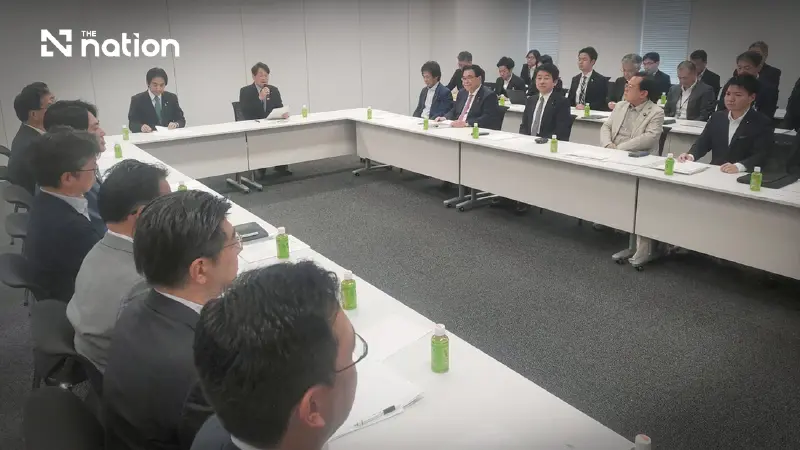


A suprapartisan commission has suggested lowering the consumption tax to one per cent as an interim measure to combat rising inflation and support households.
- A Japanese panel has proposed temporarily cutting the food consumption tax to one per cent for two years to deliver on a campaign promise from Prime Minister Sanae Takaichi.
- The one per cent rate was chosen over a zero per cent tax because it can be implemented much faster (5-6 months), allowing for quicker economic relief.
- Revenue from the one per cent tax, estimated at 600 billion yen annually, would be redistributed as targeted financial aid to low- and middle-income households.
- The plan faces significant challenges, including political opposition and an unfunded annual cost of approximately 5 trillion yen.
A fresh proposal to slash Japan’s food consumption tax to virtually zero per cent has been put forward in an effort to deliver on a key election pledge made by Prime Minister Sanae Takaichi.
Itsunori Onodera, who chairs a suprapartisan working-level panel under the National Council on Social Security, unveiled the strategy, which seeks to temporarily lower the levy to one per cent for two years starting next April.
Onodera, who also leads the ruling Liberal Democratic Party’s Research Commission on the Tax System, explained that the revenue generated from this one per cent rate, amounting to approximately 600 billion yen annually, would be redistributed.
These funds are intended to serve as "fine-tuned" financial support specifically targeted at low- and middle-income households to help them cope with mounting inflationary pressures.
The decision to opt for a one per cent rate rather than an immediate total exemption stems from practical constraints highlighted by the industry ministry.
According to official estimates, reconfiguring cash register software for a zero per cent tax threshold would take between ten months and a year.
In contrast, adapting systems for a one per cent rate can be achieved within five to six months, allowing the government to deploy economic relief far more rapidly.
This interim measure is designed to segue into the Takaichi administration's ultimate objective: a comprehensive refundable tax credit system scheduled for full implementation around autumn 2029.
Under the current timeline, the initial iterations of these income-linked benefits would be rolled out during the autumn of 2027 and 2028.
Despite the administration's timeline, the future of the policy remains highly volatile as the National Council races to secure an interim consensus by the end of June, ahead of a final decision by the Prime Minister.
Strong resistance has emerged from opposition benches; during Wednesday’s session, the Democratic Party for the People urged the government to bypass the tax cuts entirely and focus solely on direct benefits, whilst the Constitutional Democratic Party of Japan challenged the underlying rationale of the one per cent figure.
Compounding the political friction is a massive fiscal question mark.
Crucially, the grand plan carries a staggering annual price tag of around 5 trillion yen to finance both the tax reductions and the corresponding welfare benefits, and ministers have yet to clarify exactly how this multi-trillion-yen shortfall will be funded.

[Copyright The Jiji Press, Ltd.]
