
Thai civic groups condemn government over Min Aung Hlaing visit
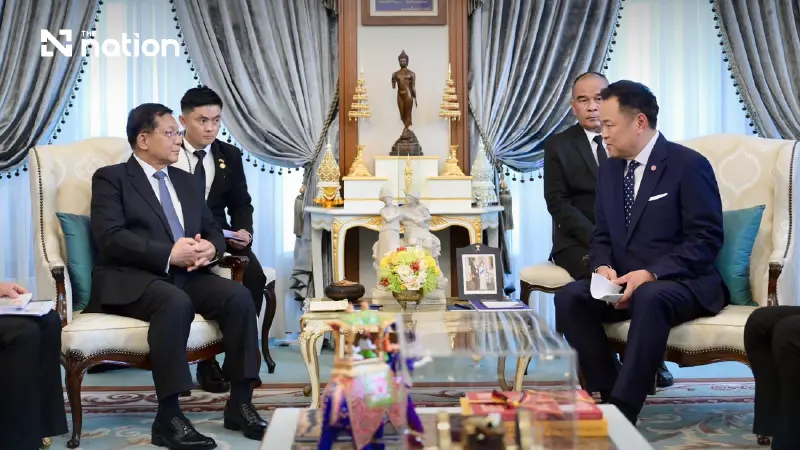


Thai civil-society groups say welcoming Myanmar President Min Aung Hlaing grants legitimacy to military rule and disregards the suffering of Myanmar’s people
- Thai civil society groups accuse the government of granting political legitimacy to Myanmar's military rule, which seized power in a 2021 coup.
- The condemnation is based on widespread human rights violations by Myanmar's military, including arbitrary arrests, torture, and deadly attacks on civilians.
- The organizations argue Min Aung Hlaing is not a legitimate representative, highlighting that he faces international legal action for alleged genocide and crimes against humanity.
- The groups claim the Thai government is abandoning ethical principles and international law by prioritizing relations with the military regime over the human rights and dignity of the Myanmar people.
Thai civil-society organisations have condemned the government’s reception of Myanmar President Min Aung Hlaing, accusing it of granting political legitimacy to military rule and disregarding the suffering of Myanmar’s people.
Min Aung Hlaing arrived in Thailand for a two-day official visit on Thursday (August 6) and was scheduled to meet Prime Minister Anutin Charnvirakul and attend a bilateral business forum. Thailand has defended continued engagement with Myanmar as necessary for addressing security, economic and cross-border issues.
The joint statement was issued by the Thai Allied Committee with Desegregated Burma Foundation, the Thai Action Committee for Democracy in Burma, the Union for Civil Liberty, the Campaign for Popular Democracy, the World Peace Working Group, the Asian Cultural Forum on Development Foundation and other Thai civil-society networks.

The groups said Min Aung Hlaing’s visits to Thailand and other Southeast Asian countries were part of an effort to gain regional acceptance after years of international isolation.
They argued that the Thai government should base its policy on the military’s seizure of power from an elected administration in February 2021 and the subsequent detention and prosecution of Aung San Suu Kyi and other elected leaders.
Groups cite violence and humanitarian suffering
The statement accused Myanmar’s military of arbitrary arrests, torture, forced conscription and attacks that had killed and displaced civilians.
It also cited continued air strikes affecting civilian communities, schools and hospitals, including military operations conducted during the humanitarian emergency following Myanmar’s 2025 earthquake.
The United Nations has described continuing air strikes against civilians and infrastructure, widespread violations of international human-rights and humanitarian law and displacement affecting millions of people.
The groups said the coup had contributed to a multidimensional crisis involving armed conflict, economic decline, poverty, climate-related disasters and migration into neighbouring Thailand.
They rejected the military-backed political transition and election process as an attempt to change the administration’s image without fundamentally altering the military’s control.
Min Aung Hlaing became president in April 2026 following an election process that excluded significant opposition and was widely criticised internationally.

International legal proceedings highlighted
The statement said Min Aung Hlaing should not be treated as the legitimate representative of Myanmar’s people and cited legal action concerning alleged atrocities against the Rohingya.

An Argentine federal judge ordered arrest warrants in February 2025 for Min Aung Hlaing and 24 other people under the principle of universal jurisdiction. The warrants relate to allegations of genocide and crimes against humanity against the Rohingya.
Separately, the International Criminal Court prosecutor applied on November 27, 2024, for an arrest warrant against Min Aung Hlaing for alleged crimes against humanity involving the deportation and persecution of the Rohingya.
The application remains distinct from an arrest warrant issued by the court and requires a decision by ICC judges.
Government accused of abandoning ethical principles
The civil-society organisations said the Thai government’s treatment of Min Aung Hlaing as a national leader reflected what they described as an unacceptable ethical standard.
They argued that the visit could be used to reinforce his standing and prolong military control over Myanmar’s population.
The statement accused the government of failing to give sufficient weight to the principles of constitutional government, the rule of law, international law, human rights and humanitarian responsibility in conducting relations with Myanmar.
It said Thailand’s foreign policy should recognise the interests and dignity of Myanmar’s people rather than focus solely on relations with those controlling state institutions.
