
The deaths and downfall of dictators rocked 2011


Play
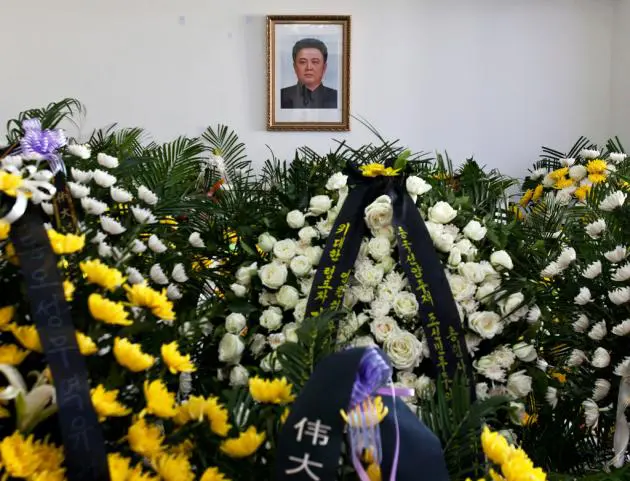
Kim Jong-il, general-secretary of North Korea's ruling Workers' Party of Korea, died toward the end of last month.
This significant news, which came in near the close of the year, was hastily added as an extra to this year’s top 10 international news stories selected by Yomiuri Shimbun readers.
North Korea's state media has announced that Kim Jong-il’s third son, Kim Jong-un, will succeed his father. The country held a state funeral and national memorial service in Pyongyang, proclaiming that the regime remains stable. However, it is uncertain whether the succession of power will proceed smoothly. Also, concerns remain over possible military provocation by North Korea.
In contrast to North Korea, the Middle East and North Africa saw a historic surge toward democratisation in which dictatorships collapsed one after another. News of the “Arab Spring”, in which long-established authoritarian regimes fell in countries like Tunisia and Egypt, came in third in the ranking of international stories.
A parliamentary election was held later in Egypt. Libya, where Muammar Gadhafi’s regime collapsed, has begun to move toward an election for a constituent assembly. The tense situation continues over whether democratisation through elections will take root in these regions.
The second-ranked story – the killing of Osama bin Laden, leader of the al-Qaeda terrorist group and mastermind of the September 11, 2001 attacks on the United States – reminded us of the menace of terrorism. The fight against terrorism still continues around the world.
Meanwhile, natural disasters and the debt crisis overseas have had a grave impact on Japan’s economy, which is in the process of being reconstructed following the Great East Japan Earthquake on March 11. The top international story was the flooding that struck Thailand and seriously damaged Japanese companies.
The massive flooding that spread over a wide area of the country from September dealt a blow to automobile, electric appliance, optical and other Japanese manufacturers that were recovering from damage caused by the March 11 disaster. The flood’s disruption of the global parts supply network was also a great shock.
In response to the aggravation of the euro-zone debt crisis – the No. 5 story – Germany, France and other European countries are trying to contain the crisis, but the financial unrest continues. The crisis, together with the historic appreciation of the yen, is delaying Japan’s economic recovery.
China’s economy has grown to be the second largest in the world, clearly demonstrating its expansion. That story ranked ninth, while China’s high-speed train crash was sixth. The Chinese authorities’ response to the accident blatantly disregarded people’s lives and safety. China showed the world a face unbecoming a major economic power.
How to deal with China, which is intensifying its hardline stance backed by huge economic and military power, will continue to be a critical issue for Japan next year.
Many precious lives were lost in a massive earthquake in New Zealand, including 28 Japanese, and in a powerful earthquake in Turkey. The New Zealand and Turkey earthquakes ranked in fourth and 11th place, respectively.
In eighth place was the world population climbing to 7 billion. This tells us that the world, saddled with various problems, should give the highest priority to efforts to attain sustainable growth.
