
Forget gay marriage; we've more important things to do


Play
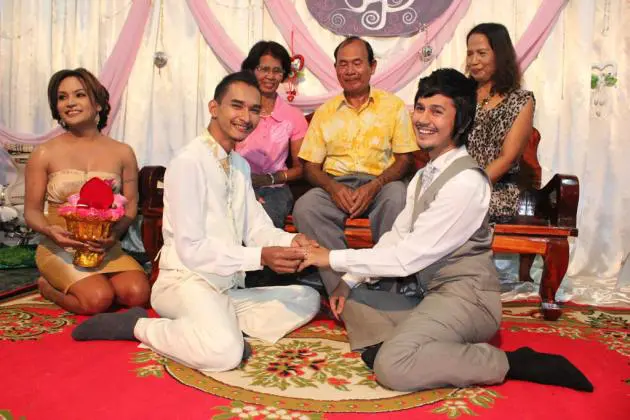
The front-page photo of an all-smiles gay marriage in Trang reminded me of an uneventful, yet heartfelt scene I witnessed at a coffee shop two weeks ago.
There was a male couple, apparently in their thirties, squeezing together at a nearby table, giggling over their smoothies and computer tablet content. That was all, but they must have wanted to freeze the moment. You would want to do it for them.
Those four men must be like most homosexuals I know, people whose “happiness” focuses on the present and, when it comes to the “ever after” part, they just wish for the best and fear the worst. In many cases you are lucky to be able to wish for the best at all. A lot of gay people stay firmly with the present, and their only wish about the future is that it never comes.
I’m not here to argue for or against gay union. The debate is getting nowhere. There are millions of website entries on this sometimes bitter showdown but they revolve around just a few things – a moral slippery slope, human rights, legal rights, the (in)ability to procreate, adopted children’s orientation. You know, that sort of thing. Some say we’ve come a long way already from the time when women couldn’t even vote, and the next step could be a moral tipping point. Others simply say, “Look around you. How can you deny the existence of something that is very much there?”
I’m for the debate to get somewhere. Currently, we are struck. Which is a shame, because while legislative moves or legal campaigns featuring abstract values are vehemently prioritised, everyone keeps the issue of gay rights at arm’s length. What’s more important – a man’s right not to stand up where anybody else does, or another man’s right to put the name of the man he loves in his insurance policy?
Don’t be fooled by the “openness” in Trang. Thailand is as homophobic as they come. Gay movies face big censorship risks; politicians (some of whom call themselves “freedom fighters”) use allegations of “closet activities” to attack their enemies; public figures have to live double lives if they are gay; and until very recently being effeminate was a “mental illness” in military conscription records.
We have seen activists proclaiming a readiness to die for somebody’s right to draw demeaning caricatures, but we have never seen a real push for the same tax privileges as normal couples for gay spouses. “Human rights” have to be political in Thailand. Anything less, and off they go to the backburner. Children’s rights or women’s rights are not as urgent as the “injustice” suffered by politicians who have cheated and got caught.
We willingly give people the right to hate. We always fight for that right; if not for ourselves, it will be for others. We even try to make the right universal. When the right is not given, we consider it the most scandalous thing in the world. Where love is concerned, it appears okay to narrow down the list of who can (legally) love and who cannot.
It’s funny just to think of it. In England, a footballer who’s just above twenty is being pilloried for uttering allegedly racist words against a coloured player. The world of “equality” is falling apart because of what he said in the heat of the moment on the soccer pitch. In a survey released last year, more than half of Britons sampled believe that homosexual marriages should not be allowed, and two thirds think the adoption of children by same-sex couples should not have become legal nine years ago.
The Trang couple does not want to send these messages, obviously. Gays as a political movement must do a lot more than just pose for the cameras and smile those happy smiles. The couple has chosen a brave, yet unprovocative path. But silent as it may seem, we heard from them, their parents and their community loud and clear all the same.
To get their photos on the front pages and disseminated on Facebook, along with positive captions or encouraging comments, is a little victory in itself. A real triumph, however, must showcase a totally different scenario. That triumph is the day of “total silence” – when same-sex marriages are not reported or tweeted about and don’t have to be mentioned on Facebook because they are something so normal.
Of course, my gay friends will likely say, “You are dreaming.” With the way things are, who am I to argue with them?
