
Time is running out for the global economy


Play
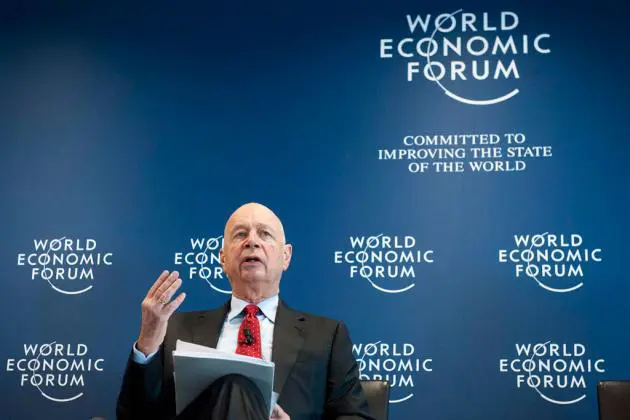
Before leaving New York for the World Economic Forum in Davos, Switzerland, George Soros gave an interview to Newsweek, sending out a stark warning about the coming class war in the United States.
Demonstrations and riots on the streets of American cities, manifested by the leaderless, grassroots Occupy Wall Street movement, are growing. Chronic unemployment is here to stay. The official response to the street demonstrations will be even more draconian.
“Yes, yes, yes,” Soros said, almost gleefully. “It will be an excuse for cracking down and using strong-arm tactics to maintain law and order, which, carried to an extreme, could bring about a repressive political system, a society where individual liberty is much more constrained, which would be a break with the tradition of the United States.”
The passage of the National Defence Authorisation Act last year, signed into law by President Obama, signalled an overture to a “war on terror”, not only abroad but also at home. For this law allows the authorities to hold any citizen in custody without any warrant or trial. Last week, dozens of prominent websites from Wikipedia, Reddit to Craigslist staged a voluntary blackout in protest against two other bills – SOPA and PIPA. The two bills are designed to combat Internet piracy, but would also help the US government fight a “war on terror”.
“What these bills actually do is force website owners to police the Internet; create entry barriers to the only relatively free and open medium of communication; and threaten to break the technological structure of the Internet itself,” said Ron Paul, the Republican presidential hopeful. “They also violate our 1st Amendment right to freedom of speech and our 4th Amendment freedom from unreasonable searches and seizures.”
Last year more than 10,800,000 guns were sold in the United States alone. Obviously, the Americans know what is about to happen as the economy continues its spiral downward. They have to arm themselves to protect their families.
“I am not here to cheer you up. The situation is about as serious and difficult as I’ve experienced in my career,” Soros told Newsweek. “We are facing an extremely difficult time, comparable in many ways to the 1930s, the Great Depression. We are facing now a general retrenchment in the developed world, which threatens to put us into a decade of more stagnation, or worse. The best-case scenario is a deflationary environment. The worst-case scenario is a collapse of the financial system.”
Prime Minister Yingluck Shinawatra left India for Davos yesterday. If she were to attend most of the forums, she would hear the common theme of global business leaders about a gloomy period ahead – sluggish growth, financial crisis, low employment and social turmoil. This entails that global leaders re-think the credit-driven capitalist model of the past six decades.
“I think we have three to four years in the West to improve the economic model that we have, and if we don’t do that soon I think we’ve lost the game,” warned David Rubenstein, managing director of the Carlyle investment fund.
“If we don’t do that soon, when we are here in three to four years ... the game will be over for the type of capitalism that many of us have lived through and thought was the best type of capitalism,” he added.
Professor Raghuram Rajan of the University of Chicago warned that the Western world had failed to live up to its promises to workers.
“Governments made a ton of promises in the 1960s, when growth was very high. We had the welfare state across the industrial world. And then growth started falling off in the 70s, in the 80s,” he said. “Some countries, the UK and the US, tried to revive it through deregulation, and managed for a while, but in general growth is too slow in the industrial world relative to the promises we have made.”
Back to Soros. He blamed evil in the financial system as the cause of the current malaise. “Unrestrained competition can drive people into actions that they would otherwise regret. The tragedy of our current situation is the unintended consequence of imperfect understanding. A lot of the evil in the world is actually not intentional. A lot of people in the financial system did a lot of damage without intending to,” he said.
