
Assessing policy differences between Obama and Romney


Play
Over the past nine days, the first presidential debate between Barack Obama and his Republican rival Mitt Romney has made headlines across the globe. A CNN poll had Romney the winner with 67 per cent of voters polled. However, the final outcome remains to
It would be interesting to explore the policy differences between the two candidates and their implications for Thailand. Obama’s Democratic Party generally favours minimum-wage levels and progressive taxation with higher tax rates for higher income brackets. In contrast, Romney’s Republican Party believes taxes shouldn’t be increased for anyone (including the wealthy) and that wages should be set by the free market.
As a result, the main economic position of President Obama is to repeal Bush tax cuts for households earning more than US$250,000 (about Bt7.7 million), lower taxes on manufacturers, use stimulus spending and tax cuts to grow the economy (in the short term), cut spending, and raise taxes on the wealthy to reduce deficits (in the long term).
On the other hand, Romney aims to make Bush tax cuts permanent, lower the corporate tax rate across the board to 25 per cent, cut taxes and regulations to encourage business, and cut non-security-based government spending by 5 per cent to reduce the deficit.
On healthcare policy, President Obama signed the 2010 healthcare-overhaul bill. He is calling for patient protection such as allowing coverage for pre-existing conditions, not letting insurers cancel policies when patients get sick, and requiring individuals to buy health insurance or pay a fine. Romney created similar legislation in Massachusetts when he was the state governor, but he believes it is not appropriate for all of the US and wants it repealed. He now proposes encouraging individuals to purchase their own health insurance rather than via employers, and allowing insurance across state lines.
On immigration, Obama supports the path to US citizenship for illegal immigrants, including learning English and paying fines. He would toughen penalties for hiring illegal immigrants. He voted for a security fence along the Mexican border, but has issued an executive order to prevent deportation of certain undocumented immigrants. On the other side, Romney would make English the official language of the US and turn off incentives like tuition breaks or other breaks that draw people into his country illegally.
On the war in Iraq, President Obama opposed invasion from the beginning, opposed troop increases, and ended military operations in Iraq (on the previously negotiated George W Bush timeline). Most US troops in Iraq have now moved to the Afghanistan and Iranian borders. Romney says that keeping the US in Iraq is the best option for minimising casualties and maintaining a democratic government in Iraq. On Iran, President Obama stands for engaging in direct diplomacy, tightening economic sanctions with international cooperation, and maintaining a military option. However, he failed to deliver on his 2008 campaign promise to meet with the Iranian president without preconditions. For Romney, a military solution to the Iran issue is not off the table.
On global warming and environmental issues, Obama supports a mandatory cap-and-trade system to reduce carbon emissions. He delayed the decision on the northern section of the Keystone XL pipeline delivering crude oil from Canada to the US due to environmental concerns. Meanwhile, Romney opposes cap-and-trade legislation. He also supports the Keystone XL pipeline project. While he thinks that exporting carbon emissions to China hurts the US and the planet, he recognises that humans are contributing to world getting warmer. He proposes a US$20-billion package for energy research and new car technology.
Based on their campaign policies, I personally think that Obama will fare better in convincing the “median voters” with his tax policy of taxing the rich and expanding social programmes for middle-class and low-income groups. In this time of economic uncertainty in the US, I think median voters will vote to secure their livelihoods and support policies to address the widening income and wealth gaps. Also, some voters may be concerned with the hawkish position of Romney on Middle East issues. This could have major implications for the global economy and for Thailand if the differences between the US and Iran should escalate into military conflicts. On the other hand, I like Romney’s policy to “unleash” the power of private markets through lower taxes and reducing regulations to promote businesses. This would be good for long-term prosperity, but may not necessarily address the immediate economic woes the US is experiencing.
In any case, we must wait to see whether Romney can turn around his 4 percentage-point deficit during this final campaign month before the November 6 election. All eyes today will be on Kentucky and the second presidential debate, on foreign and domestic policy.
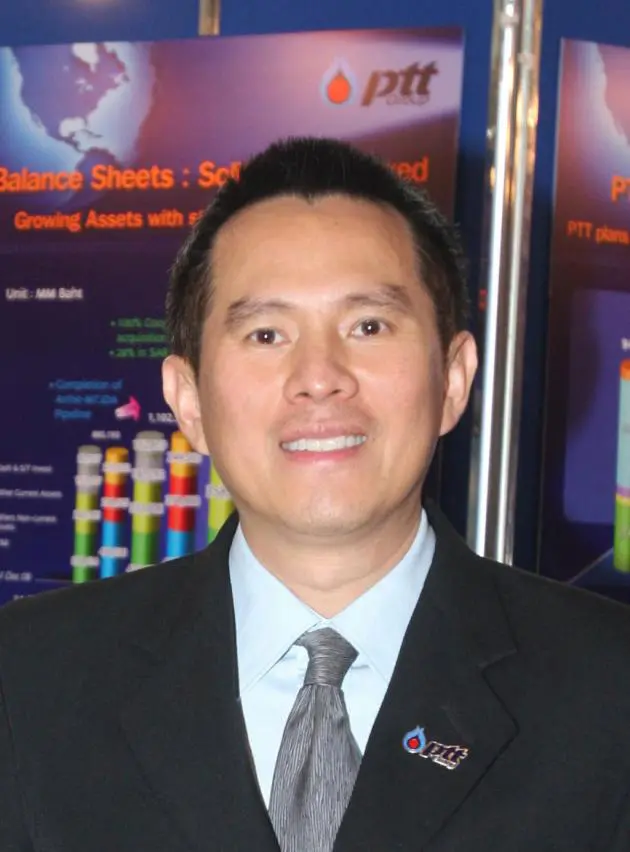
Dr Chodechai Suwanaporn is executive vice president for Economics and Energy Policy at PTT.
