
Taxes are certain, patriotism isn't


Play
The idiom "nothing is more certain than death and taxes" is proved true again with French actor Gerard Depardieu successfully seeking Russian citizenship regardless of criticism at home over his lack of patriotism.
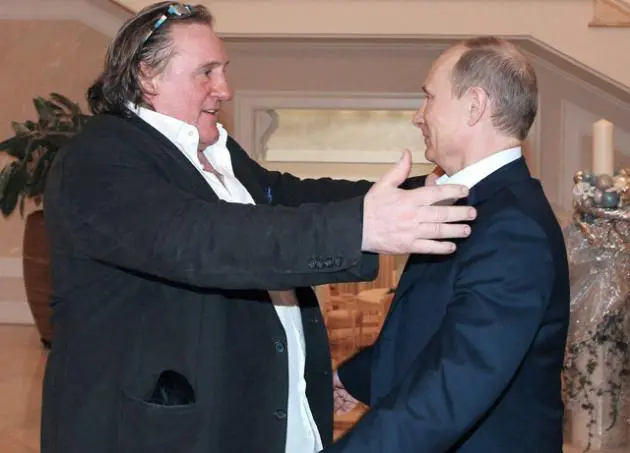
The picture of him shaking hands with Russian President Vladimir Putin at Russia’s Black Sea resort of Sochi must have stirred the sense of patriotism among French nationals. The actor announced he was seeking Russian citizenship after the French government criticised his decision to move abroad to avoid higher taxes. Earlier, he had eyed Belgian citizenship, seeking permanent residence in a French-speaking town not too far from the French border.
Depardieu decided to relinquish his French citizenship after French President Francois Hollande decided to slap a 75-per cent tax rate on the rich earning over 1 million euros in taxable income.
He is not alone in this regard. Bernard Arnault, France’s richest man, with a net worth estimated at US$25.7 billion, who runs luxury giant LVMH Moet Hennessy Louis Vuitton, has also applied for Belgian citizenship. It was said that he actually sought residence in Monaco, which allows Belgian nationals – but not French – to live there tax-free.
French rock star Johnny Hallyday also sought Belgian citizenship a few years ago, in what was widely seen as a move to escape French taxes. He was turned down, even though his father is Belgian. Hallyday moved to Switzerland instead.
Europe’s debt crisis is forcing some countries to raise taxes. Spain, for example, raised its personal tax rate by 2 percentage points to 45 per cent in 2011. In France, the new tax will only hit very rich individuals, and only for a year or two, to help bring down the government deficit.
Moving to Belgium will shave one’s tax rate from 75 per cent to 50 per cent, the same top rate applicable to UK residents. According to KPMG’s survey, France’s new tax rate would be the highest in Europe, considering 56.6 per cent in Sweden as of 2012, 52 per cent in the Netherlands and 47.8 per cent in Norway. Greece quotes only 45 per cent, but no one rich may want to live in a country rotten with a public debt crisis.
Across Europe, the average top tax rate is 34.94 per cent; the African average is 27.95; North America’s is 28.29; Latin America’s is 31.84; Asia’s is 34.94; the EU average is 37.36; the OECD average is 40.6; while the global average is 31.91.
Depardieu claims he has paid 145 million euros in taxes since beginning work as a printer at the age of 14. The actor’s move has upset many right-wing French. He is one of the most successful actors in the country, with more than 180 film and TV credits since he began his career in 1970. His decision not to help France handle its fiscal deficit proves, to the right wing, his lack of patriotism.
Somehow, this criticism surprises me. Is there still a sense of patriotism in Europe, when the continent is more integrated than before, politically and economically?
My guess was that when Europe, and the world, became borderless, a sense of patriotism would wither away. I also guessed that when the Asean Economic Community kicks off in 2015, we would see a similar phenomenon here in Asean. It is not difficult to envision the rich, like Charoen Sirivadhanabhakdi or Dhanin Chearavanont, seeking Singaporean citizenship, to enjoy much lower personal income taxes. Being in Thailand, they are subjected to the 35-per cent top rate, against 20 per cent in Singapore – which is now the lowest among Asean nations.
Indeed, how the world would be if patriotism totally withered away. When homo sapiens first began roaming the world, what they felt was the need to survive. A sense of belonging only sprung up when humans started to settle down, with land for farming. Patriotism was born after people began sharing languages and cultures and formed their own nations. That sense was heightened during the great world wars, when nations fought over natural resources (which were then not as scarce as now).
In the 14th century, France and Britain fought over territory and thrones. Then, what an actor in the TV mini series “World Without End” said made a lot of sense. When the wool trade tax was raised to cover future wars against France, some protested, but one actor said we all should be proud to be part of the fight against the nation’s great enemy.
Now, without wars like that, all are required to pay taxes to address other national problems – mostly stemming from government policies that are sometimes geared towards the poor and underprivileged. From war, policy-makers’ focus is now on inequality of resource allocation. Patriots in the past may have been willing to pay taxes to cover war expenses, but now they are required to do so out of compassion for poorer countrymen.
Indeed, taxpayers should not mind this, as long as their tax money is wisely used. We all need a place to live, and we all should be willing to pay something in return.
