
Can Malaysia be a peacemaker in southern Thailand?


Play
If everything goes well - and it is a big if - by the end of this month in Kuala Lumpur, Malaysia could broker a framework peace plan between the Thai government and southern Thai-Malay insurgents to begin a peace dialogue. But it is not a done deal. Rath
Prime Minister Yingluck Shinawatra’s government, with her brother Thaksin behind it, is currently working together with the Malaysian government through the Special Branch Police to identify the insurgents who would be part of the framework. As a facilitator, Malaysia will have a limited role in the beginning. Thailand has made clear to its neighbour that it owns the process and would move at a pace that is comfortable to all. There will be a top-level meeting today of all concerned 17 agencies to decide whether to move on the peace framework.
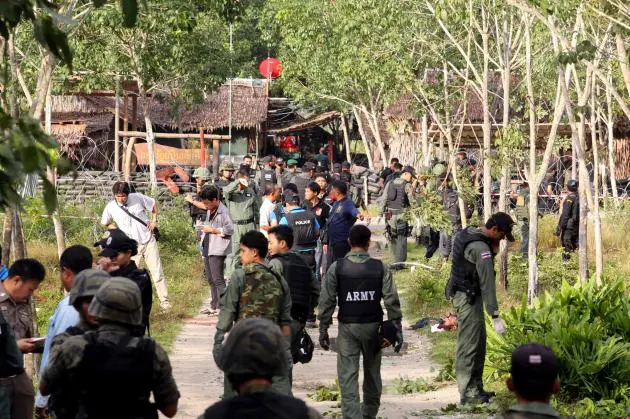
What prompted the government to move forward essentially has to do with the worsening situation in the three provinces in recent months. A series of continued violent killings on innocent civilians and the failed attack on a Thai naval camp recently in Narathiwat added urgency for the government to seek dialogue with the various insurgent groups. Furthermore, all of this has made Thaksin look really bad. It was under his leadership in 2004 that the southern conflict spun out of control. According to Deep South Watch, a total of 5,377 people had been killed and 9, 513 injured as of last week.
Last March, Thaksin met with representatives of Pattani United Liberation Organisation who reside in Malaysia, along with low level members of the Barisan Revolusi Nasional across the border, but they failed to strike a deal. When the news broke, Thaksin and his associates denied vehemently that the meeting took place despite pictorial proof. Subsequently, bombs attacks in Yala and Songkhla followed, committed by younger elements opposing the meeting. Nearly a year has elapsed. Suddenly, Thaksin and his security team saw a window to strike a peace deal with the insurgents with Malaysia’s full cooperation. After all, Malaysia played a commendable role in assisting the historic peace agreement last October between the Philippine government and the Muslim rebels in Mindanao. If Malaysia can do the same in forging a peace deal in southern Thailand, it would enhance the country’s prestige and position. Most importantly, it would also immediately augment Malaysian Prime Minister Najib Razak’s leadership credibility. Apart from promoting the Global Moderated Dialogue, which has now become an Asean agenda, Najib has assumed a high diplomatic profile in recent months in the Middle East and on the plight of the Rohingya.
Najib has to hold an election within the next few months, possibly in April. The poll outcome would determine his future leadership and the fate of his party, the United Malays National Organisation. The coalition of opposition parties led by Anwar Ibrahim is getting stronger and increasing in popularity. Viewed from this perspective, any tangible progress along the Thai-Malaysian border would be valuable a asset to Najib and boost his leadership.
As of last week, senior Thai officials including Pol Col Thavee Sodsong, director of the Southern Border Provinces Administration Centre, Panadorn Pattanathabutr, Secretary General of National Security Council and Gen Udomchai Thammasarorat, the Fourth Army Commander, were in close consultation over the names of insurgents who would be included. They are still very cautious concerning the real movers and shakers, among the veterans and “juwae”, as the younger militants are known. The Thai-Malaysia Regional Border Committee is scheduled to hold its 100th meeting in Aloe Star on February 27. Unfortunately, the official invitation has not yet arrived, reflecting future uncertainties. Yingluck, who is scheduled to drop by at the meeting, is in jeopardy. She wants to highlight the importance of Thai-Malaysian cooperation before she holds talks with her counterpart Najib the next day in the capital. Both sides are also working on an agreement to exchange prisoners.
Thailand has been urging Malaysia to amend the border security cooperation to reflect the newly perceived threats along the Thai-Malaysian border. In the past both countries fought communist insurgents as common enemies—something older generations of Malaysians continue to appreciate. However, with the disappearance of communist threats, both sides have yet to come to terms with their different threat perceptions. At the General Border Committee in November last year, Thailand wanted to add terrorism, transnational crime, and drug and arms smuggling to intelligence exchanges as new security areas for cooperation. Malaysia was reluctant. The Thai officials have been hoping—but rather in vain—that there are specific confidence-building measures that Malaysia could do right away on its own to show goodwill, especially in preventing any explosive devices or material from crossing the border into Thailand. Forensic evidence from the past three months pointed to imported explosive devices and components. Thailand has already asked for two additional military-police manned checkpoints.
At this juncture, some miraculous shifts in security thinking can be detected on both sides of the border. Followed the rejection of Deputy Prime Minister Chalerm Yoobamrung’s maverick idea of imposing a curfew in the three provinces, the Thai authorities have given more attention to the role of neighbouring countries, especially Malaysia and Indonesia, in ending violence in the South. Major efforts earlier zeroed in on improving the safety and lives of people there as well as promoting the Thai image among the Muslim countries by such measures as providing temporary shelters for the Rohingya boat people. This has been one of the strategies outlined in the National Security Council’s three-year strategic plan, which was published early last year. Others included power decentralisation and peace dialogue.
Within the next two weeks, Thailand and Malaysia can together make history if they can overcome their differences and find new common grounds for cooperation, which could eventually lead to an enduring peace in the South and in adjacent areas. So far, a convergence of factors including domestic dynamics has played out positively in the South. But for the future, nobody knows whether peace is at hand.
