
China has never failed to impress its visitors


Play
To businessmen anywhere, China is a mysterious country worth exploring. With 767 million workers, US$20-trillion worth of machinery, buildings and other kinds of capital, and rapidly-advancing technology, global manufacturers have China firmly in their si
One banker reports there are a whole host of opportunities, thanks to good infrastructure – both tangible development in roads and rail, and intangibles such as education – that will maintain the pace of growth in years to come. To him, China’s development is something that its poorer neighbour Myanmar can learn from as it attempts an economic leap following its opening up the world.
Yet, he admitted that businessmen in China had to follow a unique set of rules, foreign to those in a global business community dominated by the West.
China has indeed made splendid accomplishments. A flock of airlines now connect the huge country, which takes four hours of flying to cross from the east to the west. Complimenting this is the marvellous rail network that allows speedy travel for locals and visitors.
But what has amazed visitors even more is the contrasting slow pace of development in its citizens’ behaviour.
Recently making headlines was the incident in which a woman took a dump in a glass elevator while her husband tried to block others’ view.
In Chongqing , another megacity alongside Beijing , Shanghai and Tianjin , development is happening at break-neck speed. The new train station is a grandiose, futuristic building. New shopping malls packed with global brands are mushrooming. New cars, many of them luxury marques, can be seen on the city’s streets.
The boom has spread to nearby Chengdu. Yet here too, it seems people’s manners are having trouble keeping up. In busy traffic one evening, a new car suddenly stopped on the road by a garbage bin, and young girl and a woman got out. The woman placed a sheet of paper on the ground and the girl took a dump. The waste was dumped in the trash bin and they left. Caught on camera, the incident sparked a big question over the family’s notion of public hygiene (and public toilets).
Queuing is one thing that the Chinese definitely need to learn about – China is the most populous country in the world, and resources should be shared equally.
A few years ago, waiting in line for a visa stamp at the Shenzhen border point, I got a shock with the appearance of a man by my side. He seemed to materialise out of nowhere, holding a phone and shouting over my head to his friend who was in the line not far ahead. He simply ignored my existence while he tried to cut in line. His face was blank, and notably free of an expression of shame.
This is a common experience in China. A foreigner who finds herself behind locals in a queue shouldn’t be surprised if their friends show up and cut in. Typically, they don’t bother to make any excuse. They simply jump into the line, oblivious of how long others have spent waiting.
Always brace for the unexpected if you queue in China. Last week, Lijiang welcomed a huge number of visitors. Some got serious altitude sickness after visiting its mountain peak, over 4,500 metres above sea level. With no treatment available, they had to wait in line for the buses to take them down the mountain. Without warning, one queasy Chinese visitor vomited. She had no energy to apologise, of course. Then, she washed her mouth and simply spat out the water on the floor.
On the other hand, it’s a good idea to prepare for more well-known hazards in China. The most notorious one is public toilets. The strong smell from a women’s toilet at a very new airport caught me off guard. Some public toilets, the flush either doesn’t work or isn’t used much. It didn’t surprise me to discover that new Chinese airports come equipped with toilets where automatic-flush systems are standard.
The flush-culture reminds me of Thailand some 30 years ago. What we see here today is a result of improvements over several decades. I fervently hope that it will take a shorter time for China to change these behaviours, echoing what the country has achieved in economic terms.
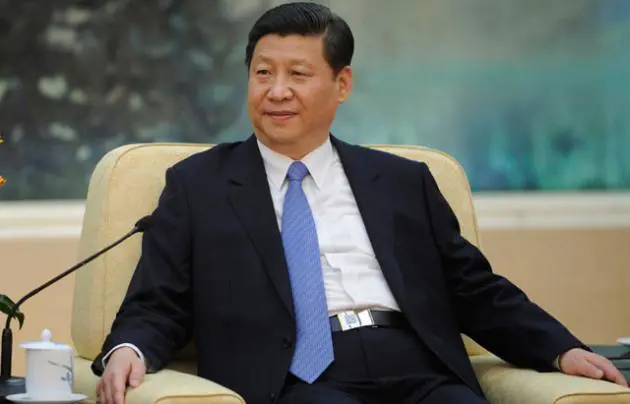
Obviously, China ’s new leader Xi Jinping has his hands tied over much of the national reform agenda. Probably because of the envy due to its fast rise in the global arena, the country is now being accused of many things, including subsidising the manufacture of many products, such as solar cell panels.
Internally, it has yet to address local government borrowing. Proper planning is necessary before the central bank stops imposing a ceiling on deposit rates. After accumulating some $2.4 trillion in foreign reserves and becoming the world’s second-largest economy, China is also under pressure to internationalise the yuan. All that needs to be carefully implemented, or it could spark unwanted social and political unrest.
Well, there is a lot more to be done, if China is hoping to impress the global community.
One consultant who has accumulated tonnes of insight on the country said something that resonated with me: its leader the most unwanted job in the world.
