
Floppy discs, Walkmans and now newspapers?


Play
It is an undeniable fact that the world moves fast, and it has moved particularly fast over the past three decades. During that period, many products were invented, widely used and erased from the memory.
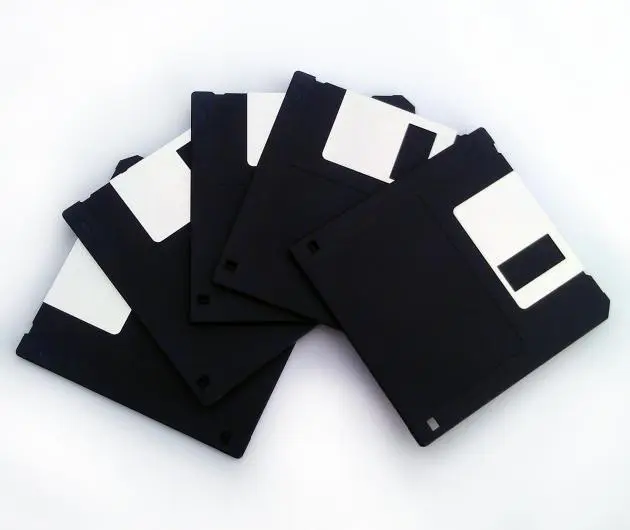
Two that I can think of are the floppy disc and the Walkman. For those aged 40 and over, floppy discs were widely used for the storage of text and pictures. Some people still have several of these square objects in collection boxes, waiting to be trashed, as there are no longer machines that will accommodate or open them. Then, for data storage, came CDs, which were quickly replaced by flash drives.
Most people aged 40 or over also had a Walkman, the first gadget that allowed them to listen to the radio, cassette tapes, and then CDs, anywhere they liked. That portable music player was replaced by the iPod, and then later-model mobile phones provided the same function.
When these objects were in their heyday, nobody expected them to die so fast. On the contrary, when TV sets were introduced, people were convinced that radio, which could only transmit sound, would die an immediate death. But that didn’t happen, of course. Some fashion styles are also revived, sometimes as much as 20 or 30 years later.
How can some things die so completely while others continue to survive, even thrive, despite periodic hiccups?
To a journalist like me, it is worth pondering into which category the newspaper industry will fall.
The future of newspaper is being hotly debated at the combined World Newspaper Congress, World Editors’ Forum and World Advertising Forum, now taking place in Bangkok. Given declining circulations and advertisement revenue for newspapers, news organisations are being urged to go digital – online and mobile.
Vincent Peyregne, CEO of the World Association of Newspapers and News Publishers (WAN-IFRA), said yesterday that “Newspaper professionals understand, more than ever, the benefits offered by the digital world to improve the quality of their conversation with communities, identify new territories where they can expand their role, help reduce the complexity of the world, and increase the trust of their audience.”
In retrospect, the newspaper industry has gone through an interesting period since its inception. According to inventors.about.com, it took the industry hundreds of years to evolve and reach its prime in the 20th century. With the first newspaper born in Rome in the first century of modern human history, the industry prospered in the US in the 19th century. At its peak, in 1870, there were 5,000 daily newspapers in the US. In 2007, that number had dwindled to 1,456.
The figures are astounding. More than half of the world’s adult population reads a daily newspaper: 2.5 billion in print; more than 600 million in digital form.
Does that mean newspapers will die soon? Some other figures suggest something interesting. Over the past five years, newspaper circulation dropped by 13 per cent in North America but rose 9.8 per cent in Asia. Over the period, advertising revenues declined by 42.1 per cent in North America but rose 6.2 per cent in Asia. It seems that while people in “mature” markets are fed up with newspapers, those in emerging markets are not.
In a conversation with a person in my age group, we agreed that print is better for our eyesight and brain. Probably, our brains are trained to better digest material from print. But for younger people, their brains also function similarly. In 2011, a study by three doctoral candidates at the University of Oregon School of Journalism and Communication found that print news readers remember “significantly more” than those who read news stories online. Print readers also remember “significantly more” topics than online readers, the report found.
But then again, people these days do not want to remember things.
A worker in the financial world admitted that fund managers in the old days spent time crunching numbers. Now, they spend more time on mobile phones. With just a punch of a button, they can buy or sell. No matter what bad lessons they learn, they can easily forget them when a new day arrives. He is not surprised that financial chaos keeps knocking on our door.
News consumers these days tend to consume only what they want. Given time constraints, they want things delivered fast. That explains why they are hooked to Twitter and ready to put aside accuracy.
Only a few of them care to learn more about breaking news stories. Those who don’t want to wait go to news websites. Those who want more details buy tomorrow’s newspapers. Often though, newspapers disappoint them, and this may explain lower circulations and advertising revenue.
I have an interesting question here. When the Gen-XYZ population is older and their eyesight deteriorates, will they remain glued to Twitter, online and mobile news? Will most of them turn back to newspapers and push up newspaper sales?
It is an interesting question whether newspapers will die a total death just like the floppy disc and Walkman. If that day does come, hopefully, the industry’s legacy will not be buried too – the culture of ethical reporting that has kept society connected over the centuries.
