
Making the right connections


Play
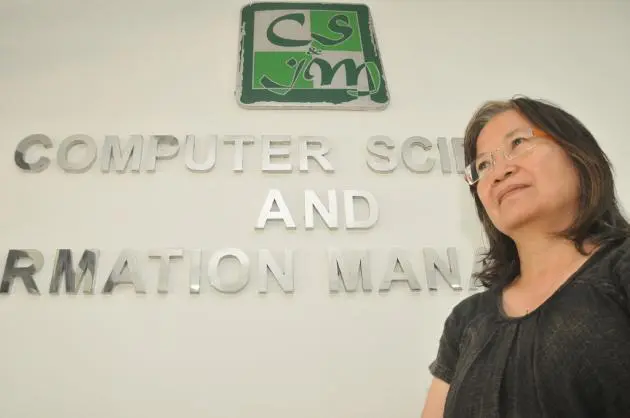
Thai Internet pioneer Kanchana Kanchanasut is inducted to the Internet Society's Hall of Fame
Twenty-five years ago, long before Thais discovered the power of the Internet, Kanchana Kanchanasut, a professor at the Asian Institute of Technology (AIT), was working quietly to connect university researchers online.
Today of course, few Thais can imagine life without the Internet. Current data show that more than 26 million Thai residents have an Internet connection and almost 20 million of us spend varying degrees of time on the social networks.
Now Kanchana has been recognised for her pioneering skills by the Internet Society (ISOC), which has inducted her to the Internet Hall of Fame for bringing the Web to life. She is the only Thai and just the second Asian – the other is Japanese – to receive this honour.
ISOC, the only trusted independent source for Internet information and thought leadership, is holding the second edition of its award ceremonies on August 3 in Berlin, Germany where Kanchana will join 31 other innovators and global connectors for her induction to the “pioneers circle”.
According to the Internet Society’s chief executive Lynn St Amour, this year’s inductees represent a group of people as diverse and dynamic as the Internet itself. As some of the world’s leading thinkers, she says, these individuals have pushed the boundaries of technological and social innovation to connect the world and make it a better place.
“Whether they were instrumental in the Internet’s early design, expanding its global reach, or creating new innovations, we all benefit today from their dedication and foresight,” St Amour notes.
Kanchana’s fascination with the cyber world started in 1988, when Thailand got its first connection and domain name – ait.th – via a dial-up network linked to the US and Australia before switching to the Internet connection model from “dial-up” to a leased line network.
“From 1988 to 1992, the Internet here was used at three universities – Chulalongkorn Prince of Songkhla and AIT – and only by researchers and academics,” she recalls.
One of Kanchana’s major contributions to the cyber world as we know it today was inchoosing to rely on ISOC’s TCP/IP (Transmission Control Protocol/Internet Protocol) technology rather than the International Telecommunication Union (ITU)’s X25, an ITU-T standard protocol suite for packet-switched wide area network (WAN) communication. The TCP/IP is now the norm.
She also set up the Thailand Network Information Centre (THNIC) and from 1988 onwards encouragedthe computer savvy to use the Internet both for website development and domain name registration. THINIC was awarded foundation status in 2007 and continues to promote information about domain names in Thailand.
The efforts of Kanchana and her team of Internet pioneers in Thailand led to the launch of the first commercial Internet in Thailand in 1995, opening the cyber doors to the Worldwide Web to users outside universities.
CAT Telecom was also quick to recognise the importance of the Internet and licensed the commercial service, joining up with private Internet Service Providers (ISP) to provide access to all.
Four years later, in 1999, Kanchana was appointed to the first advisory committee of the Internet Corporation for Assigned Names and Numbers (ICANN), a private, non-profit corporation created in 1998 to assume responsibility for Internet Protocol (IP). Not only did she play a major role in IP development but she also designed the criteria for the members of the ICANN.
Internet access remained spotty in Thailand until the early 2000s when the Information and Communication Technology Ministry brought down the price of a broadband connection to an affordable level, thus opening the possibilities for everyone with a computer to be connected at home.
Today, the Internet is everywhere, allowing Thais to access it at anytime from anywhere, especially from their smart phones. While Kanchana is happy that such a wide section of society has access, she is concerned about the lack of Internet literacy. “So many people use the Internet without understanding how the Internet can be dangerous to them,” she says,
“They are so innocent that they believe everything and everybody on the Net with all the inherent problems that brings. The lack of Internet literacy in Thai society needs to be addressed and requires the contributions of all stakeholders in the Internet ecosystem. It’s vital that our society learns how to use Internet safely,” she says.
Kanchana would also like to see government set up an agency dedicated to overseeing the development of Internet technology. No such organisation currently exists to take care of this task, which involves participation, discussion and meetings with other global Internet organizations.
“This organisation’s mandate would not be to dictate policies on the use of Internet, but to remain in touch with the dynamic development of Internet technologies and assume a role as the country’s representative on the global stage,” she says.
Kanchana would also like to see more technical collaboration between ISPs, pointing out that the Internet, by its very nature, is collaborative and thus the ISPs should work together to develop innovative business models to attract users. “Collaboration on the technical side would serve to reduce duplicated investment in Internet infrastructure and technologies.
“That in turn would help reduce costs, making the Internet cheaper and faster too,” she says.
The writer can be contacted at twitter.com/lekasina.
