
There is no such thing as an irreconcilable conflict


Play
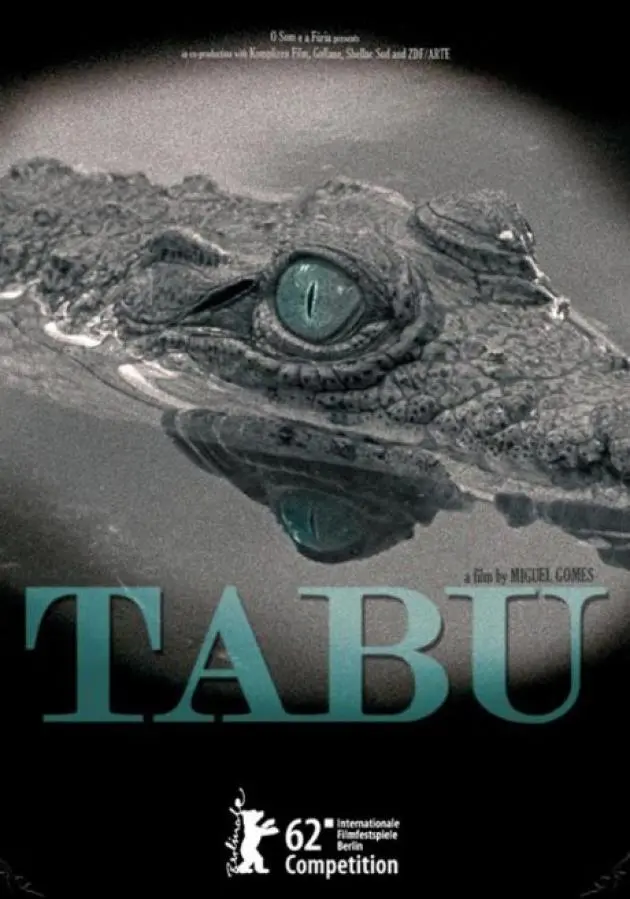
A great work of art can offer viewers a profound discovery. Watching "Tabu", a 2012 Portuguese film directed by Miguel Gomes, brought me just such an "aha!" moment.
The film itself was weak and disappointing – it was the chat afterwards among viewers that enlightened me.
Screened on Saturday at the 11th World Film Festival of Bangkok, Tabu centres on “Aurora”, a Portuguese white woman who was born and raised in the wilds of South Africa. She married a fellow white expatriate but a subsequent affair led to tragedy and a parting that was never reconciled.
For this viewer, the story line was boring, with characters that never convinced you they were in love with each other. I thought it was an inferior version of the Thai film “Chua Fah Din Salai” (“Eternity”).
But I was surprised to discover that some people liked it. Arty types said they loved the photography. A colonial-style farmhouse etched in atmospheric black-and-white transported the audience back to a bygone era, complete with props rarely seen outside an antique shop today.
This is part of the charm of an international film festival – unusual films by unconventional directors that shun the Hollywood mainstream.
Last year the same festival impressed me with “The Turin Horse”, a black-and-white art film that dealt with hardscrabble life and animal cruelty. The daily grind of work amid a howling winter wind took up the 146-minute running time. And yet I thought the film was charming. Other viewers hated it for its relentless and bleak repetitive scenes.
Of course, international film is a by-product of globalisation, and it’s impossible to please all seven billion potential viewers. But something they can all agree upon is all the unconventional – often unique – nature of film-festival fare.
In Thailand, the World Film Festival is one of the rare occasions for real movie buffs to get their fill. The budget comes from sponsors, rather than ticket sales as in the case of mainstream movies. But unlike the audience for Hollywood blockbuster, festival-goers tend to be as keen on discussing and critiquing the films as watching them. They are also sensitive to the limitations involved in “indie” film-making. Some, including me, don’t mind a lack of characters in a film like “The Turin Horse” as long as it delivers a strong main theme – in this case the fatigue of the daily grind that consumes all. Meanwhile arty types didn’t mind the weak story line in “Tabu” because the film was beautiful just to look at.
And if an indie film is weak on visuals, the festival crowd will usually find something else to like about it.
Usually, but not always. On Sunday, almost all World Film Festival-goers were disappointed with the Thai documentary “By the River”, which told the story of the locals of Lower Klity Village and thei battle with poisonous pollution. “It was bad,” one documentary film-maker said plainly, before going on to wonder why Thai documentaries tend to be poor.
The first reason identified was funding. A documentary usually costs well over a million baht to make and there are a few venues where it can be screened. Second, Thais tend to “de-sensationalise” issues.
Well, our conversation could have continues for hours, and all focused on how the film could have been more successful.
Something I noticed about the film fest conversations was we rarely got into quarrels – mainly because we respected each others’ opinions.
Taste in films is an emotive subject, but condemning others because they don’t like your favourite movies is plain wrong. People have different tastes depending on their different backgrounds and education. This diversity should be a source of interest and strength. You might not be convinced by another person’s reaction to a film, but who are you to judge them? You have the right to criticise the film, and so do others. If you have the chance to comment on something, you are also required to spend similar time listening to the comments of others. Respect their rights and they will respect yours.
Of course audiences at film festivals find it easy to reconcile different opinions – after all, it’s only art and they only screen for two weeks a year.
In contrast, it’s easy to understand why so many people were on streets on Sunday, after two years of mischievous schemes perpetrated by the Yingluck government finally broke their patience. And I also do understand why groups of red shirts headed to Bangkok on Sunday and yesterday, to support the government. Still, all are Thais, and as such their rights must be respected.
I sincerely hope that the spirit of reconciliation can stretch beyond the confines of film festivals. But it will only do so if more Thais truly understand the definition of “rights” and “respect”.
