
Not on equal terms


Play
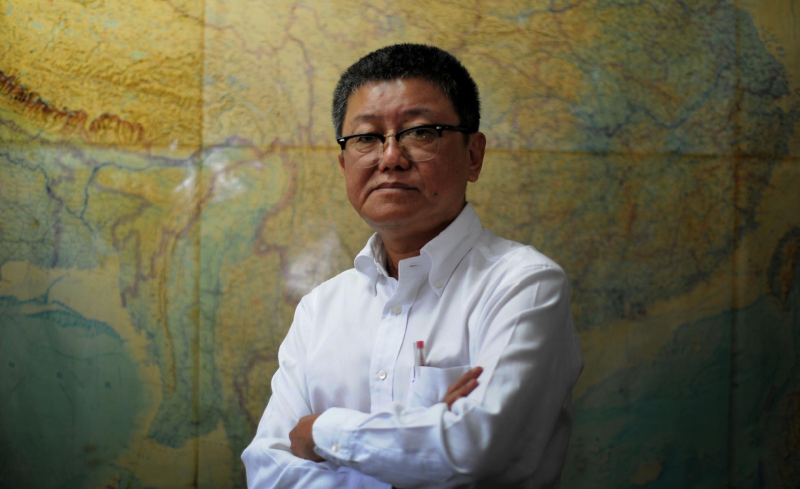
Academic and expert in Sino-Thai relations Vorasak Mahatanobol laments thai lack of understanding of Chinese people and their culture
Vorasak Mahatanobol is one of the most sought-after commentators on Sino-Thai relations, an unassuming, soft-spoken academic who looks more Chinese than Thai. As befitting his looks, Vorasak heads Chulalongkorn University’s much respected Chinese Studies Centre. It’s a treasure trove of knowledge about Sino-Thai relations, an area where there’s much to praise and even more to doubt.
Though well-versed in the subject, Vorasak’s approach to Chinese studies is rather holistic: he’s also well-informed on other aspects of Chinese life from culture and language to history and philosophy. He’s commented on everything from the trek of Muslim Uighurs to Southeast Asia, through Chinese prostitution to China’s influence on this part of the world.
But with Thailand increasingly kowtowing to its northern neighbour – think the high-speed rail plan and other mega-development projects –relations between the two nations are now the dominant theme in public discourse on China.
Although the Chinese have not been strangers to Thai history since the Ayutthaya period, official diplomatic relations between the two countries weren’t established until 1975.
“The Chinese are among the more notable foreigners in Thai history,” says the bespectacled academic.
But to understand the development of Thai-Chinese relations, Vorasak needs to hark back to ancient Chinese history.
Throughout Chinese history, the emperor of China saw himself as the “Son of Heaven” to whom other countries needed to swear their loyalty by presenting tribute (jimkong in Mandarin).
“Dynasty after dynasty, the emperor saw China as a very strong empire. Those beyond the Great Walls were barbarians who needed to come and swear their loyalty before him. If a country failed to do so, they faced the consequences experienced by the Pagan Empire (Burma) [in 1277],” he says.
That year, which marked the first Mongol invasion of Burma, saw a series of military conflicts between Kublai Khan’s Yuan dynasty and Pagan that lasted until 1287. Pagan’s King Narathihapate refused to pay annual tribute to the Mongols who conquered China in 1271 and founded their own Yuan dynasty with Kublai Khan being the first Yuan emperor.
“Every dynasty had its own map of China. The map was at its largest when the country came under the rule of the Mongols whose empire extended all the way to the West. Thai kings sent tributes to China from the reign of King Ramkhamhaeng of Sukhothai right through to the Ayutthaya period. They all recognised China’s superiority in much the same way as Thailand accepts the US or Russia today.
“But this doesn’t mean we saw ourselves as submitting to China as one of its vassal states, which is the way China saw us. We also wanted to trade with China, and it set its own rules: anyone who wanted to trade with China had to pay tribute or China would cut its commercial ties,” he says.
Far from meek and submissive, Siam’s King Taksin suspended tribute to China. Siam was in a volatile transitional period and China wasn’t at all sure who called the shots. When King Rama I moved the capital from Thonburi to Bangkok, which he founded in 1782, the news of his inauguration as the first Chakri Dynasty monarch spread, and China readily recognised his kingship. Rama I reinstated the tribute system.
“But by the fourth reign, Siam chose to suspend the tribute system once again. The king was aware of the Chinese attitude that saw Siam as nothing more than its vassal state. Thailand had always sent tribute as demanded by China. There’s a reason why the governing class had to send tribute. It was often the case that when one country sent a boatload of tribute to China, the emperor would reciprocate with three boatloads of gifts as a display of Chinese wealth and power.
“Who wouldn’t like that? The Thai aristocrats reckoned it was worth it. One country even had its envoys travel to China with the tribute so many times a year that the emperor complained and warned them not to come too often,” he says with a grin.
King Mongkut (Rama IV)’s policy to stop sending tribute came as the Manchu Qing dynasty was on the ropes and the shadows of Western powers loomed large on the mainland.
“The monarch knew that Siam had always been a free country. That’s when Siam’s tribute-based diplomacy came to an end,” he says, adding that during the reign of King Chulalongkorn (Rama V), China demanded tribute from Siam again, but the king refused.
Both countries went without any diplomatic relations until after the second world war though trade ties between the two continued.
Vorasak laughs as he explains why Thailand wanted to establish diplomatic relations with China after second world war. “It was simple,” he says, adding: “Thailand wanted to be a member of the United Nations [in 1946]. Then Chiang Kai-shek ruled China, which was then one of the five permanent members of the UN. China asked, ‘how could Thailand be a member of the UN when it didn’t have any diplomatic relations with the Republic of China?’ Another permanent member of the UN, Russia, even accused Thailand of trampling on a free society by not allowing the creation of a communist party.”
Thailand drew up the Treaty of Amity with China in January 1946. Later that year Prime Minister Pridi Banomyong helped bring about the 1946 constitution, Thailand’s most democratic to date, which ensured the legality of the Communist Party of Thailand – though only briefly. Thailand joined the UN in December, 1946.
But when the communists took power in 1949, Thailand befriended the Republic of China (Taiwan). Communist China filled the Thais with dread and fear, Vorasak says. The Thai apprehensions were not unreasonable: communism upholds a classless society, which overrides Thailand’s national values like monarchy and religion.
“The Cultural Revolution alienated the Buddhist country because it had no place for religion. And Buddhism was important to Thais,” he says.
Thailand’s stance towards communist China would have an impact on the immigrant Chinese in Thailand. The country moved from a position of avoiding the existence of the new People’s Government in Beijing to declaring open hostility towards it. The government came up with anti-Communist, anti-Chinese policies to control and politically marginalise the Thai-Chinese community.
But the ethnic Chinese have been able to adapt to and integrate into Thai society to such an extent that they identify themselves as Thai.
“The late George William Skinner, [an American anthropologist and scholar on China] once wrote that when he was in Bangkok for the first time, he expected to see Thais. But all he saw was Chinese,” he says, adding: “We have terms to address the Chinese in Thailand. In the past, we called them overseas Chinese, or the Thai-Chinese. At present, we call Chinese immigrants cheen oppayopmai, or the new Chinese immigrants. The point is that the Thai-Chinese feel more attached to Thailand than the new Chinese immigrants,” he says.
Since 1975, trust between the two has grown so deep that the relations have reached saturation point. “Thailand aims for closer ties, but we’ll have to see if China feels the same,” he says.
But certainly when it comes to Chinese-style diplomacy, things have changed dramatically on the ground. Chinese diplomats in Bangkok used to be very friendly, treating their Thai counterparts like brothers.
“Strangely enough, all that has changed lately. Now that welcome has grown formal and business-like. If the matter isn’t business-related, they don’t want to talk. In the past, if Chinese diplomats organised an event that was supposed to end at 8pm, the chances are it would end much later. These days, it ends at 8 sharp. Perhaps that’s because China has changed a lot in the past 30 years. [Chinese] diplomats used to be shy and quiet, but now they are the ones who make the first move by starting to clink wine glasses,” he says.
But what remains the same is the Chinese way of thinking.
Vorasak reckons they still feel the way they did a thousand years ago: that China is superior. “Of course they cannot state that openly or publicly. These days It’s not hard to see a display of Chinese aggression with its neighbours, and even between themselves. Some Chinese I’ve met even believe we were once their vassal state,” says Vorasak.
What’s worse, Thai leaders don’t even understand Chinese thinking. This often leads to misconceptions on the Thai side.
“Thai politicians like to think that our relations with China are very close, like brothers. They are not aware that the Chinese don’t think like democrats. The level of understanding of Chinese thinking among Thai politicians is quite worrying to me. When Chinese officials say they want to do something, they will do it tomorrow. But we cannot do it right away because in a democracy, we need approval from the cabinet or through a democratic process like a public hearing,” he says.
Vorasak reckons Thai politics lacks politicians who are well versed in Mandarin and Chinese culture.
“I can’t name a single Thai politician in the past 20 years who can speak Mandarin. If you spoke the language, you would certainly know Chinese culture and thoughts. In the past, one name comes to mind: Prasit Kanchanawat, [who served as the speaker of the House of Representatives in 1975]. He spoke Mandarin fluently. He also had a role in helping to establish Sino-Thai relations in 1975. But in the business world, yes, we have lots of Thai-Chinese businessmen who can speak Mandarin,” he says.
The same is true in Thai academia, Vorasak laments. In the field of Chinese studies, Thailand lacks researchers and academics in this field.
“Yet China is playing a more and more significant role in the region,” he says.
The writer can be contacted at [email protected].
