
Preserving Thailand: Achievements of King Bhumibol and King Chulalongkorn


Like his grandfather before him, His Majesty succeeded in sustaining the Kingdom’s integrity in difficult times of change and challenge
By happenstance I was in Bangkok when His Majesty King Bhumibol, Rama IX, left us forever. As a young monarch, he had been a good friend of my father in the 1960s when Dad was the US ambassador to Thailand.
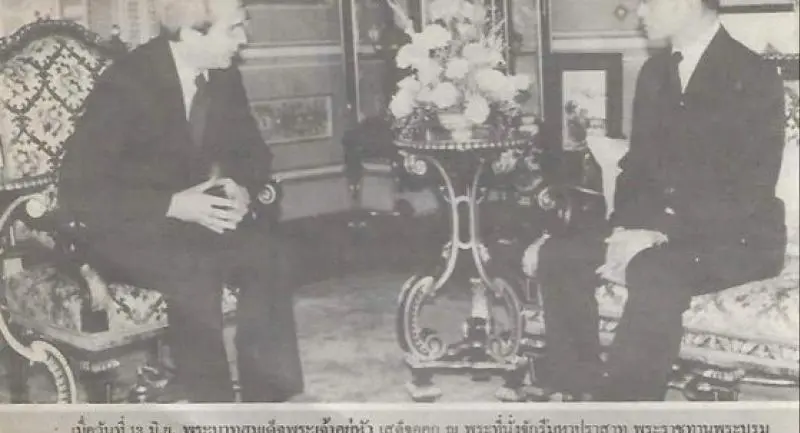
Because of that friendship, I believe, I was granted an audience with His Majesty in 1984 at the Grand Palace.
I began the conversation, as I remember, with pleasantries about family – His Majesty’s and my own. I recalled my father’s work with Thai leaders on economic development and counter-insurgency and complimented Thailand on building wealth for the people since the early 1960s and on preventing communist subversion and atrocities, like those of the Khmer Rouge, and the corrupt party dictatorships of Laos and Vietnam. I noted that, again as it had in the 19th century, Thailand had avoided subjugation under foreign-sourced threats and had seen to its successful modernisation.
I then ventured the observation that, when all things were considered, he faced a more difficult challenge than even his grandfather, King Rama V, had faced.
He seemed surprised at this remark and his eyes invited more from me.
I continued: King Rama V had faced overt, obvious, tangible threats from the British and French colonial enterprises. Furthermore, his modernisation challenges of building roads, bridges and railroads, etc, and of putting organisations in place – a modern army, a foreign ministry, schools, local administrative offices across the country, etc – were tangible too. Foreign advisers could be retained to do much of the planning and execution of such projects. Thais could easily be sent abroad to learn new skills and professional disciplines.
But since coming to the throne, I ventured, His Majesty King Rama IX had faced, and was still facing, more complex, even intractable, challenges: How do you divert away from success an ideology like communism which lives in the minds and hearts of individuals? How do you continue modernisation following the West, especially in education and society, and still remain essentially “Thai” in heart and soul? How do you encourage hilltribes and villagers in the remote areas to feel happily part of the larger Thai national community and Kingdom? How do you have more democracy emerge from a political tradition of absolute monarchy and now a largely military autocracy?
His Majesty seemed to feel that I understood his situation and what preoccupied him day and night. He became very animated and talked to me for about an hour on his thinking about how he could best help Thailand.
Surprisingly for me, since I did not really know him at all, he turned immediately to values and Buddhism. His principal concern was that if money were to erode good values, Thailand would not be able to have good governance.
He said something along the lines of, “If you can buy merit to improve your karma, why do you need to be good? Why be a responsible official or politician? Why should you worry about the poor people, the hilltribes and the villagers? Why not be corrupt in business.”
His Majesty then added that he was especially worried about the influence of money on the monkhood. If monks became competitive over possessions, over the size of received gifts and donations, the splendour of their wats, Thailand would lose its moral foundation. The people would be set adrift with nothing of great value before them to admire and to encourage them to become good and caring. If the Sanga succumbed to “moneyism”, what would sustain Thai optimism and self-confidence, in short one’s happiness as a Thai?
He worried that selfishness and pettiness would creep in as everyone – high and low – would struggle for mastery over others and for money.
I believed that afternoon in 1984, as I do now, that His Majesty was absolutely correct in his evaluation of what might happen to his country. He was more insightful about this danger to the integrity of Thailand than anyone else in leadership then and much more so than anyone in the US embassy.
He was then intellectually head and shoulders above the most sophisticated academic discourses on Thai politics and development. My respect for him grew immediately and has remained very deep ever since.
And, writing now in 2016, I can say with certainty that His Majesty was prescient. He saw long before others the cultural trend – moneyism – which has brought 16 years of anxiety to Thailand through divisive politics.
It has turned out that, as His Majesty worried they would, many Thais have come to act as if not only merit but even baramee (meritorious authority) can be bought in the markets of religion, commerce and government favouritism.
But I would propose today, looking back on His Majesty’s accomplishments, that like his grandfather, he too succeeded in sustaining Thailand’s integrity in difficult times of change and challenge.
King Chulalongkorn sustained the Kingdom’s geographical integrity with only a few losses to the British and the French of peripheral districts. His Majesty King Bhumibol, under more difficult circumstances facing intangible cultural pressures and crises of values and beliefs, sustained Thailand’s cultural and social integrity. He sustained meaning for all his people, as we saw on Friday, October 14 on and around the Sanam Luang.
And he achieved this remarkable result through principal reliance on insights from Theravada Buddhism. His Majesty told me then in 1984 that he listened very closely to the Supreme Patriarch and had learned much from him. He advised me to call on him, but as my trip to Bangkok that year was short I was only able to meet an assistant abbot at Wat Bowoniwet.
Thus His Majesty walked as best he could in the Noble Eightfold Way, seeking to make decisions as King according to the 10 ethical principles of the Thosapit Rachathamma, and by inventing for use by his people the Sufficiency Economy philosophy.
I think his advocacy of Sufficiency Economy principles was, in part, his attempt as a cultural figure without great day-to-day political power to protect Thailand from the adverse effects of “moneyism”, especially from abuses of morality and ethics, by those with access to money.
He used Buddhist principles of moderation and the middle way to resolve political conflicts in the 1990s, easing military juntas from power and bringing democracy forward step by step.
He used Buddhist principles of concern and care to adopt what we now call a “stakeholder approach” to his personal work as the proverbial Paw Khun (”Father of the People”).
He himself went to villages to study with his own eyes how his people lived from day to day. He listened to the people. He looked at their soil and crops. He worried about their water: runoffs in the hills and mountains and the rain in the Northeast. He responded to constituencies on all sides. Commercial success was acknowledged with recognition awards of Khunying and Thanpuying to wives in the encouragement of charity, hopefully tying money closer to virtue. Out of concern, he took his interest in the laws of science and sought to apply them in practical ways to improve daily life for those without money and other resources.
As the Buddhist dharma reflects the reality around us, so His Majesty immersed himself in reality – painting, building sailboats, getting close to nature, asking questions about what was real, about what was really happening.
It is much harder to improve a people’s values than to build a bridge. Today’s global culture of nihilism and individual narcissism works against the cause day and night. His Majesty’s acceptance of personal responsibility to do his best to preserve the integrity of his national community was admirable.
Many others in similar positions of privilege have shrunk from such hard, often disappointing, and possibly even ephemeral work.
I think, however, that His Majesty King Bhumibol was one of those remarkable individuals who had the courage to light candles against the darkness in human hearts.
