
Thailand Seeks IMO Council Membership as Maritime Leadership Role Expands
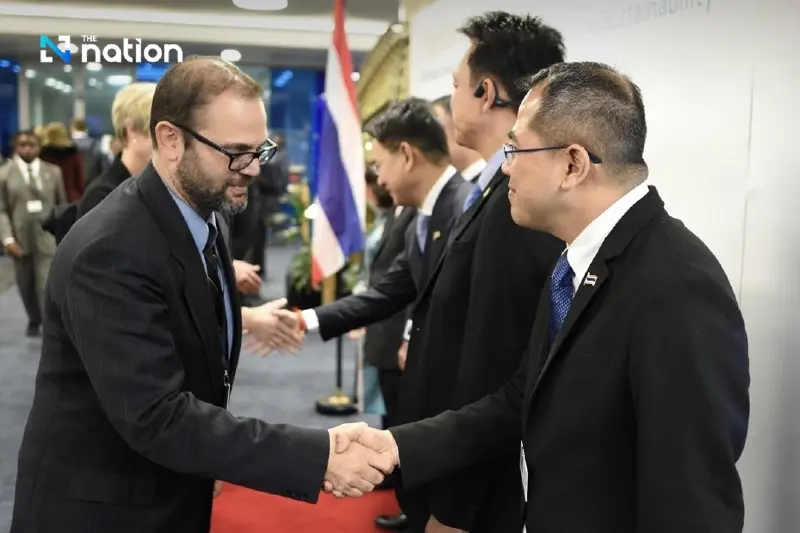


Kingdom demonstrates commitment to international maritime standards whilst pursuing council position to strengthen global shipping safety
- Thailand is campaigning for a seat on the International Maritime Organisation (IMO) Council for the 2026-2027 term to expand its leadership role in global maritime governance.
- Its candidacy is supported by its active participation in IMO committees, including chairing the Facilitation Committee, and a strong commitment to maritime safety, security, and environmental standards.
- The country highlights its strategic importance as a maritime hub with major ports like Laem Chabang, and its progressive focus on gender equality in maritime education and developing sustainable "Green & Smart Ports".
Thailand has reaffirmed its dedication to upholding International Maritime Organisation (IMO) principles and ethics as it campaigns for election to the IMO Council this year, highlighting the Kingdom's expanding influence in global maritime affairs.
Thailand currently chairs the Facilitation Committee (FAL) and plays significant roles across various IMO committees, demonstrating its commitment to maritime cooperation.
As a member state with strategically important ports linking ASEAN transport networks to regions worldwide, Thailand has continuously supported IMO regional seminars, reinforcing its position as a vital maritime hub.
Commitment to Maritime Safety and Security
The Kingdom has demonstrated unwavering commitment to continuing its robust and constructive role within the IMO framework, promoting shared maritime interests amongst member states.
Thailand's maritime policy centres on ensuring secure, safe, clean, and environmentally friendly maritime connectivity that serves the mutual interests of all involved nations whilst safeguarding future generations.
Thailand prioritises comprehensive implementation of its responsibilities as a Flag State, Coastal State, and Port State under IMO regulations to which it is party.
This includes rigorous adherence to port safety measures under the International Convention for the Safety of Life at Sea (SOLAS), the International Ship and Port Facility Security (ISPS Code), and the International Maritime Dangerous Goods (IMDG) for handling hazardous cargo and emergency response protocols.
The country maintains an extensive maritime safety system covering both the Gulf of Thailand and the Andaman Sea, encompassing:
- Vessel Traffic Services (VTS)
- Radio communications
- Meteorological services
- Hydrographic services
- Ship routing planning
- Navigational aids
- Search and rescue operations

Promoting Maritime Equality and Education
Thailand has placed significant emphasis on seafarers’ rights and welfare, promoting gender equality and fair treatment within the maritime sector.
The Kingdom supports equal access to maritime education for women, with the first cohort of female naval cadets set to graduate in 2025, marking a historic milestone in Thai maritime education.
Besides, the Country continues building personnel capacity through international maritime education programmes at university level, ensuring a skilled workforce for its expanding maritime sector.
The Port Authority of Thailand (PAT) serves as the implementing and supporting agency for Thailand's adherence to IMO standards in the areas of safety, environment, and maritime security.
The Authority is driving ports towards becoming Green & Smart Ports, elevating Thai ports to international standards.
Laem Chabang Port, under the Port Authority's supervision, stands as the country's principal port facility and ranked as the world's 16th busiest container port in 2023, handling 9.47 million TEUs, with continued growth trajectory.
Global Maritime Ambitions
Accordingly, upon its election to the IMO Council, Thailand will be able to play an active role in promoting shared maritime interests with other member states.
The IMO Council election for the 2026-2027 term will take place during the 34th Assembly session in London later this year.
Thailand expresses confidence in receiving member states support for its candidacy, viewing council membership as an opportunity to elevate the nation's role and image on the global maritime stage whilst contributing to international maritime governance.
