
Data hub comes up with app that can warn of future environmental disasters in Thailand
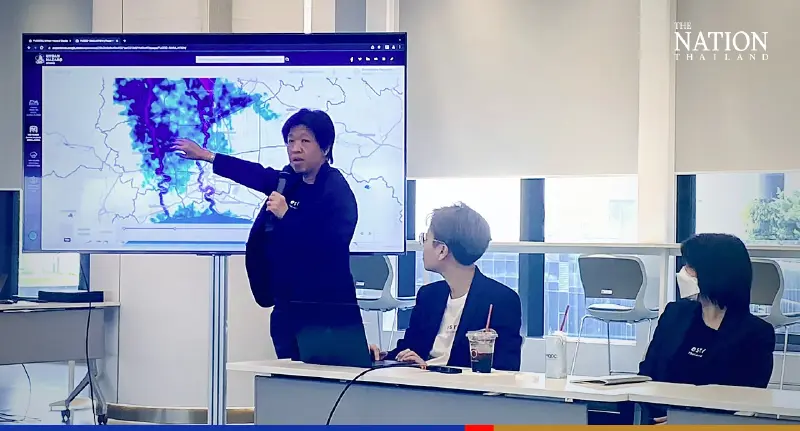


Urban Hazard Studio, a data hub, is using Geographic Information System (GIS) capabilities to predict flooding around Bangkok and environmental disasters all over Thailand, enabling better preparedness.
“By 2050, flooding could cause global economic damage of US$5.6 billion and nearly 25 million Thais live in vulnerable areas,” said Karndee Leopairote, executive vice president of FutureTales Lab by MQDC, a research centre that studies and analyses data for the future.
Flooding is one of Thailand’s greatest environmental risks. A deadly flood in 2011 inflicted THB1.4 trillion in damage, she said.

Esri Thailand, a pioneer in GIS technology in Thailand, joined hands with FutureTales Lab by MQDC to roll out Urban Hazard Studio, an environmental data hub to examine risks to Bangkok and surrounding provinces from the 100-year flood”.
The 100-year flood is a phenomenon that has seen the heaviest rainfall in the past century or a situation that leads to heavy rains that last longer than usual, explained Assoc Prof Seree Supraatid, FutureTales Lab’s adviser on climate change and disaster.
A seminar on “Learning the model of Urban Hazard Studio” was held at True Digital Park on Monday.
IPCC (Intergovernmental Panel on Climate Change) scientists have warned that an increase in global warming by 2 degrees Celsius in this century, would cause temperatures to rise, leading to drought, heavy rainfall, flooding, and eventually rising ocean levels.

Flood risks in Bangkok and its surrounding provinces are divided into three parts - urban flooding, river flooding, and coastal flooding, Seree said.
The 2011 flood is predicted to occur every decade and the volume of rainfall in Bangkok is forecast to increase by 20-30%, he said.
“The Chao Phraya River level will rise 1.68 metres by 2100, and without mitigating measures, this will put areas around Bangkok under water permanently”, he warned.
“Extreme weather brings more rain and heat wave. Without adequate preparation, there will be massive impacts and losses, hence it is important to have systematic prevention,” Karndee said.
The development of Urban Hazard Studio enables the analysis of local information through Esri’s GIS capabilities, she said.
Thanaporn Thitisawat, the president of Esri, explained that the GIS was “a tool for addressing the challenges of climate change and can be displayed on an app to share with people to monitor and use”.
“By using GIS tools, the location of future incidents can be forecast, including impacts on biological systems and local risk can be assessed,” she said.
The Urban Hazard Studio app will soon be developed to predict other phenomena, such as tsunamis and PM2.5 pollution.
Related News
5 Future Scenarios for Bangkok in the Next 30 Years from FutureTales Lab by MQDC
Treasury Dept teams up with geodata firm for land-price estimates
