
Global renewable energy surpasses coal in 2025, led by solar and wind
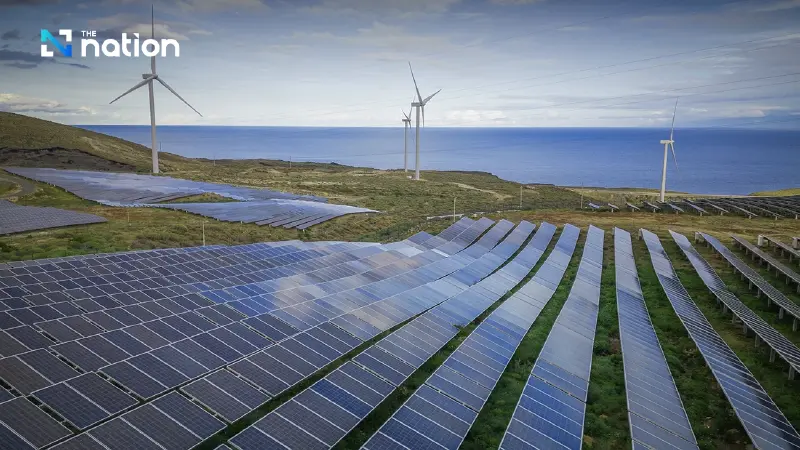


For the first time, global solar and wind power output exceeds coal, marking a turning point in the clean energy transition, says Ember research.
For the first time in 2025, global electricity production from renewable sources, including wind and solar, has surpassed that generated from coal, marking a major milestone in the global power sector, according to recent research by Ember, a climate research institute.
During the first six months of the year, renewables grew faster than the global rise in electricity demand, resulting in a slight decline in coal and fossil gas consumption. Solar power production increased by nearly a third compared with the same period in 2024, meeting 83% of the additional electricity demand worldwide, while wind energy rose by over 7%, enabling renewable energy to displace fossil fuels for the first time.
This represents a pivotal moment in the global energy transition. Solar and wind capacity is expanding rapidly enough to meet growing electricity demand, signalling the start of a clean energy transition aligned with worldwide energy consumption patterns.
The report highlights the crucial roles of China and India in expanding renewable energy, while the US and Europe continue to rely more heavily on fossil fuels. Separately, the International Energy Agency (IEA) forecasts that global renewable capacity could more than double by the end of the decade, with 80% of new clean energy coming from solar.

In the coming years, solar power will be the primary driver of renewable growth, with wind, hydro, biomass, and geothermal also playing important roles. China is expected to remain the fastest-growing market, with India emerging as the second-largest market by the end of the decade. Emerging economies such as Saudi Arabia, Pakistan, and several Southeast Asian nations are also preparing for rapid solar expansion.
Ember notes that China added more renewable capacity than the rest of the world combined, reducing its fossil fuel use by 2% in the first half of 2025 compared to the same period in 2024. Meanwhile, India increased renewable production to three times domestic demand, leading to declines in coal and gas consumption by 3.1% and 34%, respectively.
By contrast, in the United States, electricity demand grew faster than renewable capacity, resulting in a 17% rise in coal power generation during the first half of the year. In the European Union, limited increases in electricity demand, coupled with lower wind and hydro output, meant that despite rapid solar growth, electricity generation from gas and coal increased by 14% and 1.1%, respectively.
