
EGAT unveils green energy plan to boost Thailand’s competitiveness
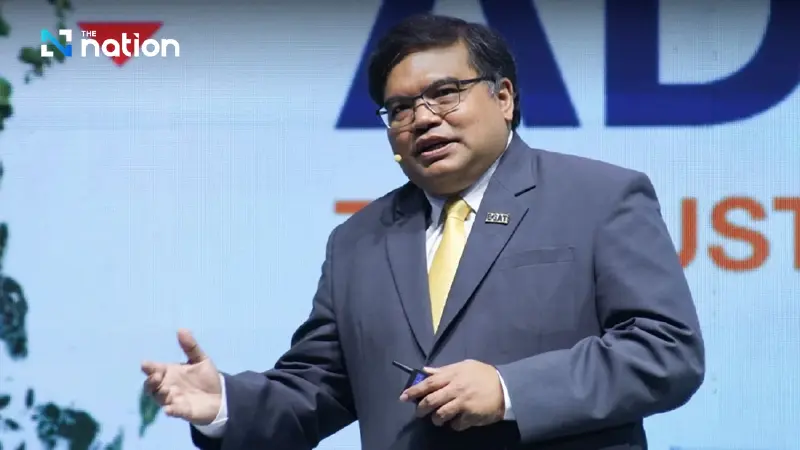


EGAT is driving Thailand's transition to Net Zero with innovative green energy solutions, enhancing the country’s competitiveness on the global stage through sustainable practices and advanced technologies.
Warit Rattanachuen, Assistant Governor of Research, Innovation and Business Development at the Electricity Generating Authority of Thailand (EGAT), outlined the organisation's role in supporting Thailand's shift towards sustainable energy and enhancing its competitiveness on the global stage.
He made the remarks during the special talk, "EGAT Way to Energy Future", at the event "A Call for Adaptation: Sustainability in Trade & Industry, organised by Krungthep Turakij and Sustainability Expo 2025 (SX2025) on Friday (October 3).
Warit highlighted that sustainable development, aimed at mitigating climate change, has become a key competitive and trade measure globally. EGAT is playing an essential role in enhancing Thailand's competitiveness through innovation and green energy solutions.
He elaborated that many RE100 companies are increasingly looking to invest in Thailand, given its focus on green energy.
"When we talk about the primary source of carbon dioxide emissions, it's often energy production and transportation," he said. However, he added, the good news is that electricity generation has alternatives that are free from carbon emissions, which can help prevent worsening climate change.

Warit also shared EGAT's strategy of "soft transformation", which involves adopting new technologies in three key stages:
- Source transformation:
EGAT is focusing on generating electricity from renewable and sustainable sources, ensuring stability in Thailand's renewable energy production. These sources include solar panels, hydrogen, and small modular reactors (SMR). "Nuclear energy has been used worldwide for decades, such as in US aircraft carriers, nuclear-powered submarines, and Russia's icebreakers," Warit explained. He also pointed to emerging technologies, such as artificial suns, which may become viable in the future.
- Sink co-creation:
EGAT is investing in carbon capture, storage, and utilisation. Warit noted the success of carbon dioxide storage systems, such as those in Japan, where carbon can be used to produce items like bowls or cultivate algae for food and medicine. He pointed out that there are many more potential uses for this technology that should be explored.
- Support:
EGAT is working on expanding Thailand's electric vehicle (EV) ecosystem by providing the infrastructure for EV charging stations. The aim is to foster confidence in the shift from gasoline-powered vehicles to electric alternatives.
Additionally, EGAT is offering decarbonisation solutions that include greenhouse gas emission reports, consultancy services, AI-powered energy management, solar panel installations, carbon credits, and renewable energy certificates.
As part of its renewable energy initiatives, EGAT aims to increase the proportion of electricity generated from renewable sources to 51% by 2037. This will involve hydropower (including pumped storage), floating solar panels, biomass, and geothermal energy.
Focusing on floating solar power, Warit explained that EGAT has piloted projects at various dams, including a large-scale farm at the Sirindhorn Dam in Ubon Ratchathani. The floating solar panels cover less than 5% of the dam, with plenty of room for further expansion without affecting local fisheries or communities.
He added that EGAT continues to explore other renewable energy sources, identifying areas with the greatest potential for development.

Warit highlighted Thailand's leadership in grid modernisation, with the country becoming the first in the world to implement such changes in collaboration with the International Energy Agency.
To further enhance grid stability, EGAT has set up the RE Forecast Centre, which uses AI to predict renewable energy generation in real-time, addressing fluctuations and ensuring grid reliability.

The Demand Response Control Centre is another important initiative, enabling the reduction of electricity consumption during peak demand times by encouraging participants to adjust their energy usage.
Meanwhile, the Virtual Power Plant gathers renewable energy plants and energy storage systems to manage power generation and distribution, ensuring a stable energy supply similar to that of a main power station.
Looking forward, Warit shared that the new Power Development Plan (PDP) outlines EGAT's goal to develop over 45,000 MWh of energy storage capacity, with 20,000 MWh from pumped storage hydro and 25,000 MWh from battery storage. This will enable Thailand to generate clean electricity around the clock.
He also mentioned EGAT's efforts to recycle EV batteries, working with various agencies and universities to ensure maximum benefits through a circular economy approach.
"EGAT is committed to supporting sustainability for Thailand, ensuring the country remains competitive, with growth, prosperity, and environmental responsibility at the core," Warit concluded.
