
Tourism faces crossroads as 'throwaway' model strains supply chain
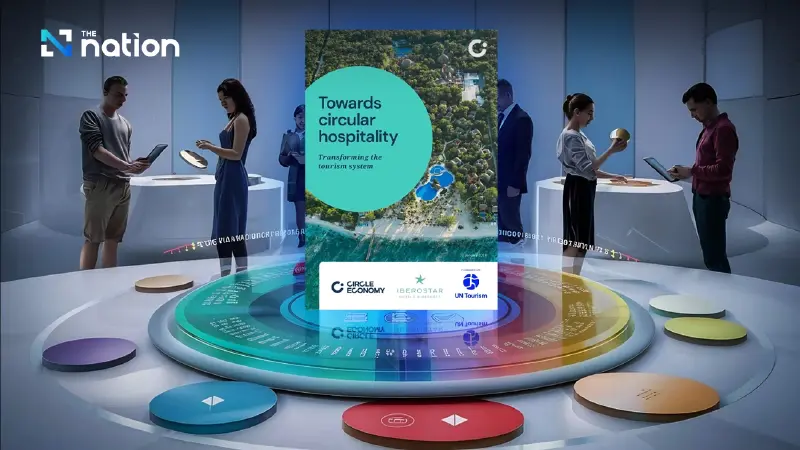


The tourism industry is struggling with the ‘throwaway’ model, causing massive waste and supply chain issues. A new white paper outlines a path towards circular hospitality.
The tourism industry is facing a crucial turning point as the 'throwaway' model — characterised by the linear approach of 'take-make-dispose' — causes significant waste and supply chain disruptions. This model, heavily reliant on new resources, has led to fragile supply chains and created pollution from single-use packaging. In response, the circular economy offers an alternative, promoting practices that enable hotels to design sustainable procurement and operations strategies based on three key principles: reducing waste and pollution from the outset, keeping materials in use for longer, and restoring the natural systems that sustain tourist destinations.
While the tourism sector creates 349 million jobs worldwide, over 70% of its environmental footprint occurs during the 'upstream' stages of production and transportation of goods used by hotels. Therefore, transforming procurement systems is essential to minimise widespread environmental impact.

To address these challenges, the Circle Economy organisation, alongside Iberostar hotels and the United Nations World Tourism Organization (UNWTO), launched the white paper 'Towards Circular Hospitality.' This document serves as one of the first frameworks to guide the industry’s transition from a linear to a circular economy. Key takeaways from the report are as follows:
10 Systemic Barriers to Progress:
The report identifies 10 systemic barriers hindering the transition to a circular model, which require collaboration from all sectors to resolve. These include:
- Lack of infrastructure to turn waste into resources, particularly in remote or island areas lacking recycling or composting facilities.
- Regulatory barriers and lack of incentives, such as insufficient laws or tax measures to support recycling products.
- Fragmented value chains, where outsourcing complicates the sharing of information and collaborative resource management.
- Supplier readiness and innovation, with most suppliers still adhering to traditional systems and lacking incentives to design new products.
- Short-term thinking, with many businesses viewing circularity as a 'cost' rather than a long-term strategy for resilience.
- Skills gaps and employee motivation, where high turnover rates affect the continuity of policies.
- Delayed behavioural change among guests, who tend to consume more resources when staying away from home.
- Lack of clear oversight, data, and accountability, making it difficult to track progress.
- Variability across regions, where solutions are not one-size-fits-all.
- Absence of a collaborative framework across the industry, leading to uncertainty and slowing systemic change.
5 Strategic Opportunities for Driving Circular Economy:
To achieve this vision, the white paper outlines five strategic opportunities that will help the hospitality industry gain a competitive edge and create long-term value:
- Circular Procurement: Optimising supply chains by prioritising recyclable materials and eco-friendly services.
- Circular Operations: Eliminating waste in daily operations, improving resource efficiency, and engaging staff and guests in sustainability.
- Circular Built Environment: Applying circular economy principles from design to construction and renovation.
- Circular Business Culture and Guest Experiences: Integrating circularity into the travel experience, making it accessible and part of memorable travel moments.
- Circular Destinations: Collaborating with hotels, suppliers, communities, and policymakers to create a resilient local ecosystem.
Unlocking Success with 6 Key Supportive Factors:
The report also highlights six supporting factors that can help unlock the transition throughout the value chain:
- Strategy and Governance: Embedding circularity goals into core business strategies and performance metrics.
- Policy and Standards: Advocating for regulations supporting low-carbon technologies and coordinated waste management.
- Innovation and Technology: Leveraging high-tech solutions, such as AI for food waste monitoring, and adapting local solutions to regional contexts.
- Collaboration: Building partnerships between the private sector, government, and communities for shared logistics and procurement systems.
- Capacity Building and Education: Training employees and sharing knowledge among partners to change long-term behaviours.
- Finance and Investment: Shifting investment models to highlight the value and long-term flexibility offered by circular systems.
Iberostar’s Innovation Case Study:
Iberostar has proven the circular economy model through various initiatives:
- Data-Driven 3R Team: Iberostar created the first 3R department in the industry, with over 250 trained staff to sort and analyse waste in real-time using digital dashboards. This led to a 69% reduction in landfill waste in 2024, with an expected increase to over 80% in 2025.
- AI for Food Waste Reduction: The use of smart bins from Winnow Solutions across over 60 hotels has helped chefs track the most wasted foods, leading to menu improvements and a 12% reduction in food waste in the first year.
- Circular Construction: In Spain, the Waves Gaviotas Park project successfully diverted 75% of construction waste from landfills, while in Mexico, almost all furniture was reused in hotel renovations.
This report urges all stakeholders in the global tourism industry to shift from ambition to action, creating a future where tourism benefits people, places, and nature sustainably.
