
Tetra Pak Cuts Global Emissions by 25% Leading Industrial Sustainability Drive


Global processing & packaging giant achieves 54% reduction in operational emissions whilst investing €100m in renewable materials research ahead of 2030 net-zero target
- Tetra Pak has reduced greenhouse gas emissions across its value chain by 25% since 2019, with a more significant 54% reduction within its own operations.
- The company's sustainability progress is largely driven by its use of renewable energy, which now accounts for 94% of its global electricity consumption.
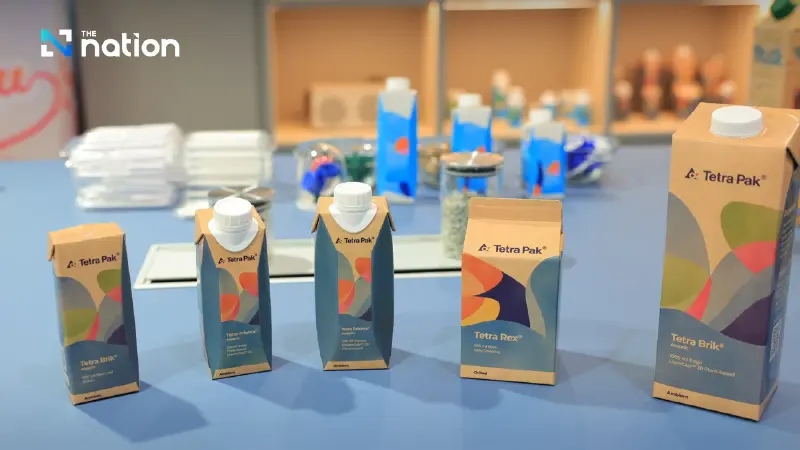
- Key innovations contributing to the emissions cut include new energy-efficient equipment and the launch of paper-based barrier cartons that reduce carbon emissions by up to 33%.
- The company has invested over €142 million in sustainability initiatives, including research into renewable materials and enhancing global packaging collection and recycling systems.
Tetra Pak has delivered substantial progress towards its climate goals, cutting greenhouse gas emissions across its value chain by 25% since 2019 whilst achieving an even more dramatic 54% reduction within its own operations, the company announced at a press conference in Bangkok on Tuesday.
The Swedish processing and packaging giant's annual Sustainability Report 2024 reveals that renewable energy now accounts for 94% of the company's global electricity consumption, keeping it firmly on track to achieve net-zero emissions in its operations by 2030.

Ratanasiri Tilokskulchai, Managing Director of Tetra Pak Thailand, emphasised the critical role of regional partnerships in achieving these milestones.
"We extend our heartfelt gratitude to our customers in Thailand for partnering with us in this sustainability journey," she said. "Their trust in our innovations reinforces our commitment to developing solutions that not only meet their needs but advance our vision to protect what's good for food, people, and the planet."
The company, which operates in over 160 countries and employs approximately 24,000 people globally, has invested €100 million in renewable and circular materials research whilst committing a further €42 million to enhance packaging collection, sorting, and recycling systems worldwide.

Technological Innovation Drives Energy Efficiency
Thailand has emerged as one of the key testing grounds for Tetra Pak's next-generation technologies, with new Tubular Heat Exchangers and Separators deployed locally achieving energy consumption reductions of up to 40% compared with earlier designs.
Surapong Kobpraditkul, Tetra Pak Thailand Processing Director, highlighted the broader impact of these innovations: "Our innovations in energy-efficient technologies, like the Tubular Heat Exchanger, are crucial in reducing the energy consumption of our operations and helping our customers do the same."

The company has also introduced Circle Green® stainless steel, produced using renewable energy, which has reduced emissions by up to 1,370 kilograms per homogeniser machine.
Circular Economy Progress in Thailand
Tetra Pak's commitment to circularity has seen significant progress in Thailand, where the company introduced 40 million tethered caps designed to reduce littering in 2024.
Plant-based cap deliveries to customers surged by 41%, whilst collection projects including PRO Thailand, The Green Shelter, and Beverage Carton Recycling Project (BECARE) expanded nationwide, now covering 49 provinces and engaging 98 sorters.

Patinya Silsupadol, Head of Sustainability at Tetra Pak Thailand, outlined the company's circular economy achievements: "We invested €100 million in R&D last year to ensure we are driving circularity in our operations, using renewable resources and boosting recycling across the globe."
He added: "In Thailand, we introduced 40 million tethered caps to reduce littering, and our plant-based cap deliveries increased by 41% in 2024."
Globally, the company collected and sent more than 1.3 million tonnes of used beverage cartons for recycling through 215 recycling partners in 2024.

Landmark Packaging Innovation
A significant breakthrough came with the launch of paper-based barrier cartons containing up to 90% renewable content, which cut carbon emissions by as much as 33% compared with conventional alternatives.
Praeporn Amornpanupun, Packaging Portfolio Director at Tetra Pak Thailand, explained the significance of this innovation within the company's broader circularity strategy, noting that these developments represent "a direct contribution to the low-carbon circular economy, aiming to reduce reliance on aluminum foil while maintaining the quality and functionality of the packaging."

Social Impact and Community Engagement
Beyond environmental achievements, Tetra Pak reported strong social sustainability metrics, with an 87% employee engagement score globally and 84% of staff reporting they could "bring their whole selves" to work.
Workplace safety also improved, with a 10% drop in the total recordable accident rate since 2023.
In Thailand, the company has partnered with informal waste pickers, known locally as "sa-leng," to improve their livelihoods whilst supporting recycling initiatives.
"In Thailand, we've worked with waste collectors to improve their quality of life and ensure that they have the tools and knowledge needed to manage waste safely and effectively," Patinya noted.
Thailand's Strategic Role in Global Ambitions
At its Rayong factory, Tetra Pak Thailand has adopted solar panels and implemented hybrid vehicle policies to further reduce emissions. These local initiatives align with the company's global push towards net-zero operations by 2030.
"We've installed solar panels at our Rayong plant and implemented hybrid vehicle policies in Thailand to help reduce emissions and improve energy efficiency," Ratanasiri explained.
She emphasised Thailand's pivotal role in the company's global strategy: "Thailand has been pivotal in helping us scale up circularity. With a 41% increase in plant-based cap deliveries, we are driving progress towards a more sustainable future."

Meeting Future Food Demand
The sustainability drive comes against a backdrop of mounting global food security challenges. Adolfo Orive, President & CEO at Tetra Pak, noted in the report that by 2050, the global population is projected to reach 10 billion, driving a 60% surge in food demand.
"Yet, while food systems are vital to sustaining modern life, they also account for more than one-third of global greenhouse gas emissions," he said. "This growing tension between the need for increased food production and reduced environmental impact presents a critical challenge—one that Tetra Pak is committed to addressing."
2030 Targets Within Reach
With only five years remaining to achieve its net-zero operational emissions target, Ratanasiri expressed confidence in the company's trajectory: "The journey is challenging, but achievable. We have already made significant progress, and with just five years left, we are confident we will reach our goals."
The company's integrated approach—combining climate action, resource circularity, and social responsibility—is designed to advance food systems that are more sustainable, inclusive, and resilient.
"Our goal for 2030 is net-zero emissions in our own operations," Ratanasiri concluded. "With continued investments in technology and circularity, we are driving meaningful change towards a sustainable future."
Thailand, with its expanding recycling networks and adoption of new food production technologies and low-carbon packaging solutions, is expected to play a critical role in meeting these ambitious targets.
