
Understanding hydrogen technology: the energy of the future for sustainability
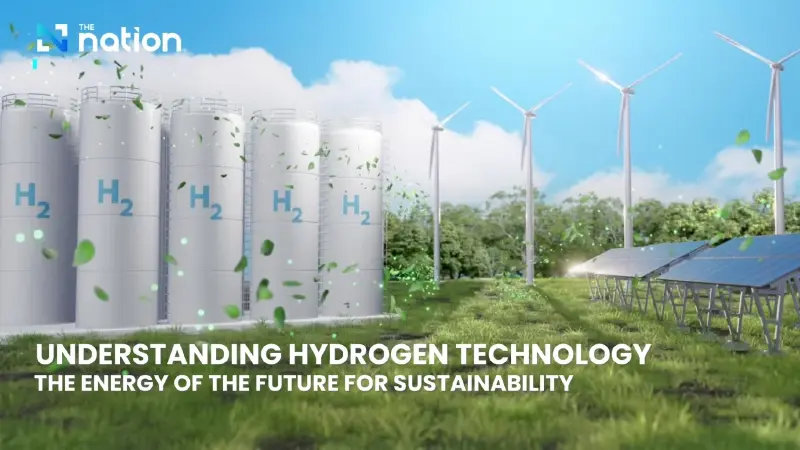


Understanding hydrogen technology, the energy of the future for sustainability.
- Hydrogen is categorised by color based on its production method and carbon footprint, with "Green Hydrogen" being the most sustainable as it is produced using renewable energy.
- The technology is being applied to decarbonise key sectors, including its use as a clean fuel in industry, for power generation in fuel cells, and to power fuel cell electric vehicles (FCEVs).
- As a key part of the global energy transition, countries like Thailand are developing national strategies and public-private partnerships to build hydrogen infrastructure and promote its use.
What is Hydrogen?
Hydrogen has become a global focus amid climate change and the urgent shift to clean energy. It’s expected to play a key role in the global energy transition, and in Thailand, this will soon become a more familiar subject. Hydrogen (H₂) has been studied since the 18th century. Water (H₂O) is the most abundant compound containing hydrogen on Earth.
Hydrogen can be produced from various raw materials, each emitting different levels of carbon dioxide (CO₂). To categorize cleanliness levels, colors are used to label the types:
- Brown Hydrogen
Made from coal using gasification, this process emits the most CO₂. - Grey Hydrogen
Made from natural gas via Steam Methane Reforming (SMR), emitting significant amounts of CO₂, though less than brown hydrogen. - Blue Hydrogen
Also made from natural gas, but CO₂ is captured and stored using Carbon Capture and Storage (CCS) technology. - Pink Hydrogen
Produced via electrolysis of water using electricity from nuclear energy. - Green Hydrogen
Produced via electrolysis using renewable energy sources like solar or wind power.
Hydrogen technology is being used in over 30 countries, particularly in Europe, the U.S., and the Middle East, thanks to advantages in renewable energy development. Thailand also has potential in utilizing hydrogen to reduce carbon emissions in three key sectors:
- Industry
Used in metal refining, petrochemicals, and as a clean fuel in high-temperature processes like cement production. - Power Generation
Used directly as a fuel or blended with natural gas in gas turbines. It can also power fuel cells to generate electricity, such as at the EGAT Learning Center in Lam Takhong where hydrogen is used for energy storage from wind turbines and reconverted to electricity via fuel cell. - Transportation
Can improve the quality of petroleum fuels for internal combustion engines (ICEs) or be used directly in fuel cell electric vehicles (FCEVs), including buses and long-haul trucks.
Government Policy on Promoting Hydrogen Energy
Thailand’s hydrogen development strategy is aligned with four key pillars:
- Market Development and User Incentives
- Support for R&D and Industry Development
- Infrastructure Development
- Regulatory and Standard Improvements
PTT Group's Hydrogen Technology Roadmap
PTT recognizes hydrogen’s potential to reduce CO₂ emissions and create new business opportunities. Notable milestones include:
- 2019:
Established Hydrogen Thailand Club with public and private partners. Now has 54 member companies. - 2022:
PTT, OR, TOYOTA, and BIG set up Thailand’s first hydrogen pilot station for FCEVs in Banglamung, Chonburi. Toyota's Mirai FCEV was tested in Thai transport conditions. - 2023:
PTT Exploration and Production (PTTEP) won a bid for a green hydrogen project in Oman.
PTT – RINA conducted combustion tests mixing hydrogen with natural gas and developed lab facilities via InI. - 2024:
PTT, Toyota Motor Thailand, and BIG elevated Hydrogen Thailand Club into the Hydrogen Thailand Association, with member transfer currently underway. - 2025:
PTT Group signed an MOU to develop low-carbon hydrogen businesses, aiming toward the Net-Zero target.
