
START-UP LAUNCHES MOBILE COMMERCE APP


Play
ShopSpot matches sellers, buyers in three-step process with social media functions
A group of Thai developers has launched a mobile commerce application for the iOS platform called ShopSpot, targeting 100,000 downloads within the next two quarters in Thailand and Singapore, where they have established a company.
It is the first product released by the new company, ShopSpot Pte Ltd, which was set up in February. This group of Thai developers have tried their hand at being entrepreneurs, establishing a software company outside Thailand with 15,000 Singapore dollars (about Bt370,000) in seed funding from Joyful Frog Digital Incubator (JFDI Asia).
ShopSpot Pte’s founder and chief executive officer, Natsakon Kiatsuranon, 27, said ShopSpot
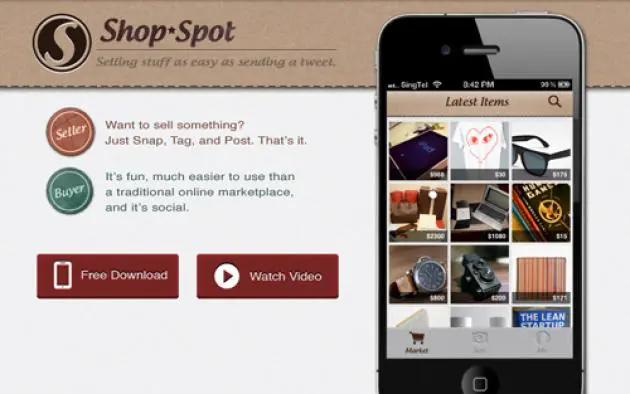
is a mobile application enabling consumer-to-consumer mobile commerce. It is designed to facilitate quick sales by individuals, through three instant steps: snap-tag-post.
The app makes buying and selling items as easy as sending a tweet, Natsakon said.
Users just download ShopSpot into their iPhone or iPad, then sign in and register as a member – a onetime procedure. Then they can create their account and immediately start selling their stuff.
“It is a very easy and very quick way to conduct mobile commerce. Just open the app and take a photo of the stuff you want to sell. Then, just put the details of the item and the price, and just post it. These three easy steps – ‘snap-tag-post’ – put the ability to conduct commerce quickly into people’s hands,” Natsakon said.
Chawanop Witthayaphirak, chief technology officer of ShopSpot Pte, said that for many people looking to sell things, establishing an online presence and engaging in mobile commerce is too complicated. The ShopSpot app is intended to address this problem. It is designed to be used in combination with a social network plug-in, alerting users’ Facebook and Twitter friends whenever they post a new product for sale at ShopSpotApp.com via the application. If anyone is interested in a product, they just click the link back to the shop to initiate a purchase.
“This app is not yet designed to allow them to make an online purchase. It works by matching people who want to sell with those who want to buy. Then they make a deal via a method agreed upon at their own convenience. They might meet at a physical location to trade the product after initiating the purchase online, or they could just conduct the transaction via bank transfer and send the product via the post,” Chawanop said.
ShopSpotApp.com is currently designed as a place for offering products for sale. In future, a function will be added to allow sellers and prospective buyers to chat with each other.
“At the current stage, it focuses on allowing people to use smartphones to post products for sale, because that is the most natural way for people who want to sell their stuff – for example a book, a mouse or an iPad case. They just take a photo of it and then post it – that’s it,” Chawanop said.
Natsakon said the firm is looking at three potential business models: selling advertising through in-app purchases; charging a product-listing fee; and quota or premium-product listing. He expects that once it has 100,000 members using ShopSpot, it will start to monetise the app.
The company plans to launch ShopSpot on the Android platform and a version for iPad in the next couple of months. It aims to have 100,000 downloads across the iOS and Android platforms in three to six months in two main markets: Thailand and Singapore. It targets having 100,000 items on sale in the same time frame. Natsakon added that the company is looking for investors to scale up the company’s business and product commercialisation for entry into the wider Asia market.
“My passion is establishing a Thai software firm that is successful in the global market. Thai developers are intelligent and have good software-development skills, especially in mobile applications. But they face obstacles to becoming entrepreneurs and achieving business success because they do not have access to sufficient investment capital or training to develop business-thinking skills,” Natsakon said.
He went on to say that the keys to success for local developers comprise both internal and external factors. The internal factors are the developers themselves; that means software-development know-how and the ability to generate product ideas. Developers have to know what products the market needs, and the ability to turn ideas into good products. But even brilliant product developers need support from investors and mentors to help craft their ideas and products into commercialised, market-ready products. Natsakon said his team – the developers of ShopSpot – has both.
The team’s journey started at the end of last year when they participated in AIS Startup Weekend Bangkok 2011, sponsored by AIS, Software Park Thailand, the Mobile Technology for Thailand Group and SingTel Innov8, the corporate venture arm of the SingTel Group. Startup Weekends are 54-hour events where developers, designers, marketers and product managers come together to share ideas, form teams, build products and launch start-ups.
They built a minimum viable product and pitched their idea, clinching the runner-up spot. This allowed them to join the JFDI-Innov8 2012 Bootcamp in Singapore. The first-ever 100-day bootcamp in Southeast Asia, it was operated by JFDI Asia and backed by SingTel Innov8 and two Singapore government agencies, MDA and Spring Singapore.
At the bootcamp, they were provided with intensive mentoring and workshops, and received the S$15,000 investment from JFDI Asia.
This group of young developers teamed up three years ago to form a software company named Fill Infinity (Fill8), which developed TagTie, a photo-sharing application for iOS-platform mobiles. The venture was not a total success, but some of the concepts used in TagTie, such as the social media and community app functions, formed the basis of ShopSpot.
