
Watching the ASEAN special foreign ministers’ meeting on the Thailand–Cambodia conflict
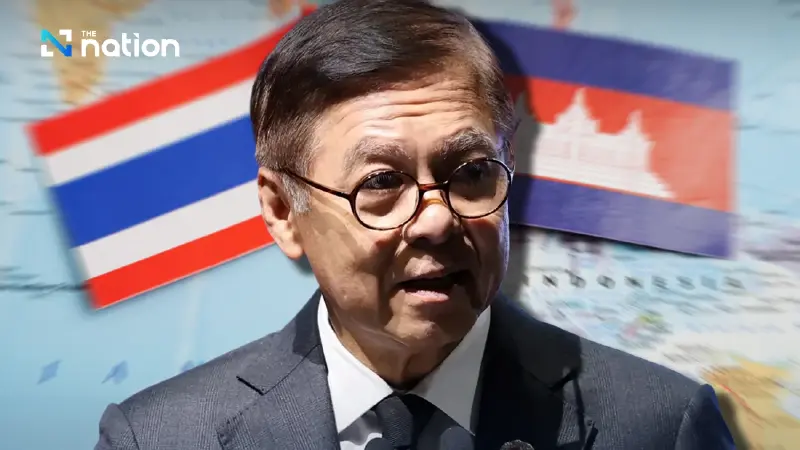


The meeting will be the first face-to-face talks between the Thai and Cambodian governments since renewed fighting erupted on December 8
ASEAN foreign ministers are due to hold a special meeting in Kuala Lumpur on Monday, December 22, 2025, as the bloc intensifies efforts to halt fighting along the Thailand–Cambodia border that has killed at least 40 people and forced more than half a million from their homes.
Reuters reported that the talks will try to revive a ceasefire previously brokered by Malaysia—this year’s ASEAN chair—with the United States also involved in mediation, but which collapsed soon after it was announced.
The meeting marks the first time Thailand and Cambodia have come face-to-face at ministerial level since fresh clashes erupted on December 8 along their 817-kilometre frontier, stretching from forested areas near Laos to coastal provinces. Both sides have accused each other of violating the truce, with heavy weapons reportedly used at multiple points along the border.
Malaysia’s Foreign Ministry said on Sunday, December 21, 2025, that the meeting—chaired by Malaysian Foreign Minister Mohamad Hasan—will consider ASEAN steps to help de-escalate the situation and end the fighting.
Prime Minister Anwar Ibrahim said he hoped the session would allow both sides to negotiate openly and reach a fair and lasting outcome. He also said he had spoken with leaders from both countries and urged them to uphold the spirit of dialogue, wisdom and mutual respect.
Anwar added that an ASEAN observer team would present findings from field assessments, including satellite imagery provided by the United States, to the special meeting.
Beyond the regional push, the United States and China have also stepped up diplomatic efforts, but there has so far been no clear breakthrough.
Reuters also reported that Thailand has carried out air strikes against Cambodian military positions and suspended some fuel movements via a Laos border checkpoint amid concerns the supplies could be diverted into Cambodia. Thai military statements have accused Cambodian forces of using drones and rockets, including strikes that it said hit civilian areas—claims Cambodia has rejected.
Thailand is also closely watching the special ASEAN foreign ministers’ meeting in Malaysia, attended by 11 members: Thailand, Myanmar, Malaysia, Indonesia, the Philippines, Singapore, Vietnam, Laos, Cambodia, Brunei and Timor-Leste.
A key agenda item is the Thailand–Cambodia border situation. Anwar, as ASEAN chair, is expected to raise the issue after 15 days of clashes since December 8, in a bid to find a path towards peace.
Thai officials say Thailand has gained the upper hand on the battlefield, with military operations retaking multiple areas it says were encroached upon by Cambodia. They cite key positions including Hill 350 and the Prasat Ta Kwai area in Phanom Dong Rak district, Surin province, described as the most intense battleground, where Thai forces say they have now established control and security.
Thailand also says it has pressured Cambodia to dismantle a silt-trap barrier near Ban Hat Lek in Khlong Yai district, Trat province, around kilometre marker 73. Thai sources say the structure extended into the sea in a bid to expand land and maritime territory, and that it altered currents in ways that worsened coastal erosion near the Marine Unit 182 position.
Thailand’s stance at the meeting will be led by Foreign Minister Sihasak Phuangketkeow, alongside a military representative, Gen Natthaphong Phraokaew, deputy chief of defence forces.
Thai officials insist Thailand did not start the latest round of fighting, saying Cambodia initiated the attacks and Thailand has acted in self-defence under the UN Charter, to protect civilians and defend sovereignty.
They say Thailand has sought peace and complied with earlier understandings, including the Kuala Lumpur Declaration, but accuse Cambodia of violating the commitments, leading to the current escalation.
On the diplomatic front, Sihasak is said to be preparing extensive information and evidence provided by the Thai military to rebut Cambodian claims and to brief ASEAN partners on Thailand’s version of events.
Thailand says it is not focused on external pressure, but on protecting sovereignty and neutralising threats so Thai people can be safe in life and property.
The report contrasts Cambodia’s public calls for peace with developments on the ground. It notes that Cambodian Deputy Prime Minister Hun Many—also described as chairman of the UYFC and the son of Senate President Hun Sen, and the brother of Prime Minister Hun Manet—led a march on December 18 calling for peace.
However, it says Cambodian forces have continued reinforcing frontline positions, including alleged BM-21 rocket fire and “kamikaze” drone attacks, with damage continuing in civilian areas.
Ahead of the meeting, Thailand’s Foreign Ministry and the military signalled aligned positions. Maratee Nalita Andamo, deputy spokesperson for the Foreign Ministry, said that despite various international moves—such as the US secretary of state and a Chinese special envoy visiting Cambodia—Thailand would not be pressured into a disadvantage.
She said Thailand’s position had been consistent: it wants genuine and sustainable peace, and insists it has not threatened or violated another country’s sovereignty. She added that Cambodia must show sincerity by meeting three conditions:
- Cambodia must declare a ceasefire first, as the side accused of initiating attacks.
- Any ceasefire must be real and continuous, with no renewed firing.
- Cambodia must cooperate with Thailand on clearing landmines—an issue Thailand says is unacceptable and must be addressed jointly.
She said the next steps would depend on assessments by Thai security agencies on the ground, working with the Foreign Ministry.
In parallel, Thailand says its armed forces have carried out air operations targeting Cambodia’s O’Chik Bridge, which links Siem Reap with Oddar Meanchey, to disrupt Cambodian supply routes from rear areas to the front.
Air Force spokesperson Air Marshal Chakkrit Thammavichai said Thailand would strike the bridge again if Cambodia continued using it to move supplies, describing the operation as pressure and a signal to Cambodia’s leadership that Thailand would continue military operations until Cambodia accepts Thailand’s three conditions as a basis for a ceasefire and peace talks.
The report concludes that the ASEAN special meeting may not deliver an immediate breakthrough, as Thailand says it still needs to assess the intentions of Cambodia’s leadership, which it says is calling for peace while potentially maintaining a willingness to continue fighting.
