
Come, let us tell you a story


Play
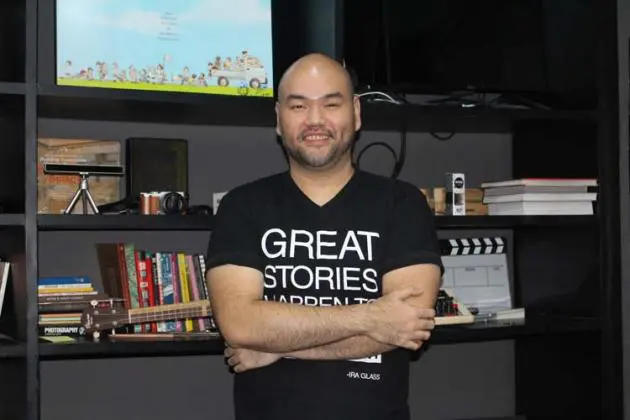
Storylog.co founder Pippo Pramewith looks back over the successes and failures of getting his startup up and running
From freelancer to entrepreneur to tech startup founder, Pippo Pramewith has acquired a wealth of knowledge over the past few years even though he freely admits to having his ambitions badly stalled for well over a year.
Today, though, the founder of story-telling community platform Storylog, appears to have found his niche. A graduate in communication arts from Chulalongkorn University, Pippo freelanced after his student days, working variously as a director, scriptwriter, and performer in stage plays, video promos and TV drama for four years. Ready for a change, he decided to become an entrepreneur and thought about opening a restaurant. That plan fell by the wayside after he read “The Lean Startup”, Eric Ries’ best-selling book that explains how entrepreneurs use continuous innovation to create successful businesses.
“This book opened my mind to the startup and piqued my interest in the startup world. I put my ideas for a restaurant to one side,” Pippo says.
An avid reader of what he calls “people stories”, Pippo combined his old interest with the new, starting the website Storylog.co, as a place for people to write and share their stories.
“My passion is to have a story-telling community. No platform like this is available, especially in Thailand. When you think about a video community, you think about YouTube, while when you think about photo sharing you think of Instagram. We would like people to think of Storylog when they think about a story-sharing community platform,” he explains.
He teamed up with his friends and went to pitch his ideas for a tech startup to AIS The Startup 2013. But even though he failed to get through the first round, he received moral support from senior startup specialist Teerachart Kortrakul, chief executive officer and co-founder of SiamSquared Technologies, the developer of Stock Radars, one of most successful tech startups in Thailand.
“Teerachart told me that my idea was interesting but needed development and improvement to make it stronger,” he says.
He took the comment to heart and worked hard to improve his product. A few months later he applied for the Dtac Accelerate 2013 and finally found success when Storylog became one of 20 ideas picked from 1,000 applicants. He also made the final cut, winning a place in boot camp for three months to groom his startup idea.
“Being one of 10 finalists in Dtac Accelerate 2013 was the beginning of our startup journey. I’m grateful to Krating Poonpol [the father of startups in Thailand] for picking us.”
The three months in boot camp gave Pippo a leg up in the startup world. He got to know a lot of people with different skills, such as programmers and designers, and emerged confident that he would be able to roll out the full version of the product in three months. In that he failed and instead became mired in developing the beta version of Storylog. It was then he realised the importance of a team in building a successful tech startup.
“We got stuck in and saw no improvement for almost a year until we decided to join Dtac Accelerate 2014. We confessed to the committee that we had failed to turn an idea into a real beta version of service. But we were patient. We would not stop working until Storylog came out to serve users,” said Pippo.
This time, Storylog made it into the final five and received seed-funding of Bt500,000 for product improvement. His team were trained and groomed during a second three-month boot camp.
Dtac Accelerate 2014 was the turning point, he says. His team learned the necessary skills and by halfway through the boot camp, were able to launch the beta version of Storylog. The team found a few users to try their product, without promoting, and used the feedback to improve features.
“We relied on the lean startup concept. We allowed users to only write their stories at a length of between 300 and 20,000 characters, with no photos and video,” he says.
By the end of the boot camp, the site had 40,000 visitors and 200,000 page views.
Pippo continued to develop Storylog and finally launched the full version last November. Since then, Storylog has been gaining more visitors [both writers and readers] and stories. Unique visitors jumped from 36,000 in November to 180,000 in January. In August alone, Storylog.co recorded 500,000 unique visitors, 1.7 million page views, and 2,400 stories.
Now, he’s working on the next chapter and says Storylog version 2.0 will be launched at the end of September with a business model to create revenue streams.
Storylog.co will partner with the largest e-book platform, Ookbee, to facilitate Storylog’s writers in publishing their books, which will be sold in both printed and e-book format. This model will be monetized by revenue sharing between Storylog, Ookbee and the writer.
Another business model is to provide content marketing for brands, a model that Pippo regards as a significant money spinner.
“We provide a platform and engage the writer community for the brand while also promoting the brand’s topic to Storylog’s writers. We offer seeded writing for the brand as well. In this way the stories, both from organic and seeded writing, will be meaningful for readers while addressing the brand’s content marketing campaign objectives as well,” he explains.
Plans are also underway to launch Fiction.co sometime in the next year. Based on the same core engine, Fiction.co will be a platform and community of fiction writers and readers under a business model that will generate revenue for both writer and platform provider.
And Storylog is talking with investors with a view to further expanding its services and making its platform stronger.
“Not everyone is as lucky as Storylog, so anyone thinking of a startup needs a business model and a plan for earning revenue from day one of their startup journey. We have been supported by the tech startup community, especially by Hubba Co-working space and its founder who have coached us and encouraged us. Without Hubba, there would be no Storylog,” Pippo concludes.
