
Obi Worldphone to enter Thai market in December


Play
Beautiful design sets it apart from rival smartphones, CEO says
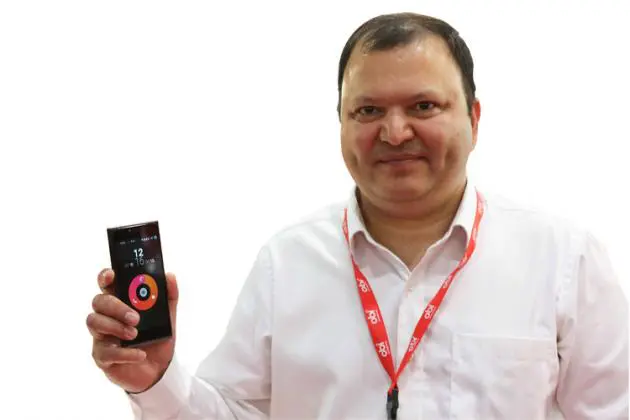
Obi Worldphone, a US smartphone manufacturer, has huge plans for the Asia-Pacific region. Next month, it will foray into Thailand’s smartphone space in partnership with a leading e-commerce player.
Neeraj Chauhan, co-founder and chief executive officer of Obi Worldphone, said his company had significant opportunities in Thailand, where mobile-phone penetration is around 150 per cent, while smartphone penetration is just 49 per cent. This, along with a high proportion of young people in the population, means the landscape aligns well with Obi’s target consumer group.
“We will continue to innovate and bring beautifully designed smartphones with top-notch features to the market in regular intervals – our product road map is robust and exciting enough. Stay tuned,” Chauhan said.
Smartphones have emerged as one of the most advanced cultural tools for communications and entertainment over the past decade. There is a significant gap in the market between high-design, high-priced phones and generic, low-priced devices. Obi says its vision is to address this gap by offering Silicon Valley-led design, no-compromise technology and features at attractive prices.
The company’s ambition is to serve customers around the globe. Obi’s key strategic move in the world smartphone market is to offer a different design as its core differentiator.
“We have thought through every element of the customer experience, from the curves of the phone in your hand to the icons that reflect the silhouette of the phones. The full experience is orchestrated to feel different from any other phone out there, one that will make Obi Worldphone recognisable across the globe,” Chauhan said.
The target users of Obi smartphones is a young customer – aged between 18 and 30 years – with a discerning eye for style, fit, finish, a great user experience and value for money, the company says. Obi adopters will typically be those upgrading to a more stylish and high-value smartphone, Chauhan said.
Obi Worldphones will be available in more than 70 high-growth countries by next year. The company is building manufacturing capabilities with its partners to increase production as demand increases.
“We’ll work to scale up our models from tens of millions to hundreds of millions of devices,” Chauhan said.
When asked about the key difference between Obi and its rivals, especially the market leaders, he said Obi was providing Silicon Valley quality and design with real differentiation in design, packaging and custom user interface (UI).
He added that Obi offered a unique value proposition to the consumer, which is to bridge high design and pricing. This gap is best addressed by Obi and its partnership with Ammunition, a Silicon Valley-based design studio whose recent successes include the Beats line of high-performance headphones and speaker systems.
Obi Worldphone has collaborated with Ammunition for industrial design as well as UI design, and it is an equity partner in Obi. “Our Silicon Valley-led design with no-compromise technology and features at an attractive price point offers a compelling proposition for our consumers,” Chauhan said.
While positioning for all existing brands becomes a function of pricing and local distribution strategy, Obi Worldphone says it has set out to make phones that young discerning customers feel are worth owning for their design, specs and pricing.
“We have identified a completely new segment, and as such we are confident of making it our own and taking a leadership position. Our positioning does not require us to compete head-on with any of the other OEMs [original equipment manufacturers],” Chauhan said.
“There is a conscious choice we make when it comes to the go-to market channel depending on the local consumer shopping habits and evolution of channels.”
Obi says it wants to be a design-led company, in an entirely different market than Apple, so its vision is to introduce an attractive range of distinctively designed smartphones with no compromises on specifications, materials or quality. This is why Obi has joined forces with Ammunition, he said.
Ammunition led the process from initial concepts through to manufacturing – so as to maintain the integrity of Obi’s original design intent.
“We worked closely with our partners in the ecosystem to create efficiencies that helped us achieve an attractive price point for young consumers. The result is an iconic, timeless design language well within reach for consumers in global markets,” Chauhan said.
