
When tradition pulls the strings


Play
A famous temple in Ratchaburi offers an alternative to water throwing with traditional puppet performances
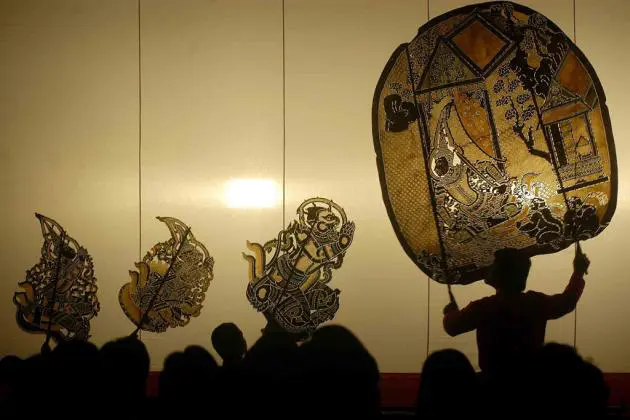
From Bangkok’s Khao San Road to Chiang Mai’s City Moat, just about everywhere in Thailand will be celebrating the upcoming Songkran Festival with water. Everywhere that is except for the small district of Photharam in Ratchaburi province. There, at Wat Khanon, fire will outshine water, as the famous temple will be burning piles of coconut husks for the unique nang yai shadow play
Part of the temple’s annual Thai Puppet Festival, the nang yai shadow play is expected to draw families and day-trippers to Ratchaburi to enjoy the low-key drama.
“The shadow play reflects our traditions. It’s a rustic theatrical form that dates back to the Ayutthaya period,” says Wat Khanon’s abbot Phithak Silpakhom, “In those days, long before the advent of electricity, the puppet troupe burnt coconut husks on one side of a screen made of a large sheet of fabric, while the puppeteers played with light and shadow on another side. We will be re-enacting that same tradition during the show over Songkran.”
Part of Thai puppetry, nang yai is considered a high performance art and the oldest theatrical form, with the very earliest plays staged during the reign of King U-thong of Ayutthaya in the fourteenth century. Unique and rare, the shadow play was popular in the royal court before fading out and giving way to newer forms of entertainment.
With shadow figures made of hide, the puppeteers entertain the audiences with stories from the Ramayana. Wat Khanon is the only temple with its own nang yai troupe and they regularly put on performances.
This Saturday and Sunday, the Wat Khanon troupe will be enacting the episode where Hanuman gives Rama’s ring to Sita.
In this story, Hanuman explores the demon’s city and spies on Ravana – the Demon King. He locates Sita in Ashoka grove, where she is being wooed and threatened by Ravana and his rakshasis to marry the demon king. He reassures the hopeless Sita, giving her Rama’s signet ring as a sign of good faith. Hanuman even offers to carry Sita back to her husband – Rama. Sita refuses, instead demanding that Rama’s troops storm Ravana’s town.
“Nang yai brings together many forms of traditional arts – music, dance, storytelling and puppetry,” the abbot adds. “We bind them together to make the play both unique and entertaining.”
This annual festival, now in its eighth edition, draws the country’s best puppet masters and traditional performance artists.
“The Thai Puppet Festival will feature the best puppet shows from all four regions at the temple ground,” adds the monk. “Show like the nang yai shadow play are rarely shown outside the temple.”
Adding even more colour to the light and shadows are smaller rod puppets from Klong Bangluang, puppet dance from Phetchaburi, Lanna Khon Dance and Dikir Hulu Muslim folk dances, along with workshops and hand-on demonstrations of mask and puppet making and other traditional performing arts. The Lanna Khon Dance, for example, will be telling the “Origin of Songkran Day” through beautiful performance art.
The festival also promises to satisfy hungry travellers with Mon cuisine, which is rarely served outside the Mon-speaking communities of Photharam.
If you go
Wat Khanon, in Ratchaburi’s Photharam district, is about 85 kilometre west of Bangkok. The festival runs from 6 to 9pm on both Saturday and Sunday.
