
Tea with the pandas


Play
Chengdu boasts a variety of renovated attractions as well as plenty of teahouses and restaurants serving spicy Sichuan dishes
Known as the hometown of the panda and the hotpot, Chengdu, the capital of Sichuan province, recently set out to draw more tourists with the launch of a 72-hour visa-free policy that applies to visitors from 45 countries.
Transit passengers holding valid visas and a flight ticket to a third country are now allowed to travel in the city and the regions under the municipal government, making Chengdu the country’s fourth city to open up these convenient three-day stops for foreigners.
Chengdu, which can trace its history back 2,700 years, is considered the political, financial and cultural centre of southwest China.
Several hundreds of years of ago, wars dropped its population to nearly zero. To boost recovery, the emperor asked people from other southern provinces to move in. The resulting mix of different cultures, dialects and cooking methods spawned the birth of Sichuan cuisine, a major attraction for many Chinese visitors.
Many historical sites have been renovated in recent years. Here are some tips for anyone ready to discover local secrets and must-see places.
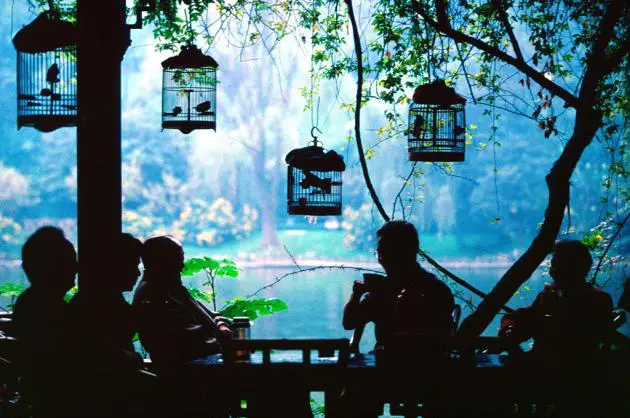
A must-do is enjoying a cup of tea in the traditional-style open-air teahouse in People’s Park, where you can also watch performers pouring steaming water from a pot with a metre-long spout. You can also treat yourself with an ear-cleaning service by the masters seen only in Sichuan's teahouses. The restaurant Dumpling Zhong is next to the teahouse, offering genuine Chengdu snacks.
Order a set of special delicacies for around 30 yuan (Bt150), and you'll have more than 10 dishes including dumplings, wonton soup, cold dishes and desserts.
The park is also home to a monument commemorating the events that triggered the 1911 Revolution that changed the country dramatically.
The Shrine of the Marquis Wu, a must-see for history lovers, was built in AD 223 to celebrate the wisdom of Zhuge Liang (AD 181-234), prime minister of the Shu Kingdom.
Jinsha Museum, located in western Chengdu, preserves one of the 21st century’s most significant archaeological discoveries on the original site. A gold mask and the Sun and Immortal Bird are representative items among the gold and jade articles, which date back about 3,000 years.
Restaurant Hong Xing, not too far from the museum, is a local favourite that offers modern versions of Sichuan cuisine classics.
Then, head to Broad and Narrow Alleys for a walk. The alleys are traces of old Chengdu that have survived the city’s expansion and large-scale construction. Once home to Qing Dynasty (1644-1911) Emperor Kangxi’s aristocratic soldiers from northern China, the alleys offer rare samples of northern courtyard houses found in southern areas. You’ll also find stores, bars, restaurants, teahouses and even hotels.
Immerse yourself in the hot and spicy world of the Damiao Hotpot, or treat your eyes and stomach to Chengdu-style architecture and dishes at Chengdu Impression. Both host lively and humorous Sichuan Opera shows.
As the habitat of the giant panda, Chengdu offers many chances to be up close and personal with these cute animals. Chengdu Zoo is one option, but many visitors prefer going to the Chengdu Research Base of Giant Panda Breeding, about 10 km from the city.
There you can observe 121 pandas placed in different areas by age group. Every panda has a name. They play with toys or with each other. If you’re lucky to be there when there are newborn pandas, you can see the infants and how they are nursed.
After spending most of the day with pandas, it’s time to go out on the town. Two sub-branches of the Minjiang River merge in the city’s southern part and Hejiang Pavilion overlooks the scene.
Near the pavilion and alongside the river, the Chengdu version of Hong Kong’s Lan Kwai Fong is a new landmark for the city’s young people and night owls.
Eastern Suburb Memory is a music-themed park. Like Beijing’s 798 Art Zone, the park was formerly a factory that produced engines for aircraft and refrigerators. The industrial roar is long gone and the night is now filled with the sounds of music from the bars and stages.
Take time too to head out to the countryside and admire the attractions.
Mount Qingcheng, located about 70 km away from downtown, is one of the Taoist sacred mountains. Besides the cultural sites, the tall trees and clean brooks create a wonderful place for a hike in the fresh air.
The Dujiangyan Irrigation System was built around 2,200 years ago and still functions.
The teahouses alongside the rivers are popular haunts with locals and visitors. They always serve tea, snacks and sometimes three exceptional meals a day, using local vegetables and poultry. Mahjong lovers gather there, too.
East of Chengdu’s downtown, Luodai town is known for the spicy snacks and traces of former immigrants from other provinces. The most famous is a restaurant serving Tear-Drawing Bean/Rice Jelly. It’s so hot and spicy that you can’t hold back tears when eating it, but you can’t quit because it's too delicious.
Huanglongxi ancient town is 40 km to the south of Chengdu. The old town preserves the former stone road, wooden houses and century-old trees, and has been the setting for a lot of kung fu movies.
The Wenchuan earthquake in 2008 took down part of the town. With the reconstruction now complete, the town is once again open to tourists who can cruise along the river while enjoying a meal on a boat.
Or you can have a meal at a family inn in the countryside. Many families have turned their courtyard houses into inns. Every venue has its signature attractions, from speciality chicken dishes to picturesque fishing ponds, or simply beautiful natural scenes.
If you go
_ Thai Airways operates a daily direct flight between Bangkok and Chengdu
