
Equine Excellence
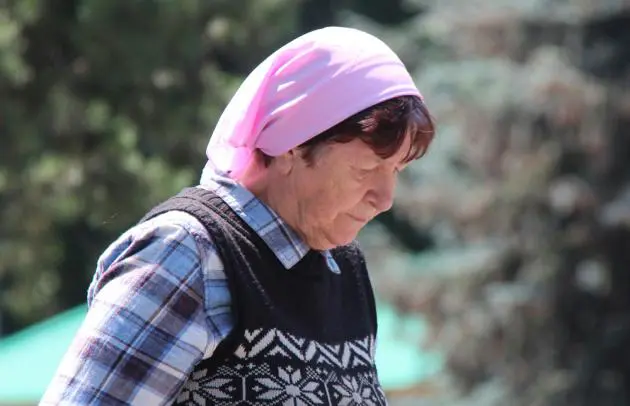


A second trip to Kazakhstan confirms the very special relationship between the Kazakhs and their horses
Six years ago I begged a Kazakh immigration officer at Almaty Airport to let me out of his country. The guy shook his head. He thought my visa had expired. When he finally stamped my passport and allowed me to catch my flight with minutes to spare, I swore with a glass of chilled champagne in my hand I would never come back to Kazakhstan. Six years later and here I am once again at Almaty Airport, waiting for another immigration officer to let me into Kazakhstan.
Located in Central Asia, Kazakhstan is a new country with a long history. It’s the world’s largest land-locked country yet has a population only slightly larger than that of Bangkok. Like his Mongolian counterpart, the Kazakh was once a nomad and enjoyed the openness of the endless steppe. That carefree lifestyle is no longer practised now that the Kazakhs have ditched their yurts for flashy apartments, the cash for which has been made possible by the country’s large oil reserve. The oil boom has seen fortunes made and paid for the modernisation of a former poor part of the Soviet Union. The nomadic instinct, though, has never changed.
“We, the Kazakhs, love horses,” begins Natalia, our guide. “The Kazakhs and their horses have been together on the steppe since the nomadic days. The horse is a great friend to the Kazakh people. And great friends make for great food.”
Natalia’s “friend-eat-friend” joke leaves many of the first-time visitors to Kazakhstan in our group looking confused.
“If the Kazakhs can eat their friends for dinner, perhaps they’ll want us for dessert,” says one of my travel mates with an uncertain laugh.
We find out exactly what Natalia means as she leads us on a city tour.
Sitting at the foot of the snow-capped Zailiysky Mountain, a spur of the Tian Shan range, Almaty is Kazakhstan’s largest city. It’s part of an ancient trade route network but it’s not a “fabled” city like Samarkand in Uzbekistan. After Independence in 1991, Almaty was capital for six years but lost out to Astana in 1997.
However, the leafy burg has always been one of the region’s most charming Russian-built cities, with long streets criss-crossing in a grid pattern making it easy to navigate, even with the free hotel maps.
That said, it is also easy to get lost as there are no landmarks, and every street has two names, in Russian and Kazakh.
To get a sense of the city, we decide to walk through the city. Darya, a beautiful Kazakh girl, takes us to Panfilov Park in the centre of the city, which is home to the Museum of Kazakh Folkloric Music and the Panfilov War Memorial.
The memorial, with an eternal flame and a massive sculpture representing the 28 soldiers of the Panfilov Division, who died in the battle against Nazi tanks near Moscow in 1941, conveys the brutality of the war.
“The flame is burning all time,” says Darya. “Newlywed couples come here to lay flowers on the reflecting stone base of the eternal flame”.
She doesn’t explain what exactly inspires these just-married pairs: the flame or the agony of the war.
Beyond the wall is the Zenkov Cathedral, a Russian Orthodox Church. Completed in 1907, the Cathedral survived the earthquake of 1911 and the Russian Revolution in 1917. Surrounded by a beautiful rose garden, the Cathedral is the second tallest wooden building in the world.
“The cathedral was converted into a recreation area and club house during the communist period because practising religion was banned,” adds Darya.
Now again a place of worship, visitors are welcome to walk inside and admire the icons and paintings.
From Zenkov Cathedral, we retrace our steps to the museum and cross Zhibek Zholy Street to the Green Market – an indoor and outdoor labyrinth of stalls. The food market connects urban Almaty with the countryside via piles of nuts, fruit, smoked fish, vegetables, wild honey and enormous hunks of fresh meat. Here, in the cavernous hall, I spot a counter piled high with steaks, chops and ribs. A sign at the end of each aisle advertises the animal on display: lamb, cow, and goat and, towards the back, horse. And it’s not only the meat of their best friend that’s a favourite among the Kazakhs, they also love kumys – a highly alcoholic beverage made from fermented mare’s milk.
At Kishlak – one of the finest traditional restaurants in Almaty – we’re treated to the delicacies of the steppe. As we are served with “beshbarmak” (a pile of lasagna-like noodles, topped with pieces of boiled horsemeat and onion), “plov” (a rice pilaf topped with barbecued horsemeat), and “kazy” (boiled horse sausage), the Thai woman sitting next to me asks me which she should taste.
“Try the kazy,” I tell her, remembering from my earlier visit that the special sausage is usually served to honour special guests.
“The first bite might churn your stomach but drink two glasses of beer and you’ll be fine.”
Surprisingly enough, my table companion loves the horsemeat.
As I bite into the accompanying radish and parsley, I muse on our luck at having such a great choice of dishes back home. We’re certainly a lot luckier than the Kazakhs, whose diet depends so much on horse, lamb and goat. But it’s all a question of taste.
The Kazakhs’ ancestors roamed the open steppe with their horses. They couldn’t grow much in the way of vegetables because of the bleak weather and rugged terrain. Those horses provided companionship as much as milk, blood and their meat.
“They eat what they have,” says a Russian, who’s sharing my table.
I imagine waking up in a yurt with my wife and my horses. I can’t eat the wife for breakfast and she can’t have me for dessert.
That, my friends, leaves the horse.
IF YOU GO
< Air Astana operates direct flights between Bangkok and Almaty.
