
In the neon glare of Nyaung Shwe


Play
Souvenir shops, restaurants and hotels have overrun this small town that serves as the gateway to Inle Lake
On a humid night not long ago, delegates from civil society organisations across Southeast Asia threw a party to celebrate the end of a conference at a big hotel in Nyaung Shwe on the edge of Inle Lake.
The boisterous party dragged on way past 10. Lights from the hotel’s rooftop illuminated the small town.
The event proved, if proof were needed, that Nyaung Shwe is great place to party.
Every country has its own tourism industry, a major source of livelihood for many in some countries. Myanmar’s top tourist draws – ancient pagodas and temples, ethnic culture and natural wonders – have sparked a massive influx of foreign tourists. Inle Lake is a must-see on anyone’s itinerary.
Located in southern Shan State within Taunggyi district, Nyaung Shwe is a popular hill station and boasts a mild and generally warm climate year round. According to historical records, the city was established in 1359 AD and ruled by powerful Shan saophas (chieftains). Nyaung Shwe Saopha Sao Shwe Thaike became the first president of Myanmar.
Tourists flock to Inle Lake to observe local ethnic traditions, enjoy its weather, and take in Shan, Danu, Taungyo, Intha, and Pa-O villages. Nyaung Shwe is an evergreen destination, with most tourists tending to stopover in the town on their way to destinations in the Inle Lake area. Now local residents reckon the town might be a victim of its own success.
Despite the city’s rich cultural heritage, few vendors are seen in traditional clothes at Mingalar Market, the main market of Nyaung Shwe. Many roadside signboards related to the tourism industry have sprung up across town. Like Bagan, tourists roam the town all year round either on their bicycles or in horse-drawn carriages.
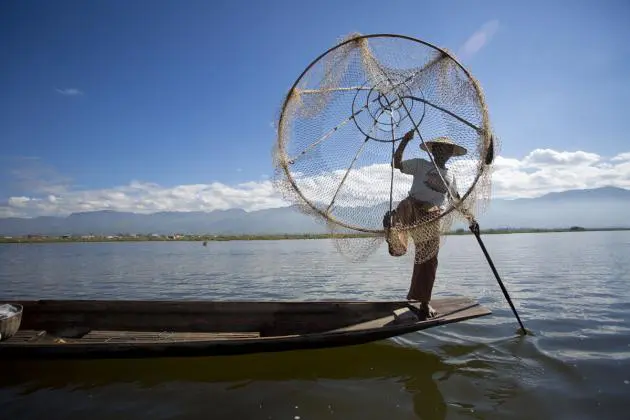
Big hotels, guesthouses, tour companies, car and bicycle rental services, gift shops, traditional handicrafts shops and restaurants are all over the place. Ethnic people can be seen around the lake where they run boat rental services. From there, the Shan mountains are visible on the horizon amid the banks of cloud.
One hotel owner says that Inle Lake boasts around 70 hotels and motels compared to Nyaung Shwe’s 40 plus. Construction of new hotels is banned in Inle and Nyaung Shwe, so hotel operators have set their sights on building hotels in Maing Thauk.
“There aren’t any original ethnic land owners in Nyaung Shwe anymore. They have sold their land and bought plots in rural areas and on the outskirts of the town. Land prices are high in the town. Every place has been turned into a hotel,” complains an ethnic Shan man in a tired voice.
However, the town continues to attract investors and migrant workers, turning it into a melting pot of cultures.
“It is crowded with foreign tourists during Thadingyut and Tazaungdaing. Many local visitors come here in April. I moved here from Yangon two years ago after my father was transferred to the town. I was unemployed so I started working at a hotel. I earn 70,000 kyats (Bt2,150)when there are fewer guests and more in tips when there are many guests. As room rates are high, only a few local visitors can stay at the hotel,” says the receptionist at a Nyaung Shwe inn.
Despite the lack of major tourist attractions, Nyaung Shwe is worth a little more than a temporary stopover. There’s not much in the way of culture to take in besides Shwe Yan Pyay Pagoda, which is famous for its murals and bell, and the former palace of Sao Shwe Thaike, now a museum. Maing Thauk and Indein are also well worth a visit, as are the broker shops selling famous tomatoes from the lake.
While some educated and skilled ethnic people are lucky enough to work in hotels, other uneducated folks are merely used as cheap labour at hotel construction sites and retreat to the countryside when jobless.
Yet tourism rarely contributes to the locals’ wellbeing. Worse, it’s threatening their culture.
Members of the city’s tourism industry are collaborating with the Forestry Ministry to build hotels around Inle Lake and on the hills of Maing Thauk. Conscious of the impact of property development projects on the environment, hotel executives in Inle Lake and Nyaung Shwe have come together to conserve the natural landscape around Inle but to no avail.
The natural beauty of Inle drives tourism, not the other way around.
“Waste is being released into the lake because of the high cost of wastewater treatment. Hotels can’t do that. Some hotels do, but the rest of the hotels don’t want to follow. Centuries-old trees have been cut to give way to new hotels. Much of the region has been deforested. Many luxury hotels have emerged, resulting in more reliance on underground water. Who will wants to visit Inle Lake if it is no longer beautiful? How will the hospitality sector survive?” worries Sai Sai Ngin, programme negotiator of the A Phyu Yaung Saydanar Environmental and Social Pioneer Group, looking over at the civil society representatives partying away.
The party finally comes to an end around midnight and the delegates make their way on foot to their hotels. Despite the late hour, the restaurants are still packed. For the tourists, it’s been another day in paradise in Nyaung Shwe.
But with tourism coming at the expense of local culture, chances are good that this is a paradise that will soon be lost.
