
Tastes of tradition
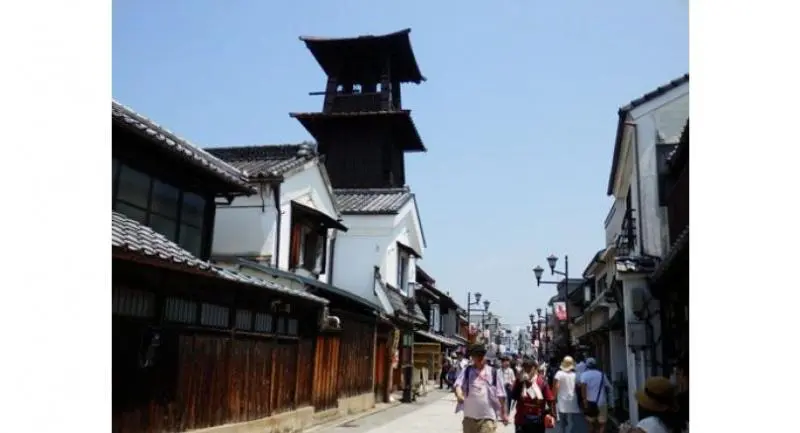


If you happen to be in Tokyo, take time out for a day trip to the Edo-period town of Kawagoe
Time seems to have stood still in Kawagoe, an Edo-period town in Saitama Prefecture some 40 kilometres from downtown Tokyo. Life here is much less frenetic than in the Japanese capital, making it the perfect place to escape the city’s chaos and take life a little easier.
It’s easy to access too, just a 30-minute train ride on the Tobu Tojo Line from Ikebukuro Station in Tokyo.

Our visit to Japan coincides with the hottest weather the country has ever recorded but the slow pace of life in this small town turns out to be an antidote to the heat. We stroll along streets lined with temples, shrines and traditional storehouses stopping off at Toki no Kane (the Time Bell Tower), the symbol of Kawagoe.

It’s possible to explore the town on foot but those who don’t have the energy can always opt for the Koedo Loop Bus, a retro-style vehicle that takes you around such tourist spots as Kitain Temple, Honmaru Goten and Kashiya Yokocho (penny candy lane).
Kawagoe is definitely a hot spot for both local and foreign travellers. Arriving at Kawagoe Station, we realise instantly that we don’t need a map to get around. All we have to do is follow the tourists as they make their way to Crea Mall, an outdoor shopping venue filled with restaurants, dessert shops, and coffee shops, as well as Atre and Maruhiro department stores.

We do however stop at Kumano Shrine, where we are surprised to find cobblestone paths designed to massage visitors’ feet on both sides of the pathway leading from the entrance to the temple. Walking on it is very good for you but also very challenging, because the stones are supposed to stimulate acupressure points on the soles of our feet. We manage a short distance before giving it to the pain. The shrine itself is popular among those seeking success, good fortune, business and marriage and we are told that if we put money in a basket and wash it in the Takara Ike pond, we will enjoy economic fortune.

From the shrine, we walk to Taisho Roman Yume Dori, where we spot many visitors shopping or relaxing in one of the many coffeeshops, then move on to the Nakacho Kosaten Intersection and into Kurazukuri Street. Also known as the warehouse district, the area boasts buildings constructed during the Meiji period (1868-1912) in the wake of a devastating fire. The new buildings were built to be fireproof with several layers of clay used for the walls. Today the spaces are no longer used for warehousing but have become home to souvenir shops as well as small boutiques selling folk crafts, tea, soap and Coedo craft beer plus restaurants.

Many visitors to Kawagoe enjoy dressing in colourful yukatas and kimonos, all available for hire from one of the many rental shops in the area. Some stroll around the streets while others take a rickshaw to see the sights.

We take a break at Kawagoe Pudding shop and sample a pudding in a glass bottle. The shop gives you back 10 yen if you return the bottle, a practice that should be adopted by every city. Further along the street, we see a long queue of people waiting for okaki (Japanese fried rice cakes), which remind us of khao jee (grilled sticky rice so popular in the Northeast of Thailand), and egg baumkuchen, which bears the amusing slogan “addicted by the art of eggs make you happy”.

Despite the heat, we continue to walk along the street and eventually arrive at the entrance to the symbol of Kawagoe, the 16-metre-high Bell Tower (“Toki no Kane”), a western-style edifice constructed in 1918. The original was built approximately 400 years ago in the early Edo period, and the current one is the fourth tower, reconstructed after the Kawagoe conflagration in the Meiji period. It is a three-storey wooden structure, and it tells the time with a loud bell striking at 6am, noon, 3pm, and 6pm. The sound of Toki no Kane was chosen as one of the “100 soundscapes of Japan”, a list of soundscapes worth protecting, in 1996.

Because it’s one of the most famous landmarks of this ancient city, it’s packed with both Japanese and foreign tourists taking those must-have selfies with the tower in the background. While walking through the alleyway, our tummies rumble at the pleasant aroma of baked soy sauce and savoury grilled skewered dango (rice dumplings) as well as potato-flavoured ice cream with deep-fried sweet potato chips.

Kawagoe is well known for its eel dishes, most of them cooked with a sweetened soy sauce. We decide to pass in favour of green tea soba noodle at Kotobukian Kuranomachi Restaurant. A waitress serves hot soup and instructs us to mix in the dipping sauce before drinking.

Our day away from Tokyo ends with a display of fireworks marking the summer festival of Hanabi Matsuri.
The writer travelled with NokScoot Airlines.
