
Bangkok Cracks Down on Diesel Smoke with Stricter New Limit
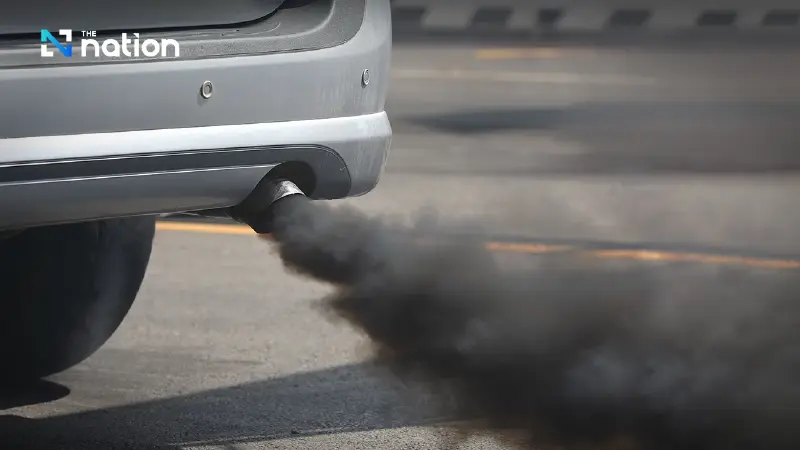


BMA halves permitted exhaust opacity to 20% from November 2025; violators face hefty fines and an immediate 30-day vehicle ban to combat PM2.5
- Bangkok is reducing the maximum permitted diesel exhaust smoke opacity from the current 30% to a new, stricter limit of 20%.
- The new regulation will be enforced starting November 1, 2025, to combat PM2.5 fine dust pollution from vehicles.
- Drivers violating the new 20% limit will face penalties including a maximum fine of 4,000 Baht and an immediate 30-day vehicle ban.
BMA halves permitted exhaust opacity to 20% from November 2025; violators face hefty fines and an immediate 30-day vehicle ban to combat PM2.5.
The Bangkok Metropolitan Administration (BMA) is set to enforce a major tightening of air quality regulations, announcing that diesel vehicles will be subject to a dramatically lower exhaust smoke limit starting 1 November 2025.
The new standard, formalised in the Royal Gazette, will see the permissible opacity of diesel vehicle exhaust smoke drop to no more than 20%, a significant reduction from the current limit of 30%.
The BMA’s Environment Department stated the measure is a crucial step to control pollution from motor vehicles, which remains a primary contributor to air quality problems, particularly for older, pre-Euro 5 engines.
The goal is to aggressively reduce PM2.5 fine dust particles created by inefficient engine combustion.

Drivers and owners whose vehicles are found to be emitting smoke exceeding the new 20% threshold will face immediate legal penalties:
Temporary Ban: Vehicles caught violating the standard will receive a ‘Temporary Ban on Use’ sticker. Owners must rectify the issue within 30 days under the National Environmental Quality Promotion and Maintenance Act B.E. 2535 (1992).
Fines: Offenders are also liable for a maximum fine of 4,000 Baht under the Land Traffic Act B.E. 2522 (1979).
Immediate Seizure: Any vehicle that is re-inspected and found to be in continued violation of the rule or has failed to rectify the issue will be issued an immediate 30-day prohibition of use.

BMA’s 5 Tips for Cleaner Diesel Engines
To help motorists comply with the new rules and reduce air pollution, the BMA Environment Department has offered five simple maintenance tips:
Fuel System: Inspect and correctly calibrate the fuel injectors and injection timing.
Exhaust: Clean out any carbon or residue within the exhaust pipe.
Oil: Change the engine oil and oil filter according to the prescribed maintenance schedule.
Air Filter: Clean or replace the air filter element.
Engine Health: Ensure the engine is regularly serviced and maintained in optimum working condition.
