
Bangkok chokes on orange-level PM2.5 as Nong Chok tops 80 µg/m³
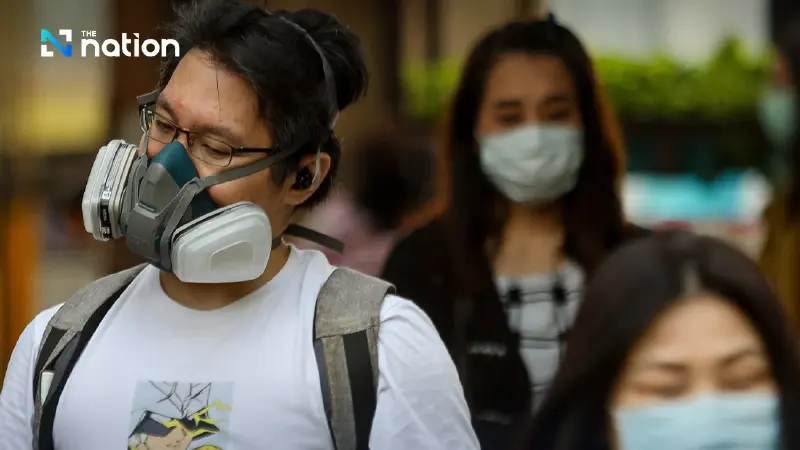


Bangkok’s PM2.5 average hit 55.6 µg/m³ at 7am, well above the 37.5 µg/m³ standard, with Nong Chok recording 80.8 µg/m³. The city has entered orange-level air quality, with health warnings and calls to limit outdoor activity.
The Bangkok Metropolitan Administration’s Air Quality Information Centre reported the latest PM2.5 situation at 07:00, with the citywide average rising to 55.6 micrograms per cubic metre (µg/m³)—significantly above the standard of 37.5 µg/m³. The sky has effectively shifted into the orange air-quality category, signalling health risks.

Top 12 areas with the highest PM2.5 in Bangkok
- Nong Chok district: 80.8 µg/m³
- Min Buri district: 77.3 µg/m³
- Khlong Sam Wa district: 76.5 µg/m³
- Khan Na Yao district: 76.1 µg/m³
- Prawet district: 71.7 µg/m³
- Sai Mai district: 70.7 µg/m³
- Lat Krabang district: 69.2 µg/m³
- 60th Anniversary Queen Sirikit Park, Lat Krabang: 68.0 µg/m³
- Seri Thai Park, Bueng Kum: 66.9 µg/m³
- Nong Chok Park, Nong Chok: 66.5 µg/m³
- Bueng Kum district: 65.9 µg/m³
- Saphan Sung district: 63.6 µg/m³
These figures show that orange-level air quality—beginning to affect health—is widespread. Conditions are particularly notable in North and Central Bangkok, areas that typically benefit from better ventilation but today are facing more stagnant air that is trapping fine dust and pushing concentrations higher.

The hidden cost: health and productivity
Economically, PM2.5 functions like a “silent tax” on Bangkok residents—from the cost of N95 masks to higher medical bills linked to respiratory illness. Medical guidance is clear that at-risk groups should avoid outdoor activities altogether, while for the wider workforce, going outdoors without protection poses a long-term risk to health and, ultimately, work performance.
How to cope
With PM2.5 levels still trending upwards, working from home and limiting time spent outdoors in orange- and red-level areas is not only a health choice but an increasingly necessary measure to protect economic continuity when air pollution reaches this level.
